
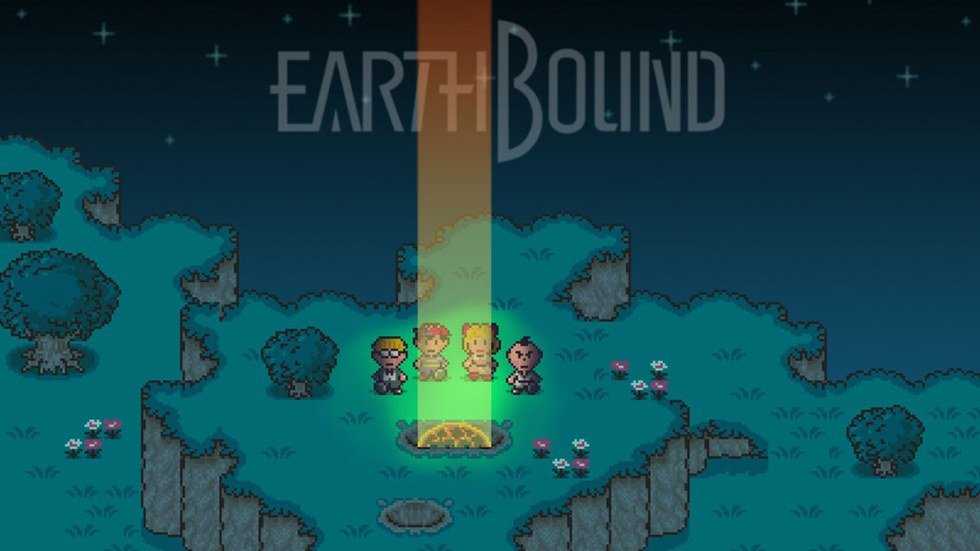
Mother 2, also known as "EarthBound" in America, is a single player RPG (role playing game) created and published by the Japanese video game company Nintendo for the SNES (Super Nintendo Entertainment System). The game was later released that summer on Aug. 27, 1994, and in North America on the 5th of July. It is set in the United States and was influenced heavily by Western/American culture, giving it a realistic style but also leaving in certain fantasy aspects giving the game an overall unique atmosphere. It contains a lot of satire and has somewhat twisted humor on real world situations. The story itself is very interesting and different which makes it an enjoyable game to play. EarthBound is a great example of a mixture of different genres that still stays true to the single player RPG. I believe that the game speaks many ways of what life is actually like in America as well as how Japan perceives Western civilization to be like and there are many influences and references throughout the game that exhibit this.

It’s imagery, music and messages create an underlying tone of both humor and eeriness, which is something Nintendo executes beautifully. It also has a certain bizarreness and craziness that somewhat draws you in to see how much more can happen. Connecting it to our culture, the humor, imagery and dialogue were revised specifically to poke at some of our culture's social history in a satiric fashion. The gameplay itself is also quite interesting. In EarthBound party members help level up the main character with experience points. The “party” style of gaming makes the player feel less alone because there are people traveling and advancing with you, as well as connecting with them in the dialogue and gameplay.
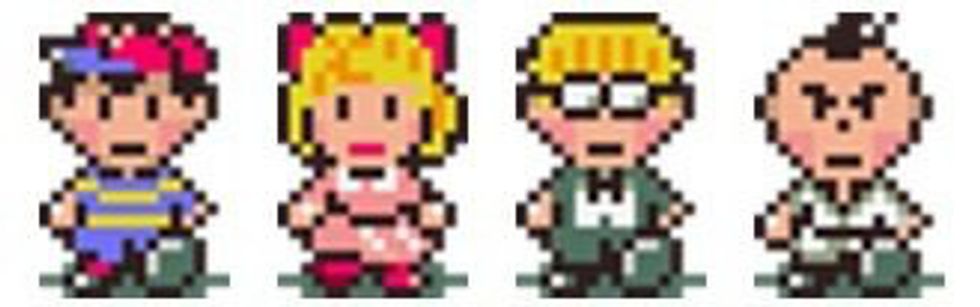
The player you are given to play as is a young boy by the name of Ness. At the beginning of the game he ventures out to investigate a nearby meteorite crash. Once he reaches the site, he discovers Giygas, who belong to an evil and negative alien race that has overwhelmed the world with hatred and has turned the world and its living inhabitants into hateful and malicious creatures. Ness is then approached with the mission to acquire and collect melodies in something called a "sound stone" to stop these evil Giygas. Throughout the game while Ness searches for the melodies, he encounters other children named Jeff, Paula, and Poo, each containing different special abilities. Jeff the inventor, Paula the psychic girl, Poo the martial artist fighter.
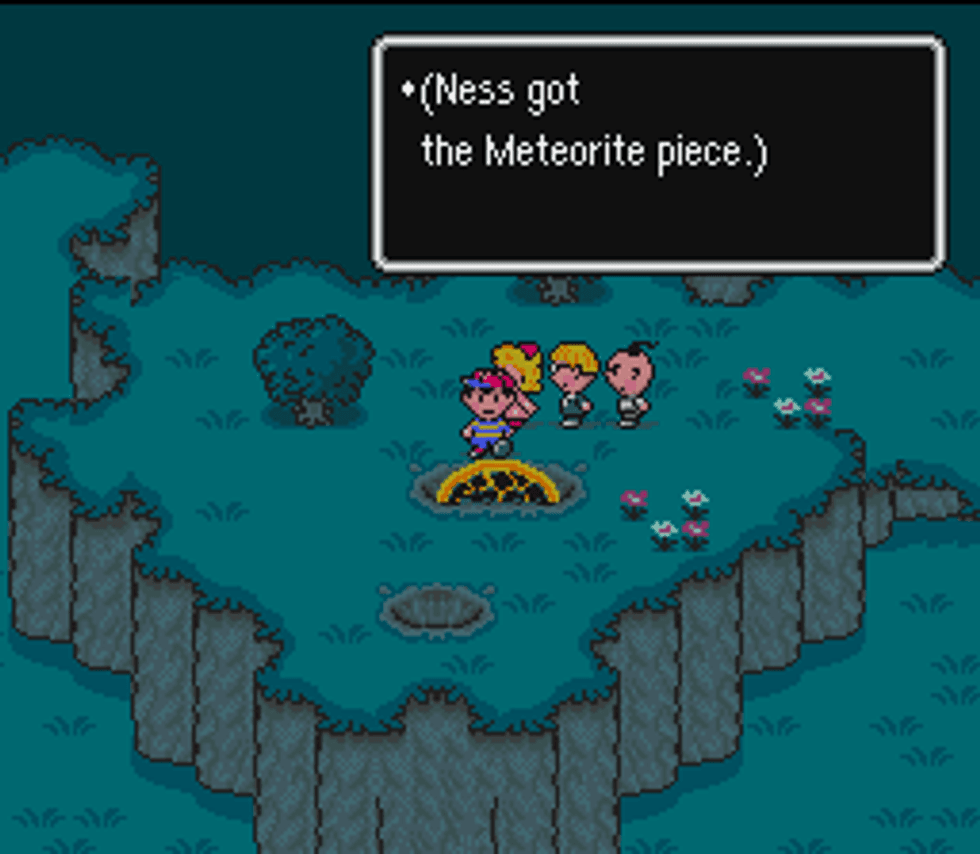
The party continues to travel throughout the game, still ultimately searching for the melodies for the Sound Stone. Eventually the Sound Stone is acquired and Ness visits Magicant alone (a world that resides within his mind where he fights his own dark side.) Afterwards Ness and his party travel back to battle with the Giygas and it quickly becomes an intense fight which leads towards the end of the game. The battle itself is quite challenging, and the imagery somewhat eerie.
To be able to connect the game to American gamers, Marcus Lindblom began to translate Earthbound's script and made his own changes by adding more satiric dialogue. In the end, this made a positive impact because it created many well known phrases and quotes directed from the game, which then gamers involved in their culture. Lindblom’s biggest task was trying to culturally and verbally translate "an outsider's view of the U.S." for an American audience as well as other Westerners and how they would interact with their adaptation of the game, as opposed to their possible negative reactions towards the Japanese version. In addition to changing the overall format of the script a well as the original puns and humor, Lindblom added humor and culture references to many iconic media references from celebrities, tv shows, and literature that were prevalent at that time.
Lindblom worked with the Japanese programmers and developers to remove references to many cultural American events, people and logos that they would recognize. Many of the references that were removed were quite controversial things that might have honestly offended a wide mass of Americans. When the party reached the "Happy Happyist Blue Cultists" were made to look less like Ku Klux Klansmen. Alcohol became coffee, there was no nudity, and the humor was less harsh. The Coca-Cola log and crosses on several things, such as tombstones, were also eliminated from the Western version of the game. The game was also directed towards psychic abilities and supernatural events rather than acts of violence including weapons such as fire arms because of the main characters being children.
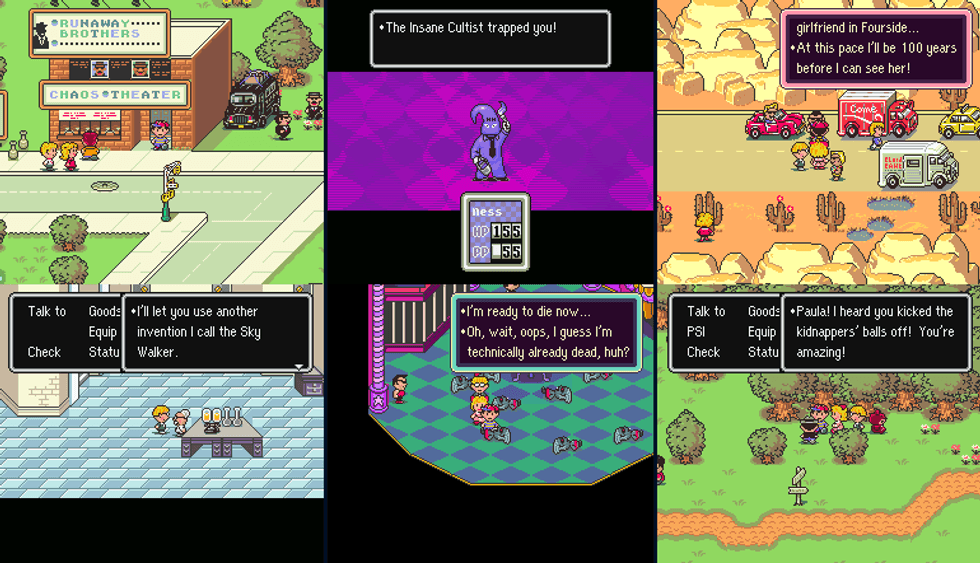
Overall this game is very insightful and extremely self aware. It is something that some people find controversial, but I think it is necessary that they are made evident to the public. Video games can be seen as a very artistic form of media, and because of it and the influence and large mass of audiences that it reaches, I believe that it is an effective way to represent historical references as well as cultural. It goes to show that with the advancements in technology that not only books, but games as well as other forms of media can communicate to us.