
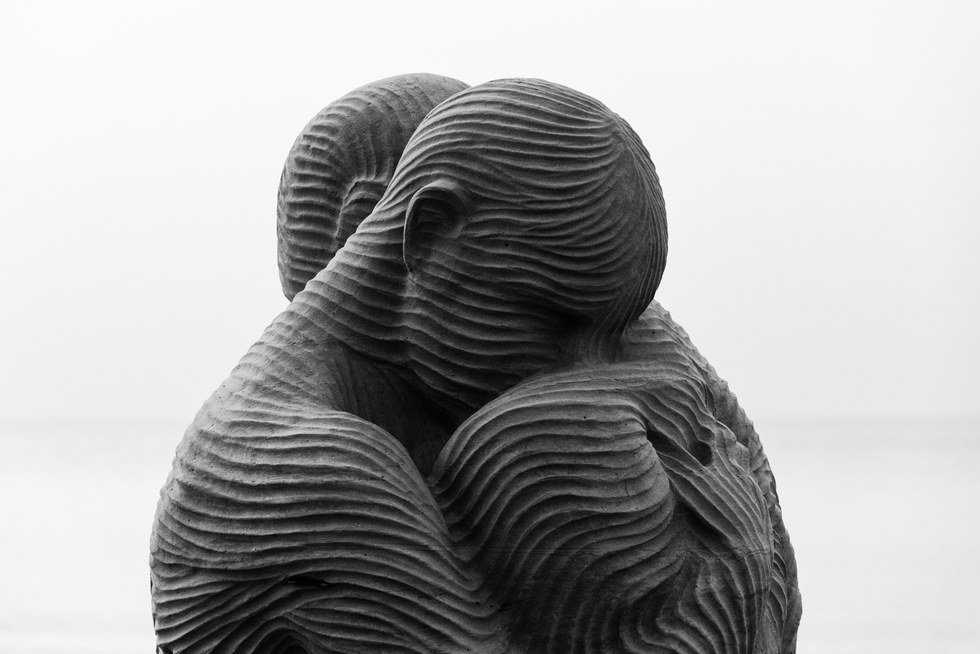
“You are safe here.”
Turn your eyes down—lights dim, soft, warm; a mute black and grey of held bated breath. We sit in a circle, sit one on one in a stolen pocket of time and space. Look at your chair, look at your hands, look at averted eyes and allow yourself to stare.
It’s strange that a tonic of deliberate solemnity and vague notions of solidarity can be heady enough for us to give a guided tour of our personal sepulchers. Mouths open and cobwebs fly out, leaky eyes start to drip; we slowly strip ourselves bare and tremble from exposure. This is not therapy, but distilled expectation—that we will be enveloped in a blanket of some form of empathy, sympathy; that we will not be judged; that we have equally invested in such an expensive space. It’s a peep show we have paid for in promised compassion, a memorial service for the selves we have killed and are yet killing, a blind date with people we only really knew by name, age, general interests, contrived logline.
Who would you trust more with something so personal that you refuse to acknowledge it yourself? Is it harder to tell a friend, a lover, or an utter stranger? We whisper our secrets and most potent memories of shame and despair anonymously to an amorphous Audience/Public/World with a kind of thrill—as if a confession in anonymity should be sufficient to exonerate us of guilt and free us from condemnatory ruminations. We are comforted by an assumption of truth, and in nurturing a kind of Munchausen for social good, we partake in a unity that has no physical substance and yet is the only thread of connection that we dare to have. Is what we seek just a feeling of unburdening? Is it sufficiently comforting to know that we are “not alone”? We confess, and nothing has changed; the earth still turns on its axis. Perhaps it’s enough to find a god who will respond to an SOS via text, pick up the phone in a night of trembling.
We sit in a circle and play a game of Russian roulette—we pull the trigger, invariably come out alive and bleeding. Are we whining? Should we suck it up and quell our anxieties because there is absolute certainty that someone else has it worse? A tantalizing concept made sickeningly old: vulnerability incites vulnerability, and we are powerful for embracing that vulnerability. “You are strong,” and you can and will roll this boulder up the hill ad infinitum and be happy with your task. The experts bring out their charts and magnetic fields and teach their growing band of disciples how to endure, warning us that there will be an inevitable decline, that there will be an inevitable disaster, that there will be an inevitable end to our temporary happiness. Perhaps there is a danger to proudly wearing our resilience like a badge of honor—for enduring doesn’t solve anything. Adaptation is just a form of running away—resistance is not the same as resilience. But for us mere mortals, is it not a miraculous triumph to be able to find something irresistible in moving from one day to the next?
The real world will not be so kind as to listen to you, will not be so generous as to give you more time, will not be so compassionate as to hold your hand and sing kumbayah. There is a compulsion to share, and a desperate need to bite our tongue. But in these moments of brutal honesty and soft intimacy, who could deny that we have been gifted with the privilege of witnessing the most breathtaking embodiments of the human condition?
You resist, you change, you inspire.
This is a safe space, and you are so beautiful.