

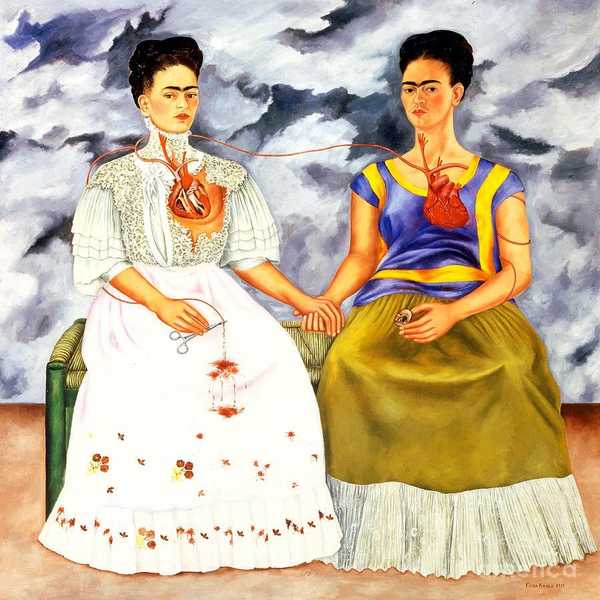
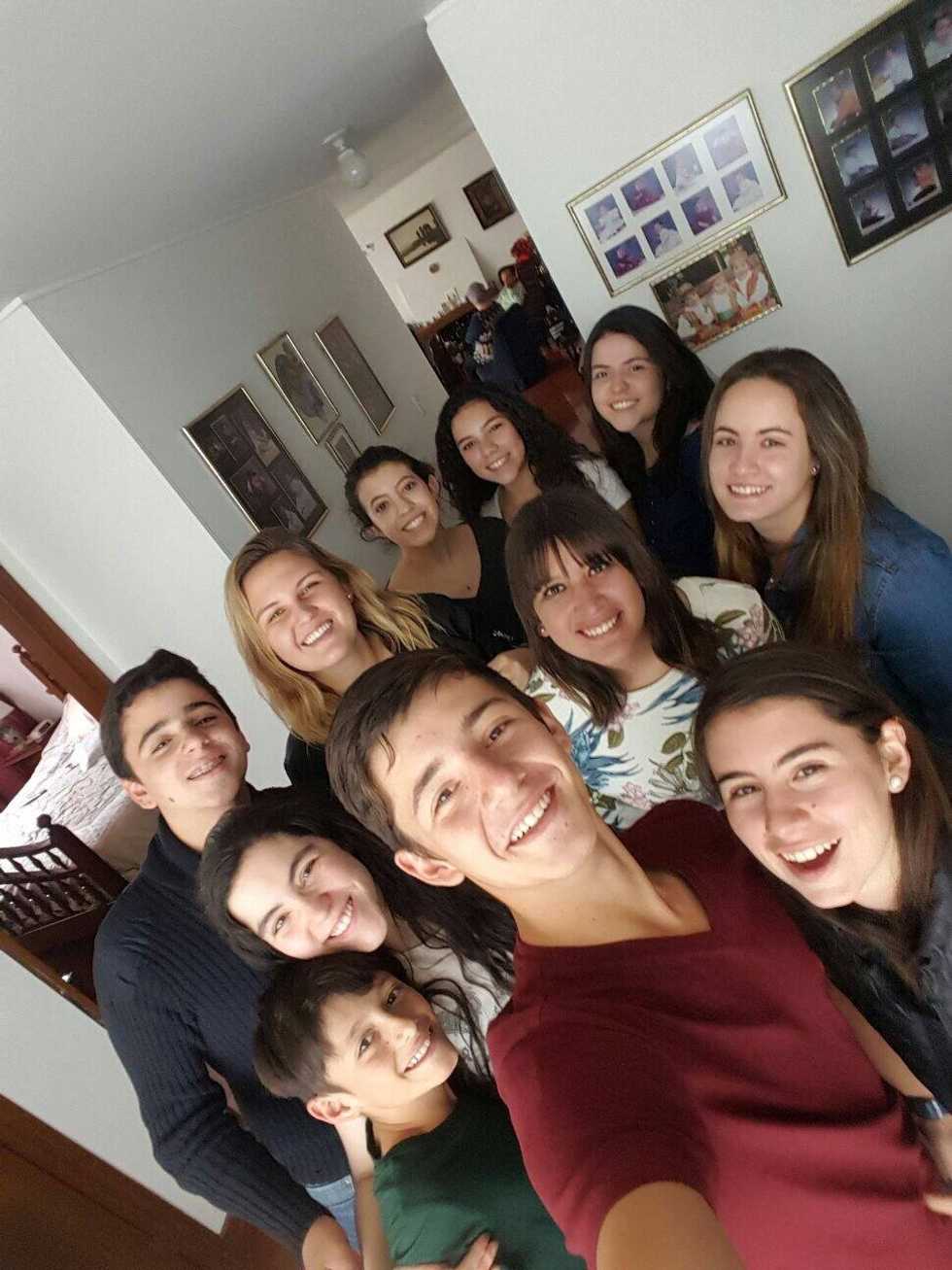
In the United States, I am Colombian. In Colombia, I am "gringa" - or, as my relatives affectionately call me, "la gringita." In other words, in Colombia, I am "the American."
So where am I really from? I was born in Mountain View, California and have lived in the Bay Area my entire life, but my parents are both from Bogotá, Colombia. They moved here 28 years ago, and we try to visit Colombia as often as possible, about once every two years. Even in California, my family makes a substantial effort to stay connected to our roots. We speak Spanish at home - or at least we try to (more often than not, our parents speak to my sister and me in Spanish, and we speak English to them in return), share delicious Colombian meals, listen to Colombian music, partake in Colombian cultural traditions, and have a close-knit network of Colombian family friends who live nearly.
Although many children of immigrant parents tend to feel more connected to one culture than the other, I have always felt equally Colombian and American. Despite having lived in California for over eighteen years and never having spent more than two months at a time in Colombia, the latter is undoubtedly a second home. My dual cultural identity truly gives me the best of both worlds, but also lends to my occasional dissatisfaction and difficulty remaining fully present - I'm caught between two incredible places, and when I'm in one, I often want to return to the other.
When I'm in California, I miss Colombia. I miss my cousins, aunts, uncles, and my grandmother - all of whom live thousands of miles away. I miss tropical fruits and fresh-squeezed juices that aren't just an expensive health fad (I'm looking at you, Pressed and Nekter). I miss breakfast and lunch being the most important meals of the day, and onces (Colombia's version of tea time, except instead of tea, there's cinnamon hot chocolate). I miss the view - everything from Bogota's never-ending cityscape, to the rolling green hills on the drive to Anapoima, to the Andes mountain range, to the translucent turquoise water surrounding las Islas del Rosario. I miss Medellin and Cartagena. I miss people actually knowing how to dance salsa, bachata, merengue, reggeaton, and so much more.
In a way, Colombia is also my escape from some of the things I dislike about the US. It allows me to separate myself from Silicon Valley's obsession with academics and success. I don't go to school in Colombia, and I don't work there, either. The college application and admissions process is also starkly different in Colombia - students generally apply to less than five schools, acceptance rates are high, and yet many of the universities are outstanding. Life in Colombia can be fast-paced and exciting, but not in the crazy overwhelming way of the San Francisco Bay Area. People make more time for family and friends and are somewhat more relaxed - so much so that it's common (even expected) to be over an hour late to a gathering.
On a more relevant note, while Colombia has certainly had its fair share of political issues, it is currently free of Donald Trump and the GOP... which is also nice.
When I'm in Colombia, however, I often find myself missing California. I miss my friends, especially since I don't know many people my age in Colombia. I miss the Bay Area's extremely liberal political atmosphere and emphasis on innovation. Although Bogotá is booming, it occasionally feels a bit behind the times in comparison. I miss my freedom and independence, but not in the way that you might think. Rather, freedom to get around. Bogotá's transportation system is a mess. You can't drive without getting caught in terrible traffic, taxis can be unsafe to ride alone, and the bus system's rapid transit system (known as transmilenio) is complicated. Many people get around by walking, but I don't know my way around the city well enough to do so safely on my own. This means that, when I'm in Bogotá, I can't really go anywhere unless I'm going with someone else (usually an adult). It isn't too bad, but it's a huge contrast to California, where I'm used to walking around late at night by myself, at least in my neighborhood, and having a car to drive long distances on the freeway.
But the thing I miss most when I'm in Colombia is feeling like I can express myself effectively - and this is on me. As much as I've tried to keep my Spanish up over the years, I often find myself tripping over simple words and lovingly teased by relatives for pronunciation mistakes. While visiting, I sometimes feel as though forming sentences in the first language I could speak makes me sound like a child. Nonetheless, I practice incessantly each year, because I look forward to the day when my Spanish-speaking fluidity, confidence, and vocabulary will reflect the mature, intelligent, and professional adult I hope to become.
Neither one of my home countries is perfect, nor is any one better than the other. I'll admit I prefer living in the United States - simply because it's what I'm accustomed to and where my "life" is - but I identify with Colombia to the same extent. It's impossible to be in both places at once, which can be tough at times, but also gives me the opportunity to bring elements of one into the other. My family shares Colombian traditions with our American friends, which has been a great way to make the most of both cultures. And if I practice my Spanish more regularly in the US, I'll feel more comfortable speaking in Colombia. There are countless ways to bring the two together.
Dual cultural identity can be conflicting and confusing at times, but I am so grateful to be from two different places. It allows me to view and understand each world from the inside, but also get an outsider's perspective. I love both of my countries with all of my heart, and I am happily Colombian-American.

















