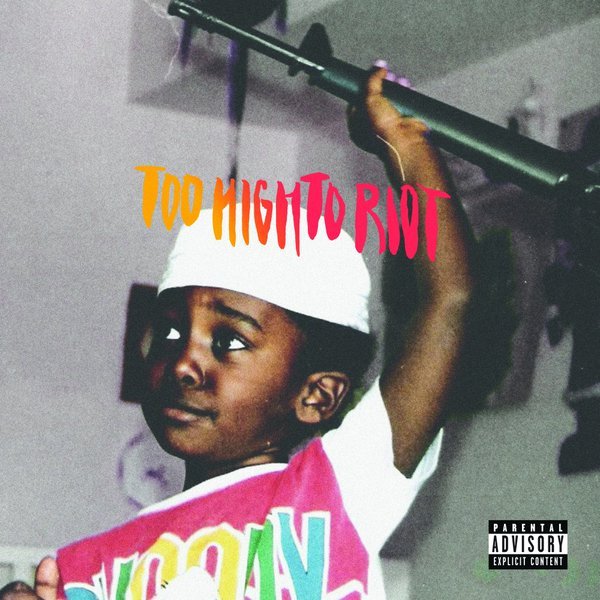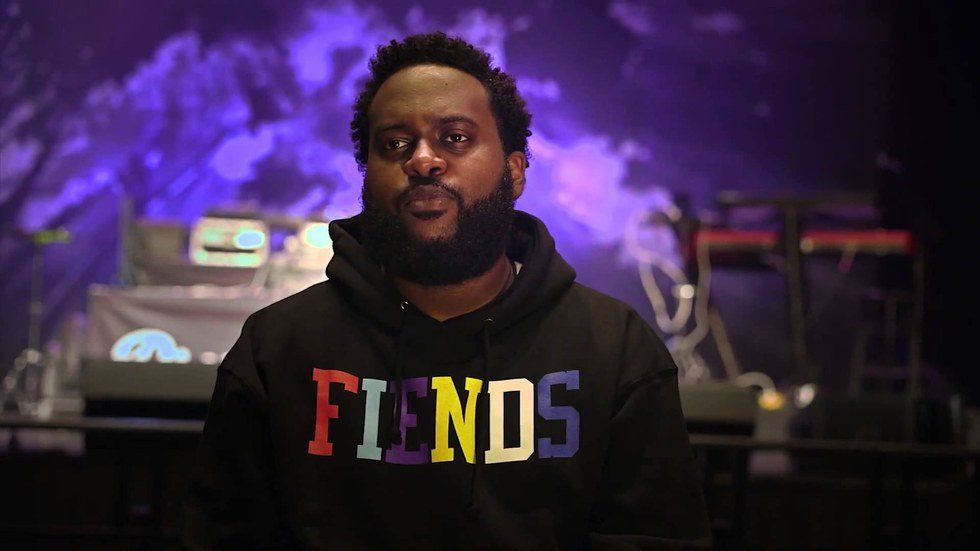
Abbas Hamad or “Bas” is a rapper from Queens, New York City. Abbas came from a Sudanese family and highly doubted that rapping was a viable option. His career did not begin, however, until he met artist J. Cole. After a few mix tapes, he released his debut album “Last Winter” in April 2014, and Cole actually paid for the music video of his song “My N**** Just Made Bail." Bas just dropped his second album “Too High to Riot” this year.

Bas offers a style contrary to current rap. Rather than spitting fast and violently, his flow is more somber and mellow. Many of his songs have to do with the lifestyle an individual adapts to when involved in the use and sale of drugs. There is a true sense of realism that can be heard in his music. He often speaks of loss and change that someone has to adapt to quickly. He speaks very highly of the city that raised him, the environment that brought him up and made him the man he is. Often speaking on legal and political matters it truly shows what rap stands for. He tells stories through poetry and often talks of the rough life that he and others have experienced due to the system.

My favorite aspect of Bas’ music is the openness he divulges. Especially evident in "Too High to Riot," he struggles with insecurities, the pain of change with new-found fame and life changes and unstable relations he holds with friends. Through much of Bas’ music, drugs are a very influential component. Whether speaking of sale or use, personal or observational, it is very important to his themes. It displays a gritty underground world that coexists and intermingles with the world we see on the surface.
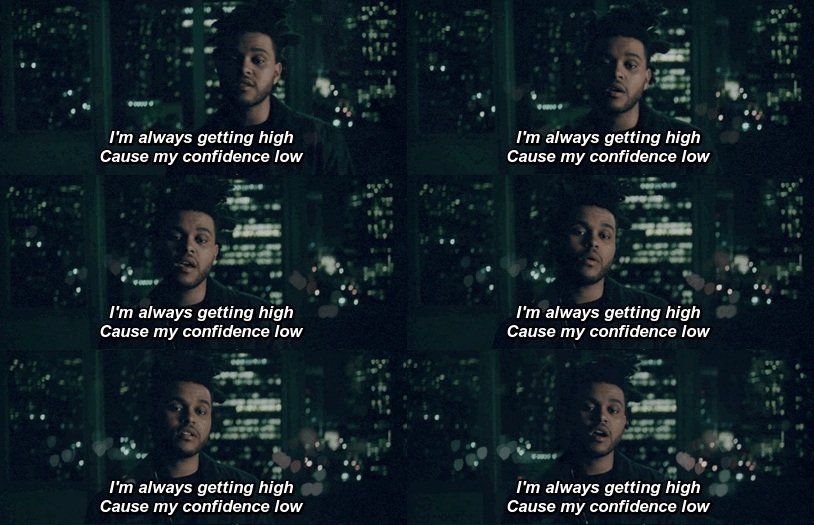
Rap and hip-hop hold some of the most important cultural significance of the modern age. Often these genres speak of struggles of the common man, and frequently have to do with societal standards and policies. To the untrained ear, Bas’ music may sound simple, and every now and then it is, but there is a component of complexity in the lyrics. Not only does he use beats that set a tempo and portray a mood, he talks about climbing to where he needs to be, and speaks of it somberly and full of doubt, but also hopeful of potential. It’s interesting how this sound from his music parallels his career choice. He knows that making it as a rapper is unlikely, he didn’t want to start because of it, and yet he still tries for the promise of something better.
Bas has started to receive recognition lately but is still far from mainstream. If you have the time, check out his work because it’s a total breath of fresh air. He’s said that he wants to put New York’s rap scene back on top, and from the looks of it, he’s well on his way.