


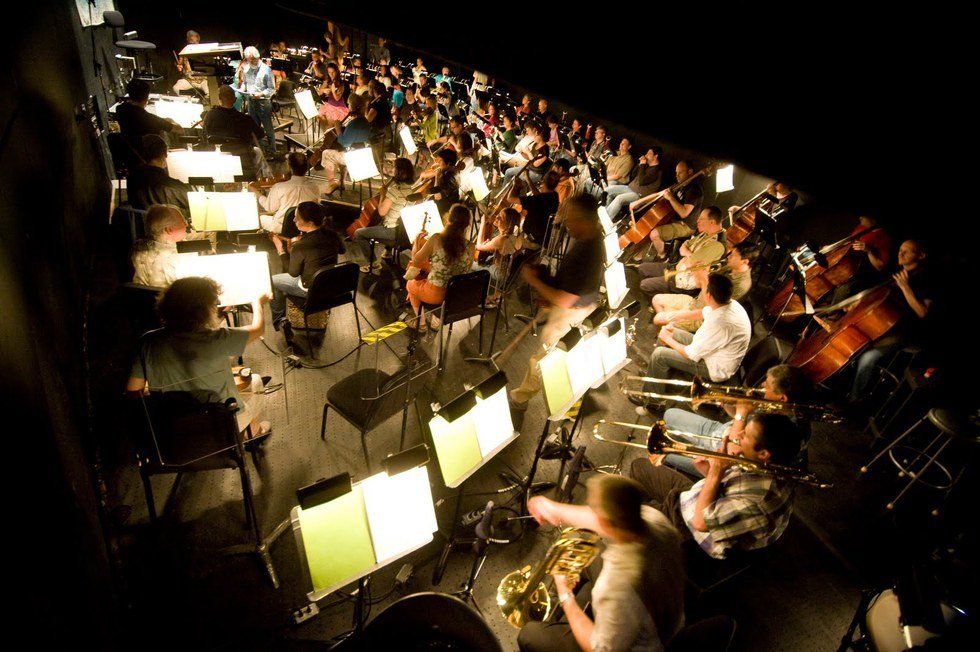
I'm sure many people have heard a musical before. Ever listened to the Hamilton soundtrack? Don't worry, I've also belted to my heart's content at home or on the road. But have you ever stopped to think about all of the musicians that poured their hearts and souls into making the soundtrack what it is, the people that bring it to its full glory? Well let me tell you, I've been in that position multiple times before; I realize nobody ever really thinks about the pit musicians.
Music is obviously a necessity for musicals. I mean, hello, MUSIC-als. It makes up the majority of the word. And of course, we have the actors on stage belting and falsetto-ing and bringing the show to life. But the underlying score is a very important constituent of a musical. It is the basis of the show, in all honesty. And it takes an enormous amount of talent to produce the score. For those of you that are unfamiliar with the process of playing a score, each of the musicians in the pit orchestra gets a book, a fairly large one at that. Typically each book is anywhere from 150-300 pages, depending on the instrument and the length of the musical.
Now, some books are written for a specific instrument, for example cello or trombone. Other books cover a range of instruments. The Reeds 1 book typically is written for 2-4 instruments, all of the woodwind nature. This past year, I played Reeds 1 in the St. John's production of Hairspray, in which I was required to play the alto saxophone, tenor saxophone, flute, and clarinet. Of course, this requires no small measure of talent, as anyone that wants to play that part must be a multi-instrumentalist by necessity.
Pit musicians do not rehearse for nearly as much time as the cast of any show, that is invariably a fact. In the three productions in which I was a pit musician, I was given the book just after cast auditions ended. And then I waited. Until about the week or so before opening night. Once that time rolled around, the pit band was in full swing, and we were rehearsing every night for the week. We poured hours and hours into perfecting our music (my lip even bled once, fun times). Opening night comes around, we all play our parts, go home, and repeat the cycle until the show is over.
What I really want to write about here isn't about the process of playing this music and whatnot, it's about what this process made me feel like. I love performing music. It is my greatest passion, and that's a fact. Playing in a pit orchestra brings me so much joy because the music is challenging and I'm about to play a part in a larger production, and that gives me such a feeling of accomplishment.
This experience is not without flaws. Sure, for any lover of performing, it's a great time. But one thing you learn quite quickly is that nobody really pays attention to the pit orchestra, which seems ironic, but it's true. Being in a pit orchestra is a thankless job. We get our names printed in the program, and that's about it...other than that we get that tiny wave from the cast at the end of the show.
Typically, unless someone in the audience knows us personally, nobody really comes up to any member of the pit. It almost feels like being in a zoo, but not being the main exhibit. People enjoy your presence, but they don't actively seek you out, and if that's not at least a little depressing, I don't know what is. My point is that we pit musicians need to be recognized more. There are musicians that are providing you all of their talents, just like the cast of the show does. Why should they get any less recognition? Aren't we as deserving of the applause as the cast?
All I ask of you is the next time you go to a musical, please give the pit the recognition they deserve. Say "thank you" to them, make them feel wanted and appreciated. I cannot stress enough how much that can really make their day.















