“Whenever you feel like criticizing anyone, just remember that all the people in this world haven’t the advantages that you’ve had (Scott Fitzgerald, The Great Gatsby)."
These are the opening lines that Scott Fitzgerald uses to describe his verisimilitude novel. "The Great Gatsby" takes place in the cosmopolitan city of New York around the 1920s. The setting is mostly divided into three unique and contrasting locations: The East Egg, West Egg and the Valley of Ashes. Each place serves as a representation of some of the main characters of this novel, and their eternal condemnation to a life of suffering and rejection by the cruel society that surrounds them.
The East Egg and West Egg are symbolic because they oppose each other. At the beginning of the novel the narrator describes both areas as physically identical, however, as his narration progresses, it’s made clear that the differences that define them are far greater than the natural barrier that separates them. Essentially, they represent the constant battle between Old and New money.
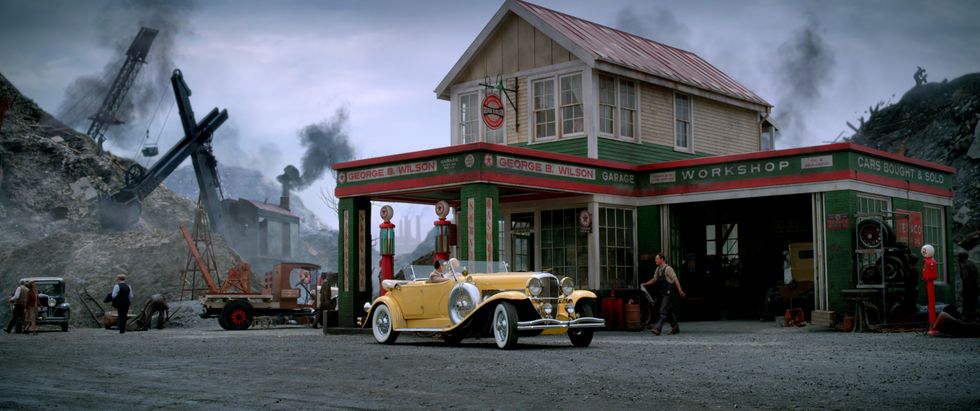
East Egg is the home of the established class, people who often come from wealthy families and therefore all of their fortunes are inherited. Daisy and Tom Buchanan are the most iconic members of this place and they portrait the void that surrounds the most fortunate portion of society. They are able to move freely within their own social circle and among the least fortunate ones and still be welcomed with courtesy and admiration. This tendency is best exemplified when Tom interacts with George Wilson, Myrtle’s husband. When this happens George serves Tom complaisantly, without knowing that Tom is having an affair with Myrtle.
On the other hand, like many of his friends, Tom is constantly abusing Gatsby’s cordiality when he goes and parties at his house without even having the decency of inviting him back. Lastly, Fitzgerald chooses Nick as his narrator in order to show how Nick is able to swing from one location to another and still fit because he comes from an affluent family.
Moving to the West Egg the reader is compelled to empathize with Jay Gatsby, the main protagonist of Nick’s narration. Gatsby represents how unfair and cruel society can be with those who desire a better life for themselves. In a way, Gatsby’s greatest sin and condemnation is his determination to archive greatness. Like many other habitats of West Egg, Gatsby is considered to be a self-made millionaire who struggled for a long time to acquire all the fortunes that he now possesses.
Despite all his sacrifices, his efforts don’t seem to be rewarded and his goals appear to be only partially completed, considering the fact that he is never truly accepted by the society that he so fervently wants to be a part of. He never acquired the validation that he so badly wanted. His ending is also hopeless, considering that Gatsby died in the place that he was trying to escape and that marked his own fate.
Finally, we arrive at the Valley of Ashes, a place as despairing as his own population. As the name suggests this valley is impregnated by the crumbs of the industrial development. The people that live in this place are doomed to a life of suffering.
Myrtle and her neighbors dream of a better future. Her husband, George, sees the West as his only option to provide Myrtle with more comforts. On the other end, there is Michael, the immigrant who runs a coffee shop near the Wilsons' garage. Most likely he came to America under the promises of a brighter future and encounter a sour reality.
At the end, Myrtle died in the place that she was trying to escape and as a victim of the woman that she was trying to replace.
Therefore, through his novel, Fitzgerald employed the use of contrasting settings as a form of characterization to demonstrate that at the end, what really matters in a materialistic society is the place where you come from. That is more important and powerful than all the money, connections and the desire for greatness that someone might have.