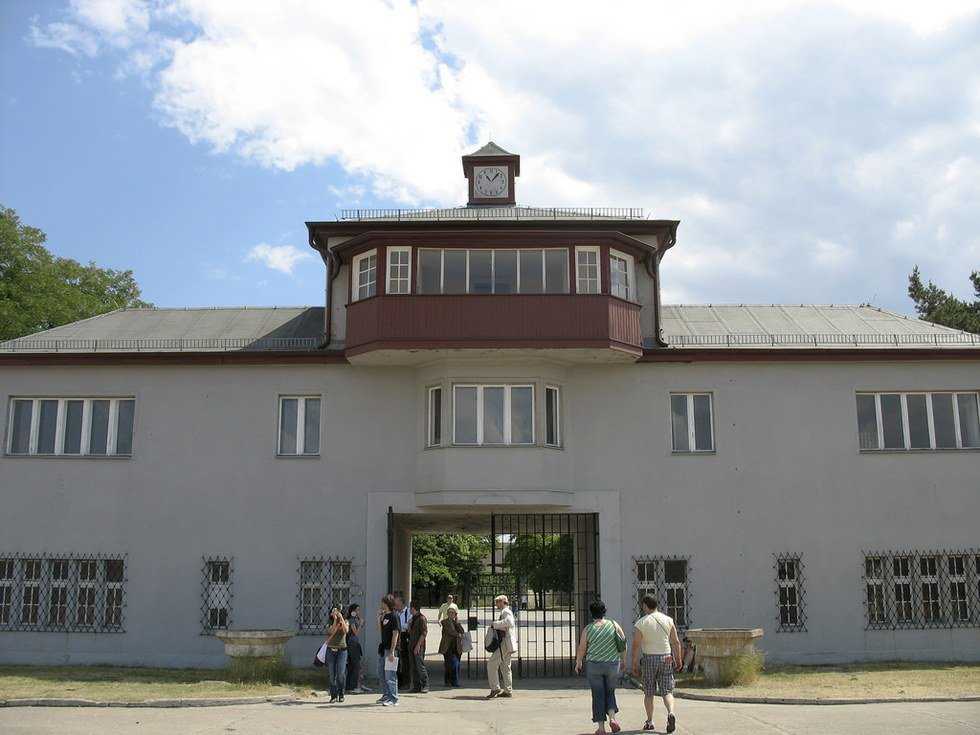
If there is one line that stood out to me during my weekend in Germany, it was that Germans know how to acknowledge and learn from their past. Traveling to the concentration camp called Sachsenhaussen located outside of Berlin was a 45-minute bullet train ride. The train arrived at the exact minute for departure and the same when arriving to the destination. The white seats were sparkling and the view outside the wide landscape window was nothing but green grassland. It was odd because towards the small town where the concentration camp was located and in between Berlin there seemed to be nothing there. When you arrive at the station it’s a mile and a half walk to the concentration camp. The area surrounding was generally abandoned with a few homes and a lot of long roads leading to the camp. The snow covered the ground and was falling quickly from the sky making the walk feel longer than it was. When I arrived at the camp there was a vast open area with gray barricades surrounding the entire premise and a gate in the very front. The gate read “Arbeit Macht Frei,” meaning work sets you free in German.
The camp, Sachsenhassen was a work camp during the holocaust that held people of Jewish heritage, low crime perpetrators, homosexuals, and religious rioters. After entering the gate the whole concentration camp can be seen from the very front. The entire center is empty, with buildings on the left hand side, right hand side and a memorial in the back center. The empty center of the camp was wide and vast with almost a perfect round circular area. I looked down at my feet and was wearing two layers of pants, a sweater, winter jacket, gloves and scarf standing in the middle of this empty place with the wind and snow gusting past my face. I couldn’t feel my toes and it was hard for me to pay attention as the tour guide spoke about the history of the camp. The weather was 10 degrees Fahrenheit and the entire tour I couldn’t stop thinking about how miserable I felt in the bone chilling cold. I turned around back towards the gate trying to avoid the snow flying into my eyes and noticed a green box raised up above the entrance gate. The small hut was where the leader of the camp did roll call every single day. The roll call consisted of calling off and checking the numbers of the people at Sachenhaussen. Walking to the first building I noticed a faint black dug-in line on the outline of the center. The line was a boundary for the prisoners, and if they crossed the line they were shot. We approached the first building quickly which was made of cement and had a dull brown lack luster color. The door creaked as we squeezed into the small doorway. Right in front of the doorway were small dark rooms with two brown pots in the center and a ladder-like figure on the floor. The next small chambers were empty dark rooms with a bar attached to the wall. The tiny hallway opened up to a slim walking center and two rows of wood bunk beds stacked close to the ceiling. On the opposite end were three worn thin wooden pieces held by thin light brown legs. The memorial inside of the building had small shoes and pieces left behind in barracks. Each piece belonging to a different prisoner in the camp.
We exited the barracks and began walking towards a building beside it. This buildings set up was different than the last because when you walked in you could see the end of the hallway. The walls were a dull white with individual cage like rooms. These were small, private rooms for specific inmates locked by gates. The end of the building came out to a wooden T shaped structure. The structure was used to torture the inmates. Across the center of the camp and after the memorial was a round shaped building that was partly broken. We had to walk behind to enter the dome. There were two sunken in the floor rooms with cracked cement and remains of long white pieces of cement. The sunken rooms were gas chambers used to kill the prisoners that were told the chambers were showers. To the left of the broken rooms were two square red brick boxes with tall dark slim chimneys. The structure of the oven was in tact, and used for cremation of the bodies. After leaving the dome and looking into the open middle of the camp I could picture people waking around, taking the same steps I was taking that gloomy winter day. I looked up and saw dark gray cloudy skies and ahead with wind and snow flying into my eyes.
Looking back at the building one last time I closed my eyes and continued walking through the snow. I tried to wiggle my fingers and toes constantly as we made the trek back to the train station, I couldn’t stop thinking about how I had probably gotten frost bite from being in the cold for six-plus hours. Although I felt miserable and cold, I had no words to say to my friends as we walked back. The silence of the walk made it feel longer than earlier in the day, and I could feel the winter chill on my skin. I noticed a lot more on my walk back to the station like the houses dull colors, the emptiness of the roads, lack of restaurants and stores in the area. I didn’t see any other people besides our tour group and never had I experienced such a silence in a town with just the sounds of our feet moving through the snow.