In recent years, the tragedy has become increasingly popular, particularly in television. And yet, we do not have an exact definition of what makes something entirely tragic. Indeed, the design of a tragedy has fluctuated throughout history. In ancient Greece, tragedies were stories where, though the characters were at fault at least to some extent, a great unknowable force is what threw them against one another, ending in tragic results. There is nothing wrong with Oedipus killing the man who assailed him on the road, or marrying the queen of Thebes. It is only because fate made these two figures be his parents that the tragic consequences occur. Shows like “The Wire” and “Game of Thrones” follow this model well, the former having a vast, inescapable "system" which shapes the identities and fates of almost every character it touches. While the latter focuses more on the chaotically violent nature of the universe, Schopenhauer’s will and Nietzsche’s will to power both come to mind, which compels characters into battle.
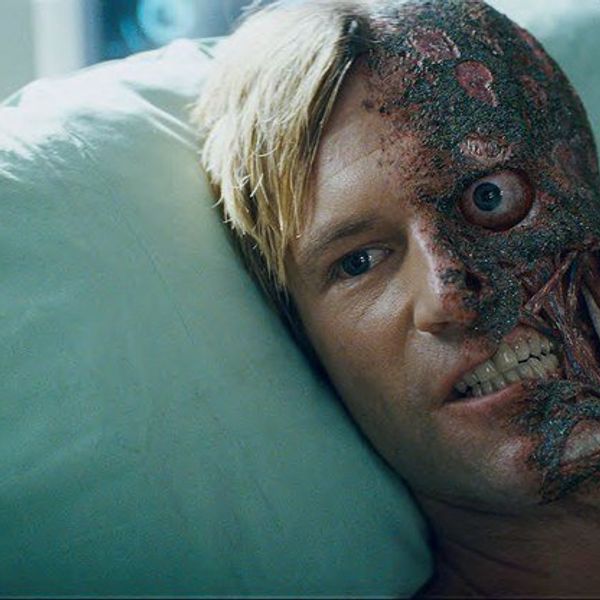
Another type of tragedy is the Shakespearean tragedy, in which the plot is tightly written around the flaws of one central character (whose foible leads all the other characters to a pre-selected doom) who generates all or most of the conflict in the plot, and perhaps helps shape the setting. While not entirely antithetical to the Greek drama enumerated above, it does share a vast difference in focus. Some examples of this in modern television would be "The Shield," in which Vic Mackey’s machiavellian tactics ad Shane’s loyalty and nobility cause most of the problems throughout the seven seasons, whilst making life difficult for the myriad, more sympathetic side characters. Even more close to the Shakespearean model is “Breaking Bad,” which even adheres to the five-act structure of most of Shakespeare’s plays (there are five seasons of "Breaking Bad.") Walter’s pride, and contempt for those who would have him bury it, instigate the events of the story and inform his reactions throughout. The other figures, Hank, Jesse, Skyler, Gus, Mike, etc. all serve to propel the story forward by being propelled by Walter’s decisions. There is almost no extra or unnecessary material, everything being closely tied to the story. The main difference is that, where BB features the almost Christ-like redemption of its protagonist (he is wounded in his side, dies with his arms splayed out like one crucified, redeems those who believe in him and kills those that doubt his utility) “The Shield” features a bleak hellscape, in which no one is redeemed or left to learn anything. If "Breaking Bad" is "Macbeth" or "Romeo and Juliet," where the survivors leave alleviated and made whole, "The Shield" is "Hamlet" or "King Lear." Everyone left breathing is broken.
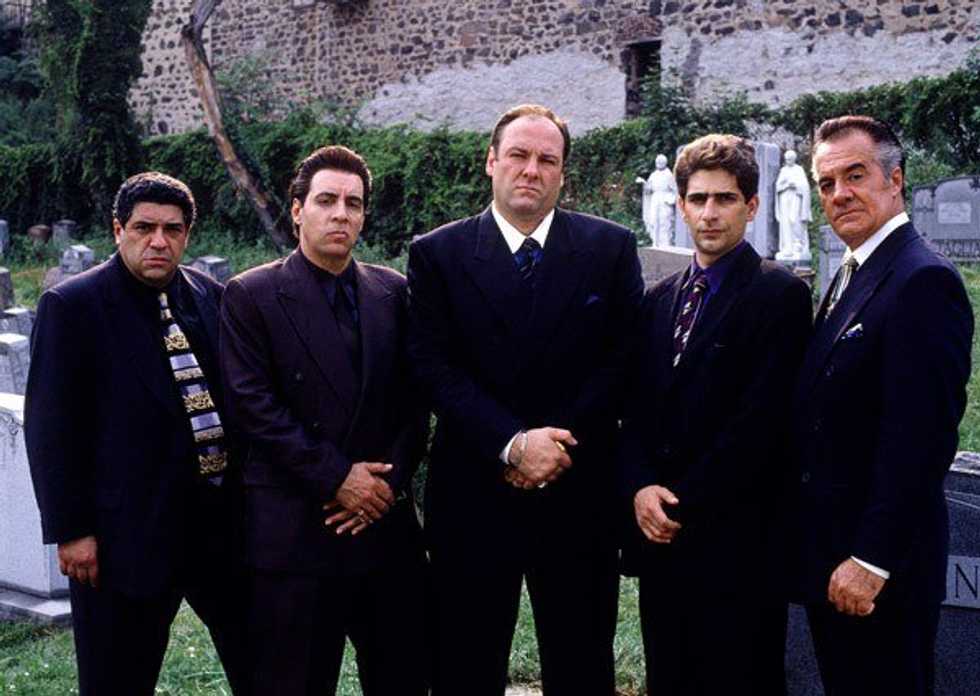
But perhaps the most interesting tragic plot is in David Chase’s “The Sopranos.” While, in a reductionist sense, “The Wire’s” setting and plot made its characters, generally speaking, in "Breaking Bad," however, the characters created the setting and the plot. "The Sopranos," rather than doing one or the other or both, does neither. While Seasons 5 (the strongest season in the opinion of this writer) and 6 (particularly 6b) were more traditional tragic narratives, the show’s other seasons featured a more understated, compartmentalized type of pain. The characters and the plot seemed, more often than not, to be in separate worlds. Chase seems to delight in unresolved lot threads, cases of old friends returning and then leaving, their goals unidentified, or of cancer striking a character then disappearing, or a plot to assassinate Tony going unpunished or never being executed. The ending most infamously characterizes this, but things such as Richie Aprile’s death, Janice’s return from exile, Bobby killing the Frenchman and facing no penalties, or even Furio’s love for Carmela and the ensuing marital disputes arise and are resolved, never to be mentioned again. Only now, the characters are not as they were before. They are shaken, stressed, violent, or melancholy, even when the scenarios that brought forth this reaction are no more.
One could attempt to draw correlations between Roman drama and "The Sopranos," but these would be most likely ill-founded. Much of Roman drama, or what Roman tragedy we have recovered, focused on war, duty and emotion, more specifically how the passions of those involved bring about their ruin, not necessarily their faults or flaws. A good comparison might be made between Seneca’s tragedy and the misanthropic glee of Showtime’s “Dexter” in which the eponymous protagonist must remain aloof and methodical to take out his opponents, and often suffers greatly when emotion clouds his judgment. Another example might be Kurt Sutter’s “Sons of Anarchy” in which the business dealings of a group of gun runners are disrupted by their constant feuding and the fact they take all assaults on them personally.
But back to the Sopranos, there is no easy way to identify what it is, no precedent for its nature. Is it an existential tragedy? Not really, as Joss Whedon’s “Angel” or FX’s “Fargo” more aptly fit these claims. A morality play? But again, only loosely; the most sympathetic characters either die or are degraded to the point of spiritual death (see the episode called “University,” s3e6). Many of the more amoral characters come out ahead—although as many do not. It is not a triumphant epic, either, like “Buffy the Vampire Slayer” which follows "The Aeneid"-like journey through adolescence and the pains this entails, or the more literal epic “Battlestar Galactica.” So is "The Sopranos" a tragedy without peer or parent? Did it grow seemingly from nothing and form its own literary genre? It certainly inspired many televisual tragedies to come.
But, tragedy certainly does exist on the show and in the show’s universe, and one can see the strongest parallel between it and the uncanny. First articulated by Freud, it is an idea espoused throughout weird fiction and folktales. Things occur which by their very nature are contradictory, or should not be. While these things have no lasting impact, in these narratives, the parties involved come away different, inherently affected.
A few examples, if you will! H.P. Lovecraft’s short story, “The Whisperer in the Darkness,” involves a once intellectually-curious and profoundly skeptical protagonist who vicariously becomes acquainted with a race of horrific aliens through a correspondent in rural Vermont. By the tale’s end, the protagonist has met these awful creatures and seen them vivisect his still-living form, leaving the head and hands grotesquely alive. Yet, these beings do not pursue him after the encounter; he, himself, is alive long enough to write to us about the horror he experienced. Though his situation is the same as when the story began—he is a popular academic of some means, not being pursued by aliens—the man, himself, will never be the same.
This is exactly how "The Sopranos" functions. Take, for example, the season finale of Season 2, called “Funhouse.” Tony has a horrible gastrointestinal disease which induces in him horrifically detailed lucid dreams. One of these dreams involves a dead fish, who is somehow an incarnation of his friend, P—sy Bonpensiero, who tells him nonsensical riddles about his fishness and treachery. When Tony awakes, his symptoms have abated and his dream has ended. Only now, he is imbued with the knowledge his friend has been betraying him, and that P—sy must be killed. Another example is in Season 3, Episode 4 called, “Employee of the Month,” in which Dr. Melfi is brutally sexually assaulted by an unknown assailant who is let off on a technicality. She contemplates telling her client, Tony Soprano, who she knows will sue his mafia connections to have the man killed. However, by the end of the episode she reaches the conclusion that it is better not to do this, and that she will instead seek therapy in order to recover. The rapist is never brought to justice (that we know of, anyway), nor is he ever mentioned again. However, his impact has facilitated a huge change in Melfi. For one, she has risen as the moral center of the show by rejecting the use of crime to make her life easier and safer, whereas many of the other characters (such as Christopher and Adrianna, Carmella, and pretty much anyone else you’d care to name) only degrade themselves the longer they stay in contact with the mafia. Secondly, she is profoundly disturbed by the attack made against her, and no longer as mentally or emotionally stable as she was before. The terrifying scenarios have vanished; the impact remains.
Because "The Sopranos" is so deeply rooted in psychology, it makes sense the uncanny would play a role in its narrative structure. What is truly worthy of our respect, however, is the way in which a structure traditionally reserved for horror was reshaped to cleave perfectly to the contours of a sinuous crime drama, and a tragic one at that. In the hands of an experienced artist, tragedy can be shown to us - to paraphrase T.S. Eliot - in a handful of dust.