1. "Catching A Crab"
"Catching A Crab" actually has nothing to do with crabs. It’s when you don’t get your oar out of the water in time with the rest of your boat, so that your oar gets caught in the water causing it to go parallel with the boat and over your head and if it’s bad enough you could get ejected.
2. "Walking Away"
This doesn’t actually imply that you’re walking away from someone or something, it just means that you’re rowing away from your competition or going faster than them.
3. "Hold Water"
“Hold Water” is a term used by coxswains to tell the rest of the boat to stop what they’re doing and bury the blades in the water to bring the boat to a sudden halt. This could be to prevent impact or to just stop the boat from moving forward.
4. "Way Enough"/"Let It Run"
These two terms are other ways to slow the boat down. They’re similar to “Holding Water” but when a coxswain yells “Way Enough”/”Let It Run” the rowers know to stop rowing and keep the oars flat on the water. This doesn’t bring the boat to a sudden halt but it does slow it down.
5. "Catch"/"Finish"
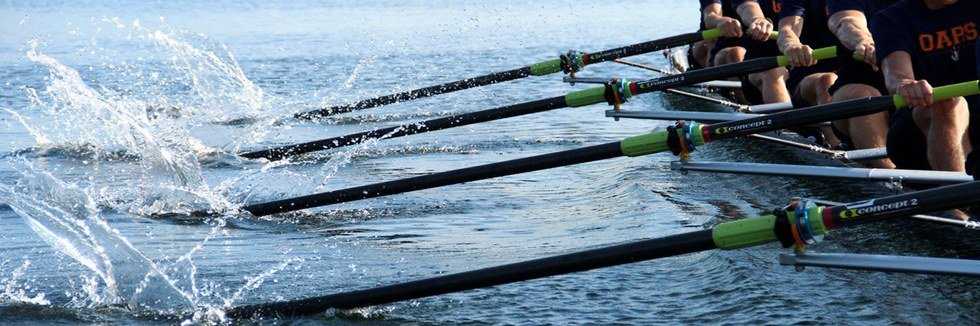
The term “catch” doesn’t imply catching anything but the water. This is when a rower has their blade at the point of impact before they pull through to propel the boat forward. The term “finish” is self-explanatory - it’s the point where the rower has finished their stroke.
6. "Shell"
Shell is just another term for the boat.
7. "Erg" (Ergometer)
This is the indoor rowing machine that is also equatable with hell.
8. "Starboard"/"Port"
These are the two different “sides” to the boat or shell. Many rowers quickly find a side they’re better on or prefer. When a rower is sitting in the boat, the starboard side would be on the “left” and the port side would be on the “right”.
9. "Tanks"
A tank is an indoor rowing facility that mimics what it’s like out on the water. A rower can sit down in the seats and there is water on both sides as if they’re outside on the water.
10. "Roll Up"
The roll up is the term described when a rower changes their blade from flat, almost parallel with the water to straight up before they bury the blade to move the boat.