


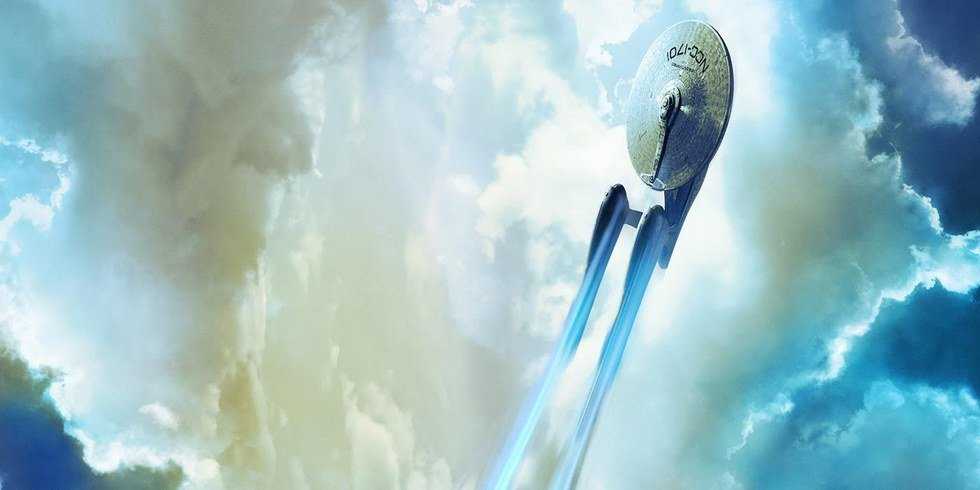
When J.J. Abrams wiped the narrative slate of "Star Trek" clean with his ingenious reboot back in 2009, longtime Trekkies knew, the franchise would never be the same. For better or worse, future voyages of the starship Enterprise would play out with more slick action-centric gusto than heavy sci-fi ethical dialogues. With this course the franchise had set, there was an impending fear that "Star Trek" will be devoured into the corporate machine, completely losing the heart that captivated generations of fans for 50 years. Many would argue that such a fear came to reality with the release of "Star Trek Into Darkness," a film that perhaps lived up a little too well to its title, portraying Gene Roddenberry’s world in a bleaker light with a story that felt glaringly rehashed. "Darkness" is not the first "Star Trek" film to be criticized for such faults, but it does leave a hole to fill for its follow-up. Enter "Star Trek Beyond" a film that strives to steer the Enterprise into a direction to get more in touch with its classic roots.
"Beyond" returns to the beefcake versions of our Enterprise crew during their infamous five year voyage through the cosmos, which Captain Kirk himself (Chris Pine) fittingly describes as “episodic.” While answering a distress call from an uncharted planet, the crew is ambushed by a mysterious enemy, leaving them stranded on a hostile world. The setup is one straight out of a classic episode from the 1960s series, and the film seems to structure itself in the reservation of that type of storytelling. Although this may seem like it is restricting the plot, it instead leads to a narrative that feels less weighty in emotion compared to its two previous installments and more in line with the tone of the original series. Director Justin Lin ("Fast and Furious") seems to comprehend the very essence of "Star Trek" even better than Abrams by placing the characterization of the crew front and center, allowing them to play off of each other while following a straight forward plot. Most notable of the characters, Kirk feels more levelheaded this time around, trading scuffles in bars for attempts at diplomatic relations, showing a satisfying growth in his character. All of this can be viewed as the franchise finally taking the steps to bridge the gaps between the new and old "Star Trek."
Lin is not the only one to credit here, Simon Pegg pulls double duty by reprising the role of “Scotty” as well as co-writing the script with Doug Jung. The “Shaun of the Dead” star brings his funny man touch to the script and he gets a lot of comedic mileage out of the interplay between the cast. Most notably, Zachary Quinto as Spock and Karl Urban as Leonard "Bones" McCoy who truly is the spiritual reincarnation of DeForest Kelly. However it does feel like some cast members are underutilized, especially the late Antonin Yelchin as Chekov and even newcomer Sophia Boutella who plays a fun character that never quite leaves an impact outside of her appearance. Regardless, it does help to streamline the narrative more to provide focus on Kirk and Spock, who each have compelling story arcs that unravel genuinely. Jung and Pegg also cleverly sneak in Easter eggs and references to the history of "Star Trek" without making them feel as if they’re drawing away from the story as "Into Darkness" did. With all of this high octane action, humorous character moments, and clever referencing it’s hard not to see the influence of the recent "Guardians of the Galaxy," and that’s where the film might turn some people off.
Needless to say, for longtime Trekkies who are not too fond of the action heavy approach the new films have taken, despite the faithfulness to the brand here, "Beyond" still probably won’t sway you. That being said, for those who enjoyed the darker and more serious approach of Abrams' films this may disappoint you as well for its lighter touch. Oddly enough, there is a moment at the end of the film during the climax that will potentially tick off both camps and feels directly inspired by the success of "Guardians." Admittedly, it's a fun scene that earns its right to be there for its specific context, but some have been calling it the lowest moment in the franchise’s history. Although, they are probably forgetting the entirety of "Star Trek V" when saying that. Perhaps the biggest fault against the film is how it underutilizes the king of gravitas himself, Idris Elba as the villain Krall. His motivations seem to provoke a context of ethics that feels credible to "Star Trek" as well as our own modern political world, but there is not enough time focused on him for the audience to be invested. It also doesn’t help that much of his performance is hidden behind grunts and thick prosthetics. Regardless, he does serve his purpose effectively enough to the plot, even if it is just bare bones.
In the end, "Star Trek Beyond" for the most part accomplishes its mission in finding a happy medium between the present and past of the franchise's history. It’s crafted with a lot of love and doesn’t seem to make a big deal of itself, compared to the previous films. Its main concern is to show the audience a good time, and it most certainly delivers in its attempt. Although it is not a perfect film, it certainly feels like a step in the right direction away from "Into Darkness" and makes the viewer just as excited for the future when the first Abrams film released. More of Idris Elba certainly wouldn’t have hurt, but it’s not the first of him we’ve seen this year and it certainly won’t be the last. Also, the film has a tasteful tribute to Leonard Nimoy incorporated into the plot and a post-credit scene that gives an emotional sendoff to both him and Anton Yelchin. If it can work its magic on you, "Beyond" is a film that will make you fall in love or back in love with "Star Trek" and fills you with hope that the franchise will “live long and prosper” beyond its 50 years.
















