Jennifer Hale, John DiMaggio, Troy Baker, Nolan North, Steve Blum, Tara Strong, Scott Menville, Hynden Walch. How many of those people have you heard of? If you haven't heard of them I guarantee you've heard their voices if you've watched a cartoon or played a video game anytime in the last twenty plus years. Go ahead, click any or all of their names and look at the work they've done. I'll wait.
Not really though, it could take you hours to go through all of their IMDB pages and I don't have that kind of time. Those extremely talented people up there represent just a tiny, tiny portion of the voice acting industry, and yet they each have hundreds of characters to their names. In fact, Steve Blum holds the world record for most credited appearances as a voice actor, with a staggering 261 credits as of June 2013, and he certainly didn't stop after that.
If you recognized just one of the names up there I'm willing to bet it was John DiMaggio, the voice of Bender on Futurama. DiMaggio also produced and starred in a documentary about the world of voice acting called I Know That Voice, which is available on Netflix and I highly recommend that you watch it if you can. If you don't know him as Bender, anyone who has played the Xbox 360 game series Gears of War should recognize DiMaggio as the voice of Marcus Fenix, the games' protagonist.
But there is a chance you might not hear any of those voices for a while if the SAG-AFTRA strike is put into place. That acronym up there stands for the Screen Actors Guild and American Federation of Television and Radio Artists, and it is the union that represents over 160,000 voice over artists, radio personalities, and broadcast journalists. Over the last several months, SAG-AFTRA has been attempting to negotiate with the video game industry (most notably Disney, Electronic Arts, Activision, and Warner Brothers) for better conditions for the voice talent. It has not been going well to say the least. The last time contracts were negotiated between the two groups was in the mid 90', and the video game industry has changed significantly since then.
One of the key proposals in the negotiations seeks bonuses for voice actors on games that sell over 2 million units with subsequent payments when sales reach 4 million, 6 million and 8 million.
“There is ample precedent for secondary payments across the media landscape,” SAG-AFTRA said. “You get secondary payments when you perform in feature films, animation, episodic TV, commercials and the like. But that wasn’t always the case. Performers who came before you had the courage to fight for the residual payments you enjoy today, and, because they stood together, they won them.”
It's also worth mentioning that numbers like that are not seen by most video game releases. The video game industry has blockbuster titles just like the movie industry and for ever blockbuster game there are dozens, maybe hundreds of smaller releases of indie games made by studios with just a handful of employees. So bonus payouts would not be so common that the major studios wouldn't be able to afford paying them.
But the money is not the primary concern of SAG-AFTRA or any of the voice actors. What they're most concerned about are the working conditions. Voice recording sessions can last anywhere from six to eight hours. For standard dialogue, this isn't usually too stressful, but if you've played a video game with any amount of action then you've probably noticed that a lot of painful screaming and battle grunting happens. So for six to eight hours an actor might have to yell things like "Go! Go! Go!," "I need ammo!" "I've been shot!" or just "aaaaaahhhhughghgghhhhh gurgle gurgle gurgle!" multiple times with varying inflections and volume levels.
As you can probably imagine, these vocally stressful recording sessions can take a serious toll on the actors. When your entire job depends on you being able to use your voice, it's important that you have a voice to use. This is why one of the other major proposals regarding the negotiations and potential strike is that those particularly stressful recording sessions be limited to two or three hours at most so that the actors have time to recover between sessions.
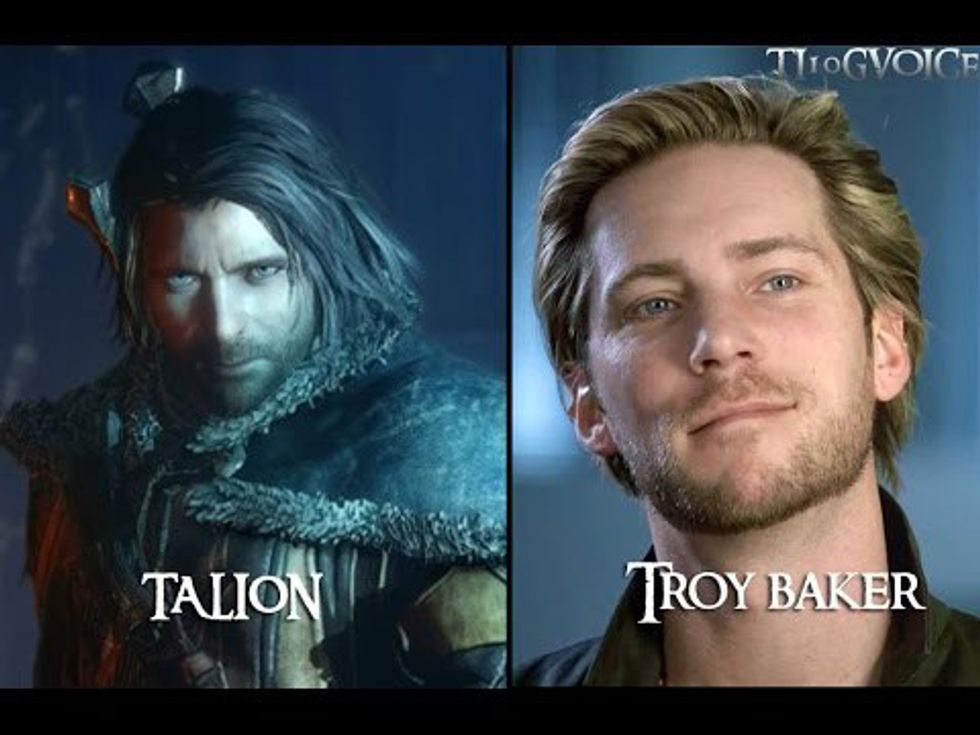
SAG-AFTRA isn't just trying to protect their actors voices either; in some cases their entire bodies are on the line. It is becoming more and more common for larger studios to incorporate motion capture in their games to get an even more realistic performance for their characters. Troy Baker was recently the star of a game called "Shadows of Mordor." He not only voiced the main character, Talion, but he also stepped in the motion capture suit and even borrowed out his face.
While film studios are required to get stunt coordinators for motion capture sessions, video game studios are not. Remember that the last voice acting contracts were drafted in the 90s when motion capture technology wasn't a thing. Voice actors are being placed in a vocally and physically strenuous situation without any professionals showing them the safest way to perform their stunts. It's hard to resist saying that video game studios don't care about their performers. Which is why I'm going to say that video game studios don't care about their performers.
Of course the studios haven't been entirely silent during the negotiations. Without discussion of any proposals made by the union, the studios have returned with the following stipulations they want to see:
- A $2,500 fine for tardiness or inattentiveness
- Fining an agent $50,000-$100,000 who chooses not to submit an actor for certain roles
- Motion and Performance Capture concerns don’t apply to voice actors
There's no way to classify that other than a total dick move. Could you imagine if your employer could fine you for being late? Or being inattentive? How do you even define inattentive? If an actor takes thirty seconds to reply to an important text message, are they immediately fined? What's to stop a studio from completely abusing that? And apparently they want any voice actor in the business to be available all the time for any job they have, otherwise an even crazier fine is put out.
As of now SAG-AFTRA is waiting on the affected members, those who have worked in interactive media, to vote on whether or not to strike. They require a 75% majority for the vote to pass, but if social media is any indication it is very likely that it will. Just search #PerformanceMatters. The deadline for the vote is Oct. 5, so by the time this article is published the votes might already be tallied and the strike in place. Hopefully the industry realizes that gamers do in fact care about the quality of voice talent in our games, otherwise we might be hearing some very sub-par performances in the near future.