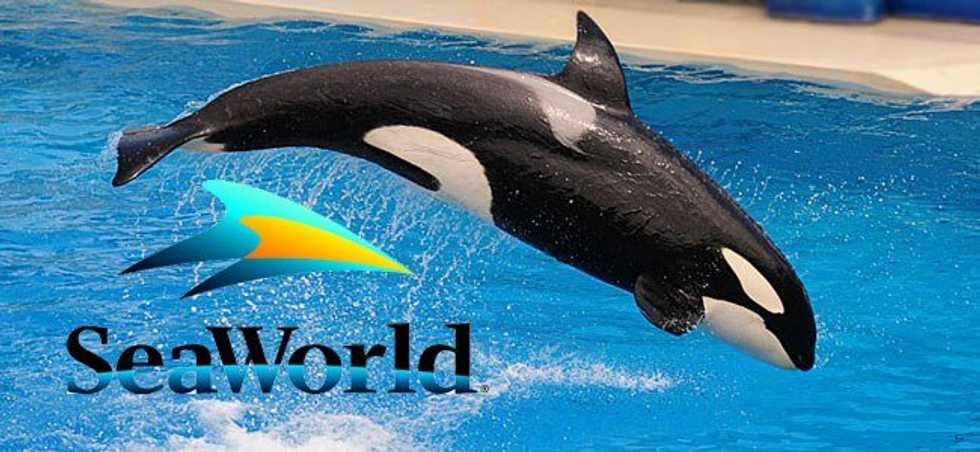
Everyone knows the commercials with the whales swimming through the amusement park and doing tricks in the "big" tanks and the much fought over splash zone. It could only be Sea World.
When I was little I was obsessed with Orca whales and still am. I begged my parents relentlessly until they agreed to a trip down to this so called magical world full of happiness. I personally loved the trip, however I was too naive and innocent to know that Sea World wasn't a place of happiness for everyone.
Of course everyone is familiar with the documentary Blackfish, casting a dark shadow on Sea World, their past, and the infamous whale Tilikum. I consider myself fairly well informed on whale facts, #whalenerd, and I can honestly say however extremely negative, there was a lot of truth to the film. While I can't make comments on what the staff from Sea World says for or against the company, the facts that they present to the mass crowds of people are very extremist and barely correct. A few of my personal favorites; “Survival in the wild is comparable to survival in captivity.”This is so false because in fact, whales in captivity live into their 30's-50's and even this includes some extreme cases. Meanwhile in the wild, whales can live to be 50-100 years old. Recently the oldest whale on record was just spotted off the coast of Canada, congrats to "Granny" at ~103 after not being seen for a few years many thought she was dead, but indeed she was not! This was great news for all the #savethewhales people, not so great for Sea World and their claimed age range.
Another; the collapsed dorsal fin is very common in whales in the wild. Seriously?! There were a few studies done and some percentage of wild Orcas were said to have it, but it is not common and generally its associated with being ill and or stressed. The dorsal fin of the Orca is meant to stick up straight. It is kept up by all the swimming they do everyday. The flow of the water currents is what keeps it up. The small tanks that the whales are kept in are the equivalent of a bath tub of what they could possibly swim in. Due to the incredibly small size of the tank, they are unable to swim an appropriate amount and their fin collapses. Many whales, when not performing, are either swimming in constant circles or just floating.This is a clear sign of distress.
Recently, Sea World has been in the news twice. The first is the announcement that the whale Tilikum is sick with a bacterial infection and is not expected to live much longer. Tilikum is known for the death of the Sea World trainer Dawn Brancheau. Immediately after her death there was much debate as to what to do with the whale. Were they to isolate him even more? Give him his own private tank and label him as dangerous? Or even put him down?
The problem I have with all of this is that whales aren't like a pets. They're not domesticated. They are wild animals who have been conditioned to use balls and hoops for our own personal entertainment. How are they supposed to know what is a toy and what is not a toy? This confusion is only increased when trainers continuously get in the water with them and play around. It's unrealistic. They came to the conclusion of just labeling him as dangerous and putting him away. Sea World knows that they can't get rid of him because his DNA makes up almost all of the Sea World's Orca whale family. Instead of being treated as a whale, he is now mainly used as a sperm donor.
There is some happy news to come out of all this being that after much debating between Sea World, PETA, and the public, Sea World has announced many new changes to improve their whale program! Sea World will no longer be collecting whales from the wild! While this is unfortunate for the whales currently in captivity, it means that the other whales who are wild and free can stay as such. Sea World also announced that they will cease all Orca whale breeding! There is currently one whale that is pregnant but that little calf will be the last of its kind. They also agreed to put an end to their "circus" performances and enhance the whales habits to portray a more naturalistic setting for the whales. They hope to give the visitors more of an inside look of what life would look like as if they were in the wild. (Good intentions, but ironic, no?) Many animal rights activists wanted Sea World to release the current whales back into the wild, but Sea World refused due to previous releases that lead to imminent death. While I'm all for whale freedom, I side with Sea World on this matter. Releasing whales back into the wild or after never being in the wild wouldn't be the best decision. The whales wouldn't be able to survive, with all the pollution and predators, not to mention learning to hunt and traveling such immense distances, the whales would surely die. Additionally Sea World has tried to release whales back into the wild before and failed. One of their greater known failed releases is everyone's favorite whale Willy aka Free Willy from the popular movie franchise. Sea World fears the same outcome for the whales they currently have in captivity.
Sea World will continue to stay open for the other maritime animals and as a rehabilitation center for animals as well. This is a victory for all the Orca whales.