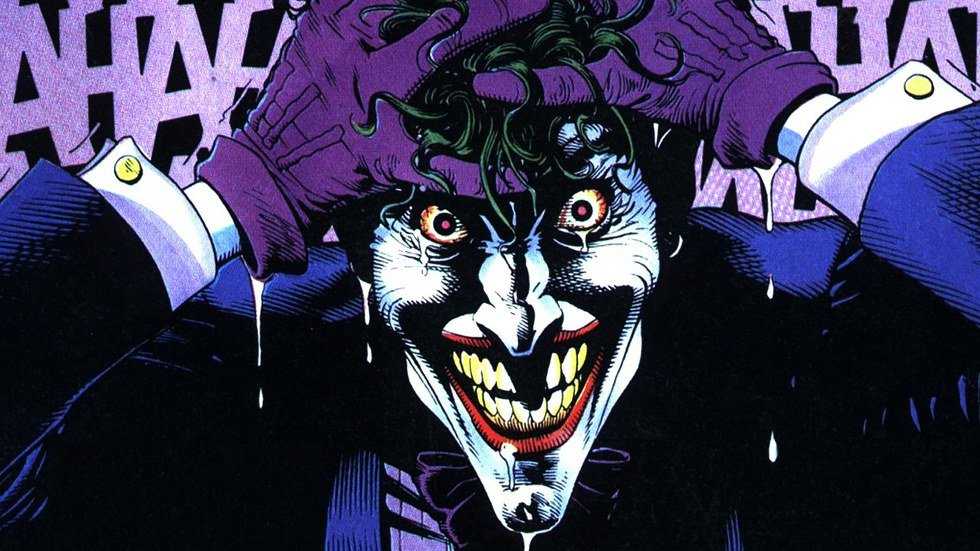
DC's latest animated feature is "Batman: The Killing Joke." The film adapts Alan Moore and Brian Bolland's 1988 graphic novel, which is one of the most influential and enduring stories in all of comics, and so many fans likely can't help but wonder: is it any good?
**Spoilers for both the film and graphic novel follow**
Unfortunately, the answer to that question isn't so simple. The graphic novel on which the film is based has always been a source of controversy and the film adaptation is perhaps even more so. Like the source material, the animated film brings a mixture of thought-provoking dialogue and equally thought-provoking examples of misogynistic ideals that make for something that is thoroughly disturbing, but brings into play questions about how far a disturbing story can go for shock value before it becomes thematically problematic. With that in mind, this review primarily focuses on the value of the film's story and its merits as an adaptation.
So let's push Barbara Gordon's story aside for a moment and focus on what's at the core of that original story: Batman and the Joker.

This is what we came to see
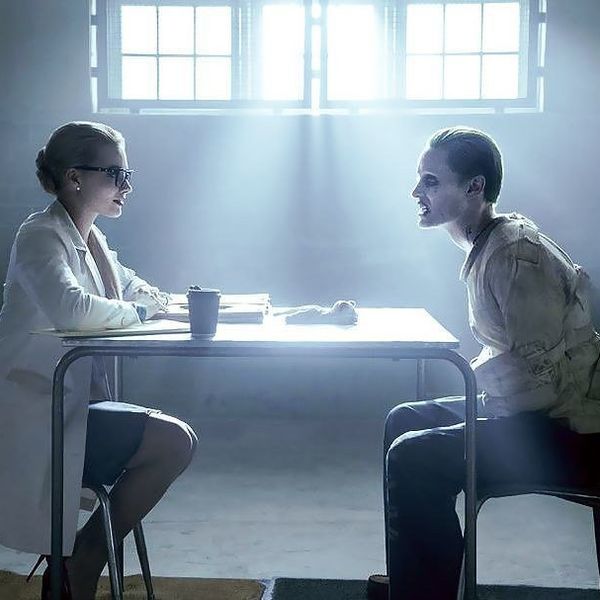
"The Killing Joke" has often been cited as the definitive Joker story. It has served as inspiration for both Jack Nicholson and Heath Ledger's beloved cinematic portrayals of the character. The Joker is the driving force behind and the true core of the original story. Thankfully, the film adaptation has the finest Joker around: Mark Hamill. Hamill famously voiced the Joker in "Batman: The Animated Series" as well as the "Arkham" series video games and is easily one of the most beloved interpretations of the character. Hamill doesn't disappoint here as he brings his trademark blend of sadism, intellectualism, and dark humor to the role. He brings Moore's monologues to life with the exact sort of charming cruelty that has made fans long to hear him voice this story for years. He even does a commendable job in voicing a pre-chemical bath Joker in flashbacks. It is a voice that is at once recognizable as Hamill's Joker and yet is subdued and soft-spoken enough to convey a man who has yet to descend into total madness.
Opposite Hamill is renowned Batman voice actor Kevin Conroy. Conroy, like Hamill, has voiced the character in both the animated series and the "Arkham" games as well as various other animated features. "The Killing Joke" doesn't provide Batman with the sort of cleverly-written and thought-provoking dialogue it does the Joker, but Conroy still shines in the role. His iconic Bat-voice is able to convey sympathy when the situation calls for it and, far more often convey the character's signature brand of rage when need be.
Towards the end of the film, Conroy and Hamill are able to take the wheel and simply hearing these talented men work with such terrific material is simply a treat. When the animated film is actually focused on adapting the graphic novel, it does a phenomenal job at capturing the tone of the iconic work thanks primarily to the voice talent behind it. Unfortunately, this picture isn't only concerned with adapting Moore's work; it attempts to expand upon it through an extended prologue.

This is why we have peepholes
The graphic novel has long been a source of controversy due to its treatment of the character of Barbara Gordon, a.k.a. Batgirl. The Joker's central idea in the story is that "one bad day" is all it takes to drive a person to madness. To prove his point, he attempts to drive Commissioner Gordon, Gotham's white knight, over the edge in a plan that involves not only crippling his daughter, but stripping her naked and photographing her helpless, bloody body. For this reason, "The Killing Joke" has long been cited as a classic example of "fridging." This phrase is applied to a situation in which a character, most often a female, is killed off, raped, assaulted, or otherwise abused as little more than plot device. There have been countless arguments over the graphic novel's treatment of the character, but here we'll simply examine how the film deals with this issue. And the film certainly does try to deal with this issue.
Roughly the first half hour of the animated film is what the creators have called a prologue. It is an entirely new addition to the original story, one that centers on Barbara Gordon, introduces an original antagonist, and, in a baffling turn, features not a bit of the Joker.
Having read the original story and knowing the hype surrounding Hamill's return as the Joker, I was dumbfounded to discover that in this animated adaptation of "the definitive Joker story," the Joker doesn't show up until nearly halfway through. For that reason alone, the prologue was a rather jarring addition to the story. The result comes across as a "Batman the Animated Series" episode about Batgirl that suddenly and rapidly shifts into an introspective look at the relationship between Batman and the Joker.
It isn't difficult to see why the filmmakers made the decision to include this prologue, but the execution is far from smooth and certainly not without its own misfires. The prologue attempts to give Barbara Gordon more agency in the story and to show her strength as a character. In some ways it succeeds, but in others it falls flat on its face. And by "others," I mean in its mind-boggling addition of a Batman-Batgirl romantic subplot.

Gross...
Perhaps "romantic subplot" is the wrong phrase here because there isn't a whole lot of romance to it. Batgirl at first simply seems to have some feelings for Batman, a not uncommon idea in various adaptations of the Batman mythos. For his part Batman seems to fill the over-protective parental figure role he has traditionally played towards all of his sidekicks since the death of Jason Todd. Then, in a scene I can only describe as inexplicable, Batman and Batgirl have sex atop a building. This scene raises many questions, the main one on my mind being: does this do more damage to Batman or Batgirl's characterization?
The attempt to give Barbara Gordon more agency stumbles greatly as she is shoehorned into a thoroughly unnecessary affair. Batman's cold distance suddenly seems far more reprehensible as he engages in sexual activity with someone not only much younger than himself and the daughter of a close friend, but someone who looks up to him as a mentor figure and then cuts off all communication. The story necessitates that Batman focus his attention on the Joker and so there is next to no depth or explanation given to his (seemingly) complex feelings towards Barbara.
The fact that Barbara is clearly the one to initiate the act helps things a little fr both characters, but only a little. What makes this addition so jarring is the fact that not only is it baseless and damaging to the characters, but that it ultimately serves no narrative purpose. Batman was already trying to distance Barbara from the case and the entire subplot is dropped once the actual "Killing Joke" storyline gets going. It feels like a story idea for something else entirely that was tacked onto the front-end of "The Killing Joke" in a misguided attempt to give Barbara more to do without actually considering the story and thematic value of what it is that she is doing.
"Romantic" nonsense aside, the prologue still has other issues. It devotes a substantial amount of screentime to a totally original character, Parry "Paris Franz" Francisco. While the character's name may be right at home with typical Batman villain naming conventions, he is not right at home in an adaptation of "The Killing Joke." Franz's heavy-handed, arrogant misogyny is just a bit too on-the-nose a way at making Barbara Gordon out to be a strong female character. His character certainly serves his purpose in that he enrages audience with his constant "flirting" that gives off more a rape-vibe than anything else, but it all feels frivolous. He is a caricature that exists only to give Barbara a satisfying victory in an attempt to soften the blow of her inevitable fall. He feels like a one-off from a TV show taking time away from the real star of the show, the Joker.

How can you not hate this guy?
Arguments about Barbara's role in "The Killing Joke" often take into consideration the fallout from the story's events. Namely, Barbara's adopting of the identity Oracle and her becoming a different sort of hero from her wheelchair. Oracle has been long applauded as not only a rare and fantastic example of a handicapped superhero, but also as a strong example of a female character who remains powerful in spite of the traumatic physical and sexual abuse she suffered at the hands of the Joker. While the graphic novel doesn't incorporate these things, "Batman: The Killing Joke" features a mid-credits scene that showcases Barbara's newfound role as Oracle. This scene is satisfying for comic book fans and does far more to empower Barbara's character than anything in the prologue. Had the film simply been a straight adaptation of the graphic novel with this scene included at the end and it wouldn't be nearly as controversial. Instead it opts for an out-of-place and shallow prologue tacked onto the beginning that creates confusing feelings that linger throughout.
Other notable notes:
- Batman's cache of Joker images is kind of weird in retrospect, but is totally forgiven thanks to the generous easter eggs to be found within.
- I had mixed feelings about the film's adaptation of the Joker's song. On one hand, it embodies the character's sillier side that is otherwise played down a bit, but on the other, it feels a bit too bombastic for the tone of the film. They turned the Broadway show-tunes feel up to 11 when a 7 or 8 would have sufficed.
- The ending is done justice and the ambiguous nature of it remains, ensuring the debates will go on for years to come.
- With so much hype surrounding Hamill and Conroy, not enough credit is given to Tara Strong's Barbara Gordon/Batgirl. Her talents here are appreciated immensely, even if they are largely wasted on a messy prologue
- The animation has been a source of contention, but I was satisfied with it. It feels true not only to the source style, but also to the classic animated series style.
All in all, "Batman: The Killing Joke" comes out to be a mixed bag. It's one part the film we always wanted to see, and one part the film we never wanted to see. Your enjoyment of this film ultimately will come down to whether or not you can sit through a shoddy and very-misguided Batgirl/Batman love affair long enough to experience Mark Hamill and Kevin Conroy doing what they do best with some oft he best material they've ever had. I would recommend this film to everyone, just as long as they show up 20 minutes late. Otherwise, just close your eyes through the rooftop scene and wait for the Joker to put a smile on your face.
The film releases on Blu-ray and DVD on August 2nd.






 man running in forestPhoto by