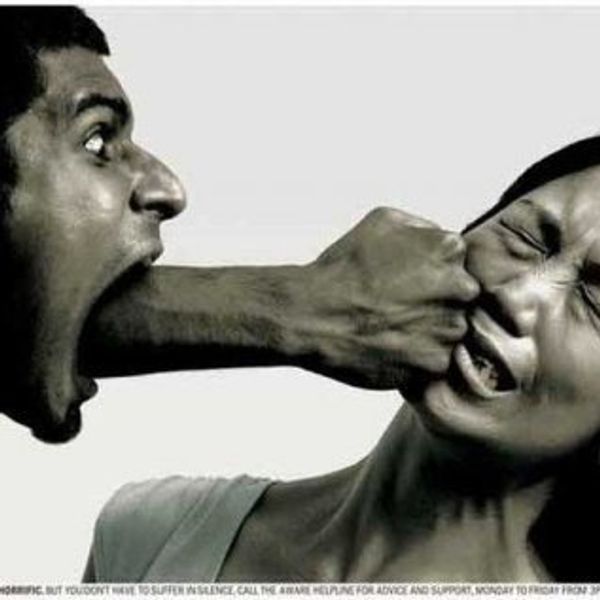

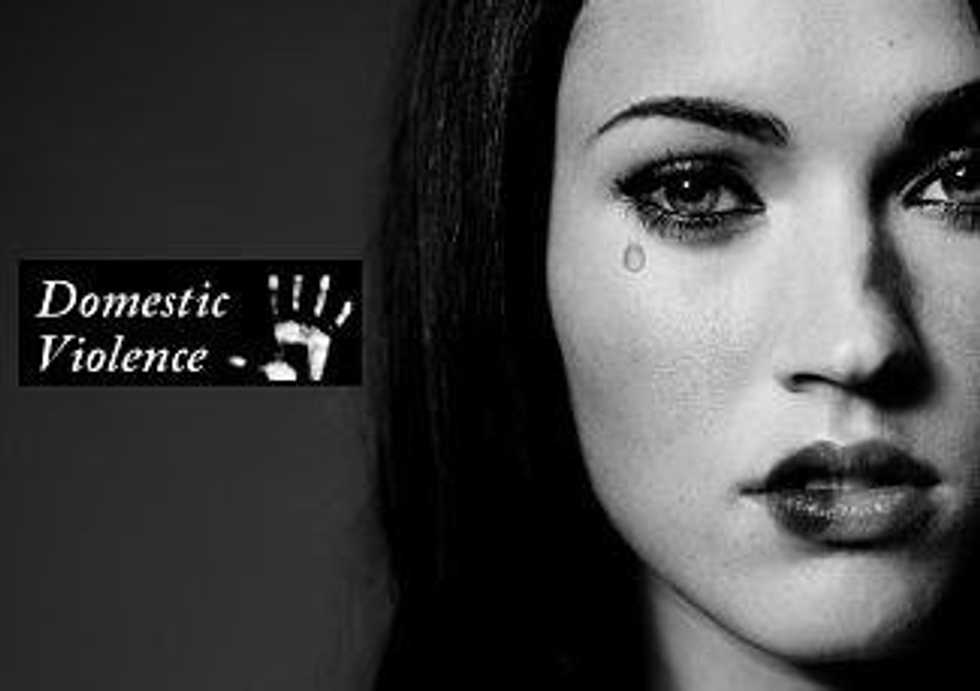
Among the fun fall festivities October represents, it is also the month of Domestic Violence Awareness. I’ll preface this article by saying that I stand as an ally, not a victim. A foreign concept to many, the idea of love leading to blind abuse is something that is far too common. What is hardly mentioned, however, is domestic violence among teens.
Typically stemming out of abusive households, the victim begins to misinterpret the concept of love for violence in the way that they may have been brought up. This conclusion is further examined by LoveIsRespect.org. “The severity of intimate partner violence is often greater in cases where the pattern of abuse was established in adolescence." When we think about domestic violence, the typical audience tends to think of the overbearing big and strong partner with the literal upper hand when it comes to dictating the nature of the relationship. Any deviation from their control is enough pretense for an abuser to use physical violence.
Note that "abuser" is gender neutral. Both males and females have the power of physical abuse. However, overwhelmingly, according to New Choices, Inc.: Breaking the Cycle, “in abusive relationships between boyfriends and girlfriends, 95 percent of the time it's a boyfriend abusing a girlfriend." I spoke to a friend who was on both sides of the abused/abuser spectrum. While dating she stated about her abuser that “he was always a sweet guy” then gradually became possessive and too controlling. One drunken night during a typical fight he, the abuser, decided it was okay to punch her. Shortly after, he said “Oh no I’m sorry, I’ll never do it again I promise!” Being the person she is, she ended the relationship because it wasn’t the first time. Not only did he fight her, but it was also reciprocated. Somewhere in the cycle she began to retaliate and hit back whenever the chance allowed for it. Was it right? No. But by no means is she the standard damsel in distress.

Emotional abuse doesn’t draw as much attention as physical abuse because the proof isn’t visible. Research conducted by DoSomething.org mentions, “1 in 3 young people will be in an abusive or unhealthy relationship. The tricky question: what does an unhealthy relationship even looks like?” A friend of mine recounted her experience with the very myth that adults tend to dismiss as hard times. “The relationship didn't start off violent. Actually, it didn't get violent and peak level of emotional abuse/manipulation until the last six months. However, for the two and a half years leading up that point, in hindsight, I see that there were definite signs that the relationship wasn’t healthy, mainly because he was being emotionally manipulative.” Once the relationship ended, her abuser began using psychological and emotional tactics as means to force her back into the relationship. Referring to her abuser's family background, the source stated, “the dynamics of the household, specifically the way his parents behaved and spoke to each other, to Jack, and his younger brother while a guest in there home (me) was present. So it's interesting to see how that all spilled over into our relationship.”
I was surprised to find out within the month how many of my peers had gone through domestic violence abuse before the age of 18 and continued into college. It made these people jaded, closed off, and caused them to alienate others because for them, vulnerability is no longer an option after their own experiences. Prolonged effects stated by New Choices, Inc. mentioned, “teens who suffer dating abuse are subject to long-term consequences like alcoholism, eating disorders, promiscuity, thoughts of suicide, and violent behavior." Some are able to break off the abuse from becoming cyclical in their life after the first sign of abuse. And others attempt to falsely rationalize the abuse for the simple fact that their partner is “passionate about them," “cares too much and that’s why they react so strongly,” and defend the abuser by stating, “I can understand why he/she got mad." No, no, and no. It is not OK.
The reason the abuse is so much more damaging for teens is simply because of their overall innocence at a young age. DoSomething.org states that, “violent behavior typically begins between the ages of 12 and 18." Before all the breakups amount at a young age, you are more likely to be open to the idea of love, but you yourself have not built the full picture of what defines love. We all want the romance and absorb it so quickly that when the ugly side of a person emerges we are cemented into the beginning butterflies unable to envision the realities of our relationship.
The key in domestic violence with teens is to be an ally, negate the stereotype of this being only an adult issue, and become informed with your peers. By creating this safe space and awareness the hope is to reduce the numbers. Domestic Violence Awareness Month may only be in October, but the challenges go beyond!