

I’ll be the first to admit it. I’m a sucker for teen targeted romcoms. Something about slow-motion scenes of a quirky yet lovable protagonist on a highly unrealistic mission, running through the hallways of their high school to the beat of an indie influenced soundtrack just sucks me in. Throw in a Victoria’s Secret model, an ex-Naked Brothers Band member, and a whole lot of black Santa figurines, and you have Paper Towns.
Paper Towns, directed by Jake Schreier and adapted from the novel by John Green, was released on July 24 and grossed $6.35 million at the box office on its opening night. Despite the hype, and despite my aforementioned love of coming of age movies, I was skeptical about Paper Towns. Green’s last book-turned-movie, The Fault in Our Stars, was okay at best. Yes, it did make me cry (I’m not heartless, okay?), but the constant figurative langauge and cliché characters made me roll my eyes enough times to be thankful that I saw the movie for free instead of paying upwards of nine bucks for it. When a friend invited me to go see Paper Towns, I couldn’t help but cringe at the echoes of cigarette-related metaphors and, “Okay? Okay.” that rattled in my memory. I was willing to give it a chance, though, so we got tickets, picked seats, and let the show begin.
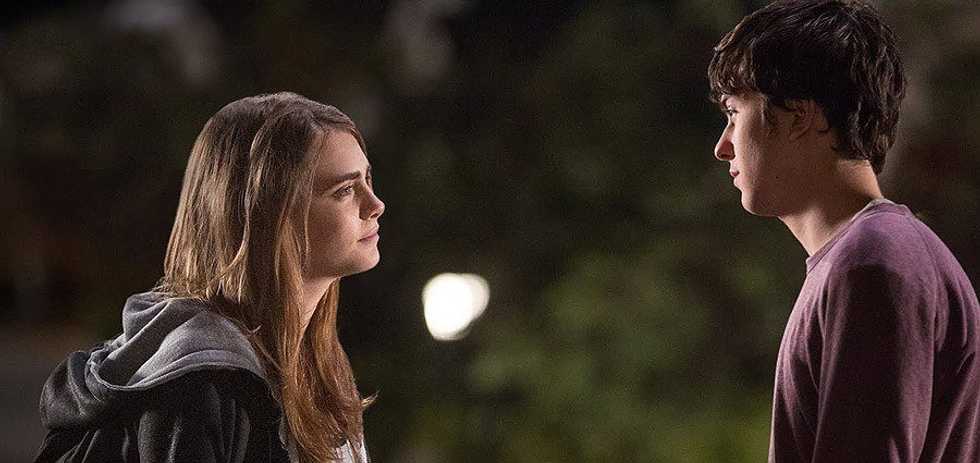
The story is set in Orlando, Florida, and follows Quentin, or Q, as he finishes his senior year of high school. His neighbor and childhood friend, Margo Roth Spiegelman, appears in his bedroom one night after distancing herself from him for years, and convinces him to leave his uptight ways behind for a night to help her gain revenge on her now ex-boyfriend and friends. Q inevitably falls in love with Margo by the end of their adventure, but when Margo disappears the next day, he takes it upon himself to find her. With the help of his best friends and a few others along the way, Q ends up taking a road trip to find Margo and, in the end, finds himself.
I have to admit, the movie does a good job of making you forget what it really is. It was easy to get caught up in the mystery of Margo’s disappearance and what clue Q will find next to lead him one step closer to finding her and, ultimately, live out his fantasies of being with her. When it all boils down to it, though, and you take away the suspense of the search and the clever humor in the script, it’s nothing unique. Like nearly every other teenaged romantic comedy that strives for uniqueness, seventy-five percent of the movie is just a boy chasing after a girl that we know hardly anything about (500 Days of Summer, anyone?).
What does make Paper Towns different, though, is the last twenty-five percent. Quentin eventually finds Margo and immediately confesses his love for her, and – unsurprisingly – the feelings aren’t reciprocated on Margo’s end. What I liked so much about this part was the way that Margo responded. It was a good reminder, both for Q and for the audience, that Margo never asked for Q, or anybody, to come find her. She wasn’t a damsel in distress, Q wasn’t the Hercules she was looking for, and she certainly wasn’t the fantasy that Q had projected onto her throughout the entire movie. After spending most of the movie making judgments about the girl that Margo “I’m Not Like Other Girls” Roth Spiegelman appeared to be, it was good to be reminded that she was a person, not the semi-pretentious, adventure obsessed, special snowflake dream girl that Q thought he needed to be happy.
Overall, I thought Paper Towns fulfilled my expectations. It wasn’t nearly as deep as it tried to be, and it wasn’t exactly a groundbreaking film, but it was an entertaining way to spend two hours, and the ending left me satisfied. It was refreshing to see a coming-of-age movie where the main characters didn’t end up together, instead favoring what was best for themselves. Oh, and the indie influenced soundtrack is awesome.
Final verdict: C+















