
I remember vividly my last few nights at home before moving to New York. They happened to be the first two that ever made me want to stay where I was. After living in one of the world’s largest cities for nine months and taking a class on the everyday for four of them, I’ve come to learn a few different tools that allow me to never see anything as less than beautiful.
The first of these tools is understanding, and not just the superficial kind that we might gain at a glance, but the deep, all-encompassing understanding of an individual or system. It sounds pretty crazy (and it is), but it’s also something that has helped me get through infinite checkout lines, and it’s how I’ve learned to never hold a grudge. We can’t possibly understand another’s motivations, but we can always give them the benefit of the doubt. Assuming the best about someone is just as easy as assuming the worst, and understanding how to understand tends to have a leveling effect; we’re all simply different, just like the places we live.
Another handy tool is media: specific, poignant media. One of the best ways to understand the feelings the suburbs stir in me is to listen to Arcade Fire’s Grammy-winning album, “The Suburbs.” To go even deeper, the short film directed by Spike Jonze in conjunction with Arcade Fire called "Scenes from the Suburbs" lends gorgeous moving images to an already stellar soundtrack. The music and the short collide in a lot of wonderful ways. For example, while the view from a dorm 200 feet up in downtown Manhattan might be “better" in a conventional sense than the view from a two story home in the California sprawl, there is a unique beauty to both.
“Scenes from the Suburbs” does a fantastic job of displaying the ’burbs in all their splendor. Not only does the piece showcase the big skies and cookie-cutter housing developments, but it gets at the memories associated with growing up bored. From shooting b.b. guns, to late night chats getting high in the hills, just because one isn’t surrounded by a bustling metropolis doesn’t mean making memories will be absent. Even from the very opening, the narrator recounts, "I wish I could remember every little moment. But I can't." The truth of this statement couldn't be more bitter sweet. Is it better to remember everything as it was? Or should we let the memories take on the rosy hue of nostalgia?
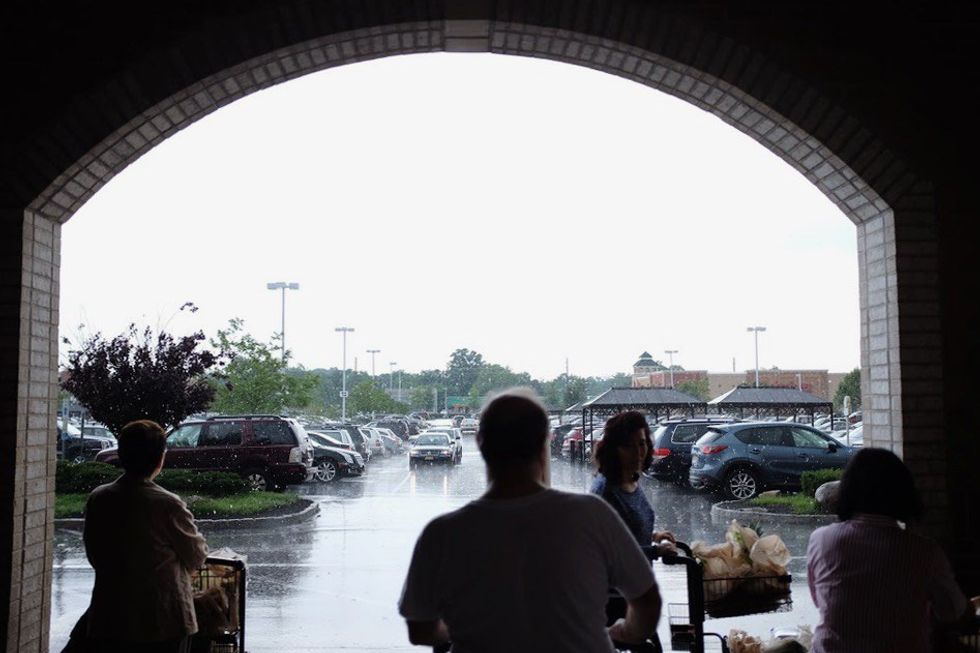 Now there’s just one last anecdote to hold onto: nowhere is as beautiful as where you are. Corny as that sounds it’s one of the only truths I feel confident in calling a truth. So as we leave home again in a few months' time (that is if you ever left the city), be curious to see if those city lights mesmerize you the way they did the first time you saw them, or if perhaps this time they strike you no more than a lawn sprinkler at sunrise, a sun shower in a strip-mall parking lot, or cardinals singing at noon.