

Space is cool. Space is and always has been really cool. Space was cool back when people were just pointing at the sky and wildly speculating about it, space was cool through science's first, clumsy baby steps into the realms of astronomy and astrophysics, it was definitely cool during NASA's First Man on the Moon golden age in the 1960's, and space stayed cool right on through. And nowadays, as we find ourselves at the height of the era of all things Nerd Culture, it would seem that space just keeps getting cooler, and I'm here to bring the people their space news.
And now, without further Adieu: Space flowers. Ah, NASA, truly one of our planet's finest bands of space nerds. Everyone knows about NASA and how cool it is already, being our planet's first interstellar nerd squad to put a man on the moon, the first to put a real, live astronaut on TV via Stark Trek, and now, apparently the first also to grow space flowers during an official mission. What more could one ask for from our team of trusted space Scientists, really?
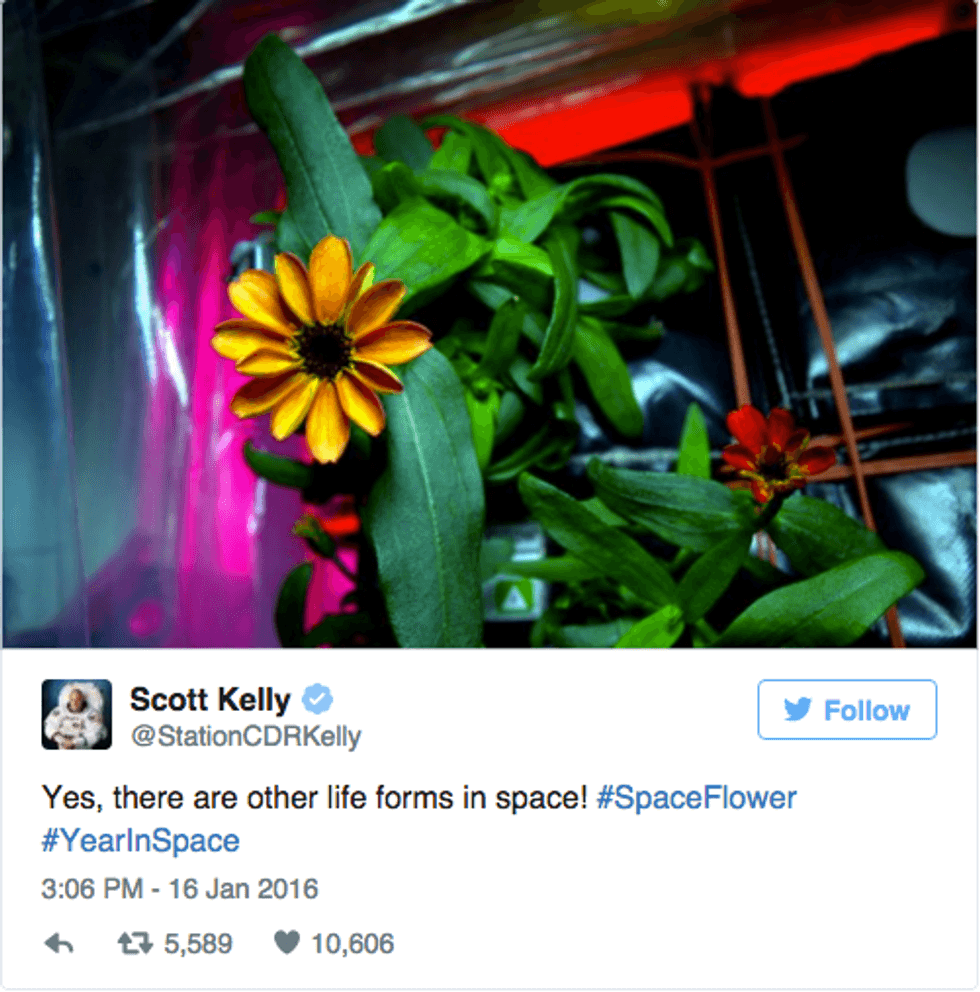
(This story/photo courtesy of Scott Kelly the astronaut's Twitter account, which you should follow if you don't already. Scott also just posted space pics of the Northeast's blizzard Jonas recently, too.)
Astronaut Scott Kelly showed off these beautiful zinnia flowers he'd grown and nurtured back to health on board the International Space Station the other day via Twitter, which caused an explosion around the subject of space flowers. But despite what some headlines are reporting on the subject, these aren't really, actually the first flowers we've had in space at all.
According to NASA Watch, cosmonauts have actually produced flowers several times in the pre-ISS days of spaceflight. It seems from the information they've gathered from their other secret astro-botanists that in at least one case prior to this one, the entire growth process of an earth-plant occurred during space flight. That time it was a lettuce plant though, and as an artist let me just say that aesthetically the flower bloom is crucial to the cool factor of these space flowers, and the lettuce just isn't cutting it for me.
In any case, these space zinnia flowers might not literally be the first, but they do represent NASA's first concentrated effort to grow flowering plants in a controlled space environment. The hope is that experience with plants like zinnias will help astronauts learn how to grow more traditionally edible flowering plants like tomatoes while they are up there. Access to fresh fruit and veg in space would be monumental in terms of cosmonaut diets.
But wait! A lettuce plant can actually flower contrary to popular belief though – and according to research published on this subject, it appears that the Russian space lettuce did. So sorry to disappoint the NASA supporters out there for this flowers-in-space race, but if you'll recall we did get to the moon first back in the '60's, so I guess blooming space lettuce second is a loss we can probably handle, right? Also as I mentioned earlier, NASA did make it to Star Trek first!
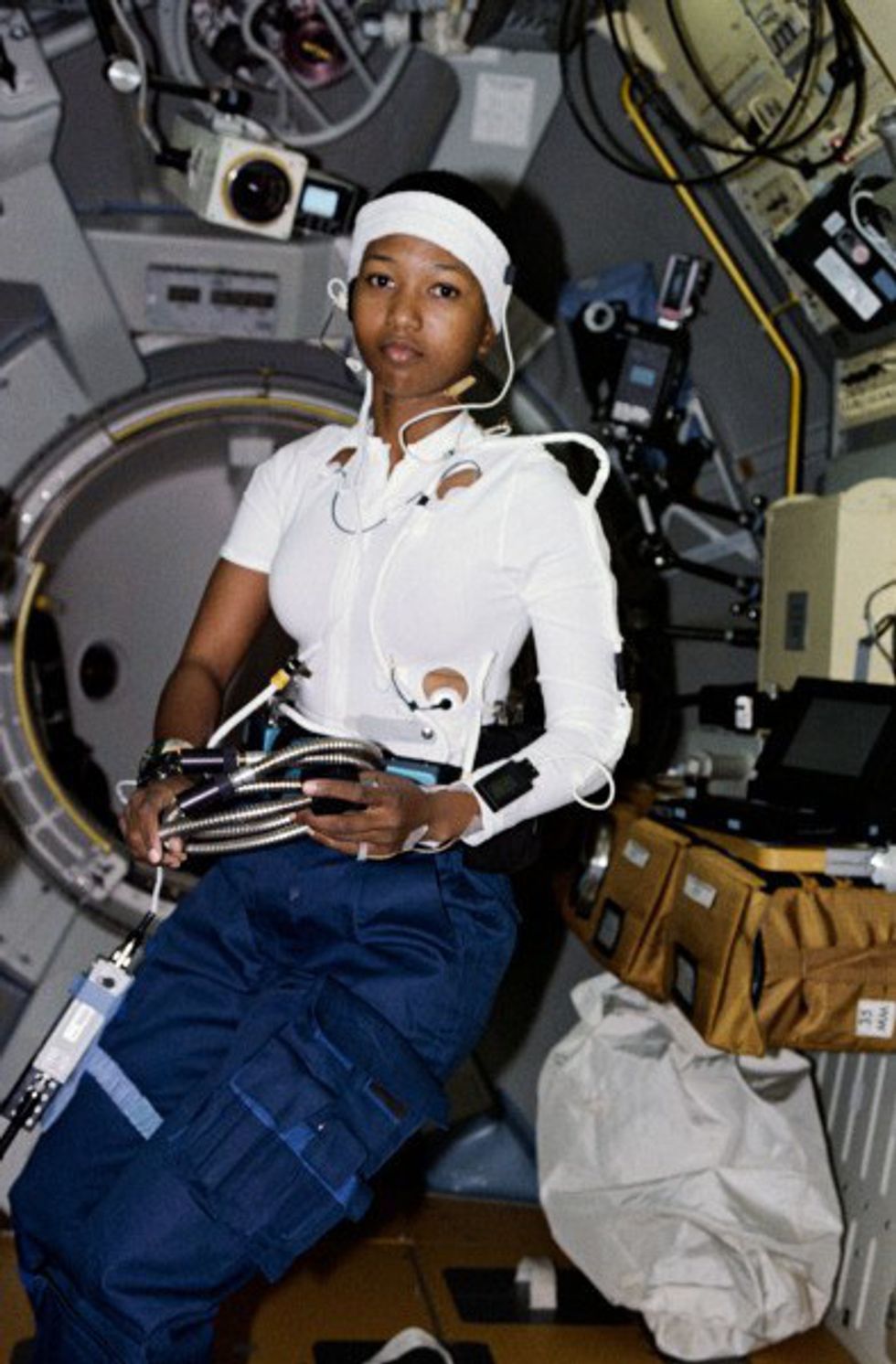
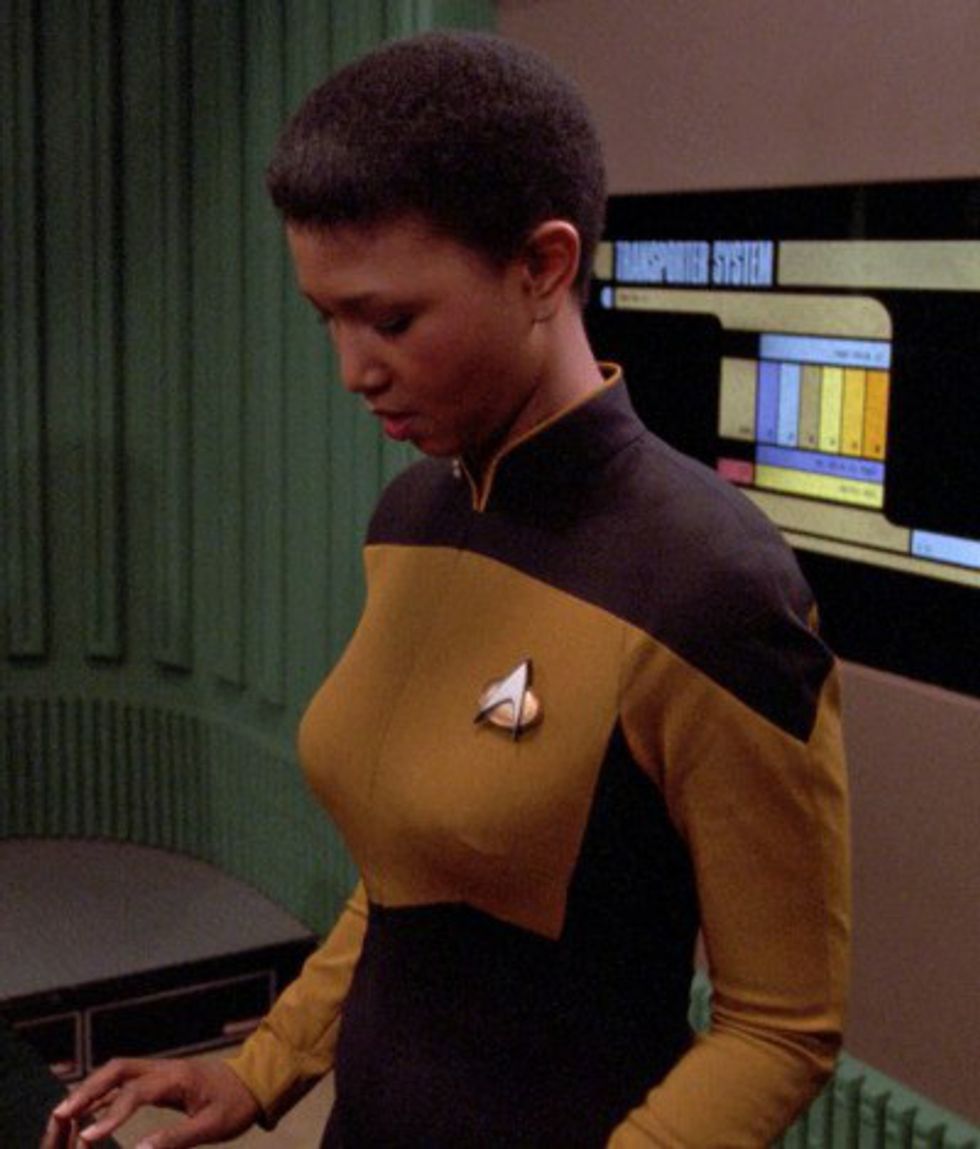
What's that? You didn't know that a real NASA astronaut had been on Star Trek before? Well it's true, Dr. Mae Jemison, MD, who was actually the first black woman in space, was also the first actual astronaut to appear on a Star Trek show. Remember Lieutenant Palmer from the "Second Chances" episode of Next Generation? Yep, that lieutenant is her, and she's a real astronaut. Dr. Mae truly is a top tier woman through and through, (and a class A NASA/Trekkie nerd to boot). She is one of the very few people on this planet of whom two pictures can be posted depicting them doing their job on a spaceship and yet each photo has two entirely different contexts, pretty f*cking impressive:
Some other cool stuff going on with NASA right now that you may be interested in hearing about before all your friends do may include the fact that maybe we have a ninth planet in our Solar System that we didn't know about?:
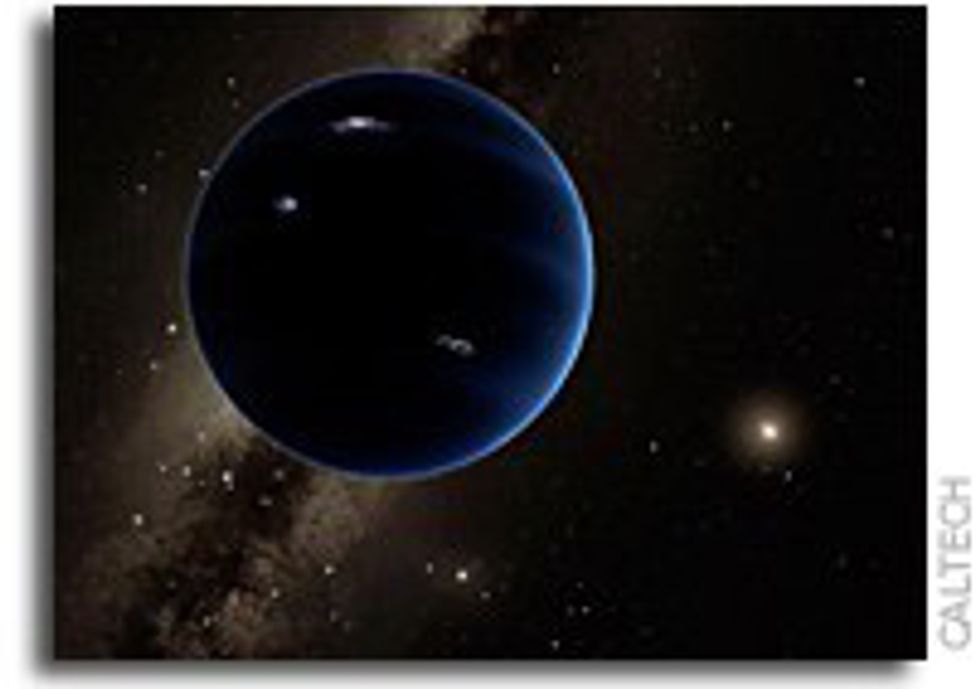
Photo of 'Planet Nine' courtesy of NASA Watch
According to Nasa watch, Caltech researchers have recently discovered evidence of a giant planet that is tracing a bizarre, highly elongated orbit in our distant solar system. The object, which the researchers have nicknamed Planet Nine, has a mass that is about 10 times that of Earth's, and orbits about 20 times farther from the Sun on average than does Neptune (which already orbits the Sun at a whopping average distance of 2.8 billion miles). This is nuts, and in fact means that it would take this new planet between 10,000 and 20,000 years to make just one full orbit around good old Mr. Sun. The researchers, Konstantin Batygin and Mike Brown, discovered the planet's existence through mathematical modeling and computer simulations that tipped them off to the planet's existence via its indications of the planet's massive orbit pattern. So they found it kind of like finding an invisible dinosaur via its footprints, but as of yet they have not yet observed the planet directly.