
As election season approaches, there is bound to be lots of discussion on who is going to vote for whom and why. Yet alongside this discussion, there will be tons of people who will firmly declare a refusal to vote.
One of the primary reasons behind this decision is the jadedness that arises when all politicians seem to employ the same untrustworthy tactics: prioritizing money and votes over critical issues, and dodging questions in order to avoid disagreement or controversy.
Candidates who do not align with these politician tropes often serve as refreshing examples to the public, which partially explains the appeal behind Donald Trump.
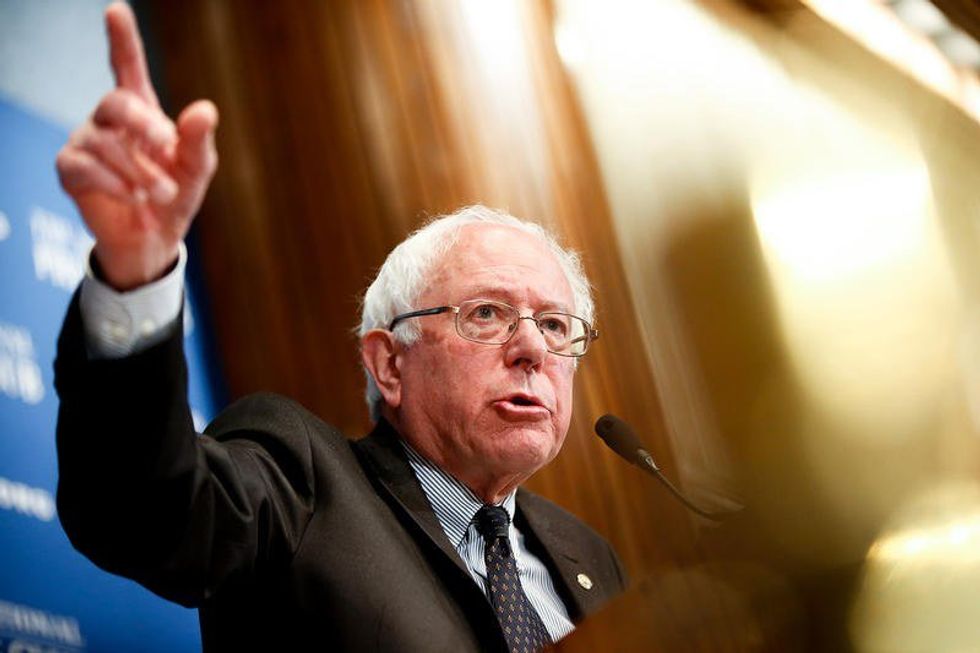
But Trump is not the only presidential hopeful who is exhilarating people across the country with unapologetic rhetoric. Bernie Sanders, a senator from Vermont, is inciting similar enthusiasm due to his unconventional political strides. Political analysts have even compared the popularity of Trump and Sanders, despite their contrasting political leanings.
Media has tirelessly covered Trump since his presidential bid, yet the press has so far appeared to neglect Sanders and his originality. In an effort to shed light on Sanders and his nonconformist political past and present, here are five moves he has made that set him apart from the typical candidate.
1. He refuses super PACs.
Political action committees (PACs) are organizations that gather donations for a candidate and run political advertisements for them. With their massive pool of money from companies, super PACs have come to represent corporate influence. Sanders, however, has refused super PACs and has instead focused on smaller donors and labor unions. This grassroots approach sets him apart from the growing impact of super PACs on presidential campaigns.
2. He sticks to his word.
Politicians often sway with public opinion in order to remain in touch with the majority. Yet for decades, Sanders has not budged on key issues. An example of his foresightedness is with the issue of gay marriage, which he has supported since the 90s. In comparison, Barack Obama did not publicly support gay marriage until 2012, and Hillary Clinton remained silent on the topic up until 2013.
3. He pays his interns.
The treatment of interns – the people at the bottom of office hierarchy – reflects heavily upon any leader. As a proponent of economic equality, Sanders advocates for a $15 an hour minimum wage and pays his interns $12 an hour. Although some choose to criticize this three-dollar discrepancy, the fact that he pays his interns at all is quite a feat, for other front-running candidates who raise more money choose to keep their interns unpaid.
4. He engages with dissenters.
Sanders recently took a massive risk and spoke at Liberty University, the largest Evangelical Christian university in the world. On his Facebook page, Sanders stated his reason for speaking to a large crowd of dissenters: “I came here today because I believe that it is important for those with different views in our country to engage in civil discourse.” Many candidates would not take the chance to speak to a young audience of 12,000 who disagree with their entire platform. Yet Sanders stuck to his belief in a shared civil discourse and received credit for attempting to find common ground with the Liberty audience.
5. He will not attack Hillary Clinton.
The dramatic personal attacks between candidates are often what make presidential elections entertaining. But Sanders has been steadfast in his objection to attacking his main opponent: Hillary Clinton. In an era where candidates desperately try to undermine opponents through personal jabs and aggressive ads, Sanders’ decision to play fair is atypical of the political process.
It is likely that Sanders will continue to intrigue the nation with his choices as he competes for the Democratic presidential nomination. Agree or disagree with his policy ideas, it is difficult to deny the unorthodox campaign methods Sanders puts forth.