

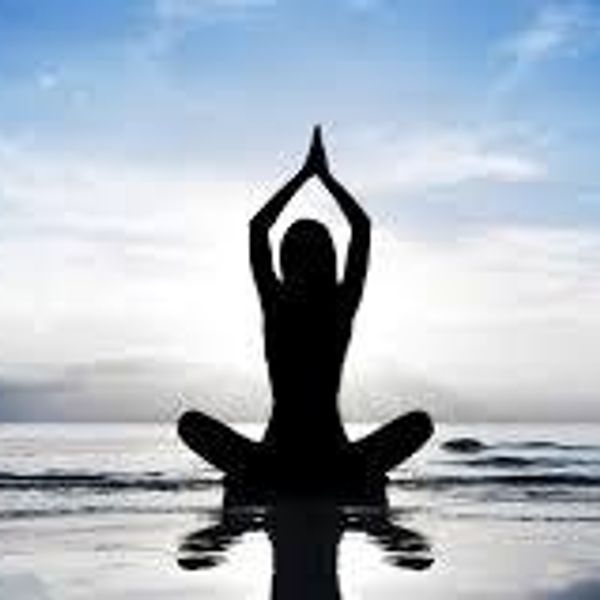

Have you ever found yourself in this position: It is the beginning of a new semester, and as you often do, you find yourself crushed under a seemingly never-ending stream of work. Your minds is jumbled, and the only direction you think you can look is forward, because if you were to look back, you would not get anything done. I want to talk about an age-old practice, an act of discovery about oneself, in attempt to counteract this feeling of helplessness: the act of meditation.
Meditation is often looked upon as being bizarre. Why would someone want to sit still, stand still, or walk around in circles for an extended period -- is it not a waste of time and energy? Some view it as a religious act, as well, which is correct in origin, but not limited to it at the same time. It is largely implemented as part of religious practices, but it is not restricted to it. It is a curious practice, is it not?
The act of meditation is simple, and the payoff is incredibly rewarding. It is largely tailored to the individual, by the individual, so you get out what you put in. In order to meditate, one merely needs to be still and have something perpetual to grasp on to, mentally, something one can be mindful about. Mindfulness is crucial for concentration, as it requires the individual to focus on one thing, object, or idea, and focus all of his or her attention towards it. This may include focusing on your breathing, the sound of raindrops outside your window, the constant ticking of the clock or, my personal favorite, counting and distinguishing each individual sound around me. By being mindful, you are keeping this particular thing in your consciousness -- breathing in… breathing out… breathing in… breathing out. One should also try to do the following: observe your consciousness. By this, I mean to pull back, to not play the game and be that person on the sideline watching. This game is you. In order to experience the full effect of meditation, you must fully commit to it.
Often, we are caught in a whirlwind of emotions. Our everyday lives seem to move forward too fast, and we forget where we are, even who we are. We forget to be grateful -- to the person in front of us who held the door open, to the person serving us food, or to the person cleaning our dorms. We forget to consider how our friends and family are feeling, and forget to tactfully ask for favors. We forget to touch base with ourselves.
Our minds are placid, like the surfaces of ponds on a calm day, yet they can easily be disturbed with ripples. When there are things that bother us, it is as if pebbles are being thrown into our ponds. The larger the emotional toll, the larger the pebble; the larger the pebble, the larger the ripple. It affects us, no matter how large or small. Meditation allows us to return to the placidity that we all are actively seeking every day. We must concentrate on what matters to each of us and give thanks. It is an extremely personal and beautiful act of kindness, beneficial not only to us, but also the people around us. Living is exemplified and the world will be more colourful.













