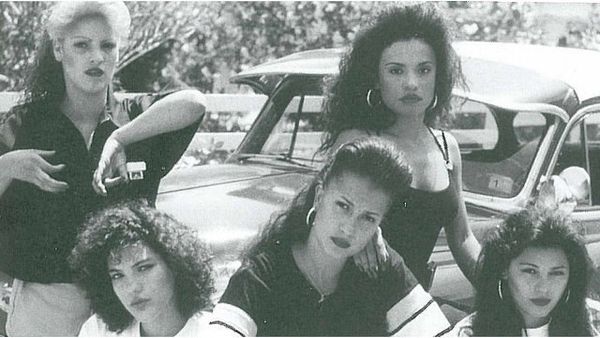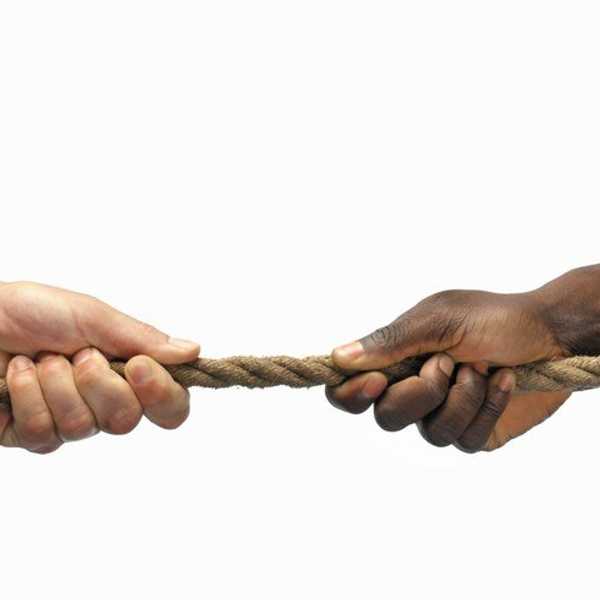



The past year and a half has been tense, to say the least, in terms of race issues in America. In August of last year, the Ferguson protests brought racially biased incidences of police brutality back under the political microscope. Concerns flared up again in Baltimore this past April as the death of Freddie Gray, a 25 year old African-American, by the hands of city police officers intensified unaddressed problems of socioeconomic climates, poverty and unemployment in urban areas. Glimpses of the 1992 Los Angeles riots, and their explosiveness, flickered across the mind.

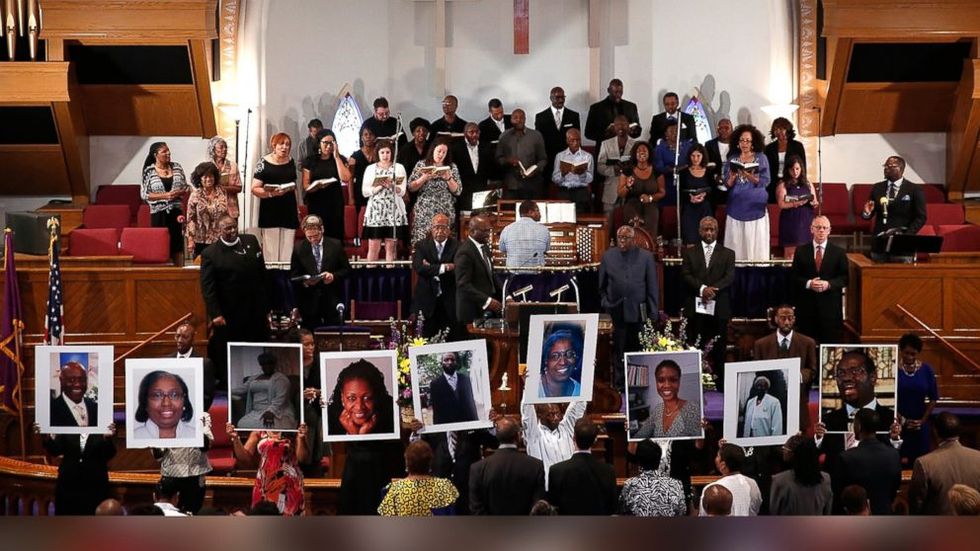
June 17, a white youth enters the Emmanuel African Methodist Episcopal Church in South Carolina, a landmark as one of America's oldest black churches, sits with church members through their Bible study, conversing with them, before opening fire, killing nine, chillingly leaving survivors to deliver his message: "to start a race war." We were reminded of how toxic racism is and how white supremacy groups, who are still here, use it to spread their poison. America will always be reminded about the dark shame it has kept in its heart for centuries.
Right this minute, the leading Republican Party Presidential candidate gets away with making blatant generalizations about Mexican immigrants, calling them "rapists" and "drug dealers". Speaking one's mind does not become fact when demoting an entire race of people. It hurts the values America stands for as our political system is manipulated to wrongfully encourage hate mongering. Support of these claims only perpetuates racism's ideological machine.

Awareness- involvement being the next step-on issues dealing with race seems to be lacking in this generation. Headlines briefly catch our attention, but that is where the insight into what is happening stops. Slate pointed out millennials' contradictions as being "more tolerant and diverse and profess a deeper commitment to equality and fairness" while being "committed to an ideal of colorblindness that leaves them uncomfortable with race, opposed to measures to reduce racial inequality, and a bit confused about what racism is." The current generation of future leaders is distanced from the premise of racism, expecting similar issues will go away if ignored without forcing an open dialogue about it. Sadly, race will always be an issue unless someone can figure out how to take racism out of the equation.
In a Huffington Post article commemorating enrichment programs teaching about the Civil Rights Movement, Ola Ojewumi wrote: "The larger social message of the civil rights symposium remained to address the misconception that racial inequality ended with Dr. King and the Civil Rights Movement." Events from the 1960's and before acted as catalysts for the activism going on today, as the "hidden...inequalities of our time" are far from gone. Ojewumi continued: "...the obligation to propel [Dr. King's] message of social equity into the modern day rests on the shoulders of this generation." Youthful community, social, and political leaders are the people now holding the power to "demand for improved civil rights through [their] student activism."

Now, take a step closer. Look around. Search through local sports teams, school districts, neighborhoods, even college campuses. Especially college campuses. Notice anything different? People from different ethnic backgrounds, cities and states, varying social classes, other countries with interesting creeds and cultures, people with and without disabilities. That is the beauty of diversity: people from all walks of lives, with their own traditions and values, co-habitating a space together. They all learn from one another, growing an appreciation for the special characteristics that set them apart but do not make them unequal.
Some of the nation's most top tier universities seem to be having trouble expanding on-campus diversity. Reasons range from lack of generous funding to financial aid resources or just that other colleges are better at recruiting more diverse students. As the title of a Baltimore Sun article shows, even "small liberal arts colleges lack diversity." Astoundingly low percentages of African-American students are evident as the majority of white students "will graduate from these schools without ever having a policy debate — perhaps even a serious conversation — with an African American student."
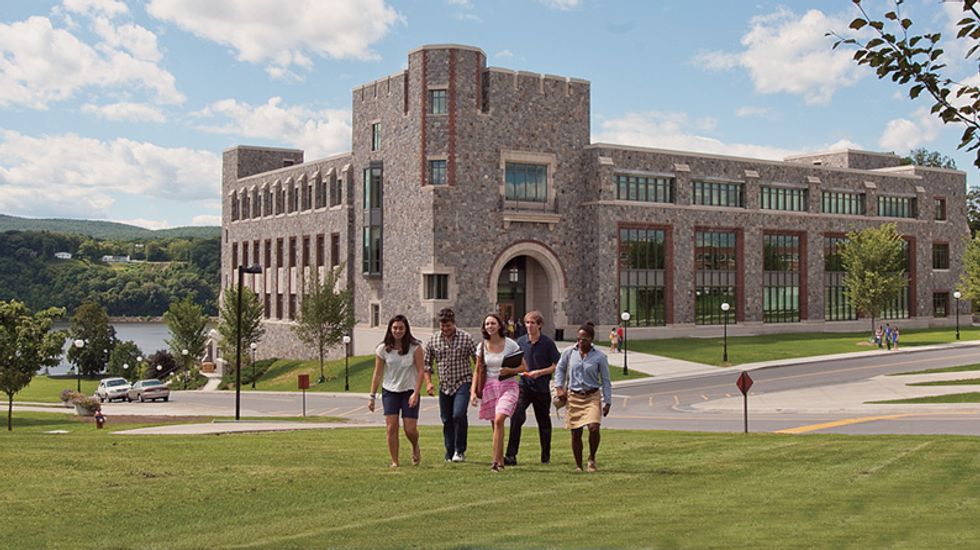
Marist College, a small to medium sized (5,000-6,000 students), private, liberal arts school in Poughkeepsie, New York, falls into that category. Founded by the Marist Brotherhood, "diversity was [their] main focus," says Dr. Ivette Romero, a Spanish language and culture professor at Marist. The university was originally an educator for priests in training; today Forbes estimates women to be the majority at 59 percent. Forbes also measures 70 percent of Marist's student body to be predominately white.
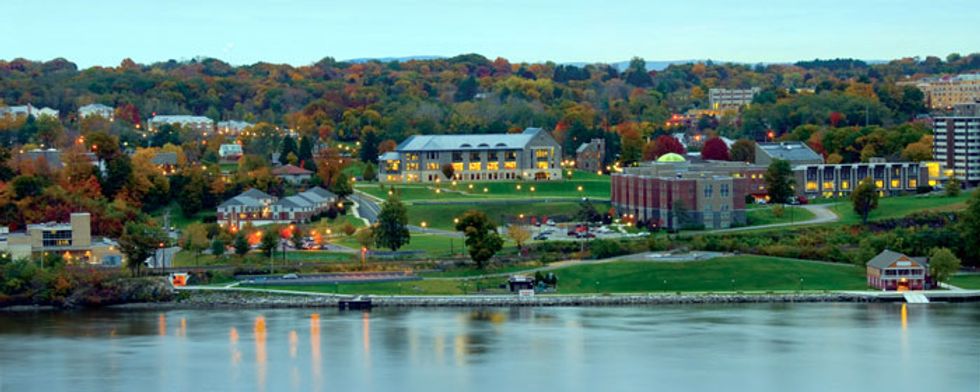
On March 31, Marist's Diversity Council put on a program titled "Why Is Diversity So Important?" Faculty and administrators from Marist and other nearby schools, such as Vassar College, spoke on a panel discussing diversity's integral role within a college. Diversity enriches our perspective on all cultures and events of the world and gives students the opportunity to work with and learn from, among other things.
The panel program was going on swimmingly until the question and answer portion began. Going up to the microphone, "students used that opportunity to make statements," recalled Desmond Murray, Associative Director of Career Services and current co-chair for the Diversity Council. "[They] started a dialogue...in terms of dealing with these issues..." The unheard variables came together that night to be heard. And it worked. "It only becomes an issue when enough students come together to address it," Iris Ruiz-Grech, Director of Multicultural Affairs, stated. The lack of diversity on campus certainly became an issue after that night.
Marist's Center for Multicultural Affairs is excellent in programming events promoting multicultural awareness of the college's body of diverse international and HEOP (Higher Education Opportunity Program) students. A.R.C.O., or Appreciating Race and Creating Opportunity, is one fine example of a student organization active in welcoming all students into cultural or community events. Siraj Bah, a CMA counselor and an advisor for Agents of Social Change, spoke on the complications of a low diversity rate: "[For example] first generation black males going into college may need mentors to support them." Agents of Social Change tries to provide that exact support to multicultural or first generation college students. "Some [students] may be discouraged or overwhelmed by a lack of diversity...[there should] be more areas to be made comfortable." Diversity should always be encouraged, but tricky in that it cannot be forced: "It's a community. You [should] feel comfortable or feel represented."
Lack of diversity enables knowledge gaps concerning ongoing race issues, among other topics, to widen. "[Students] read headlines. Not full stories...[They] need to learn how to have difficult conversations," Bah commented. Students, as emerging independent adults, are products of sociocultural bodies: their family, school, community, friends, the media. "Most millennials grow up insulated," stated Dr. JoAnne Myers, a political science professor. She labels certain communities as "silos" characterized as being chunks of Small Town, America, possessing little diversity to broaden the minds of pre-college age students. Similarly Ruiz-Grech mentioned, "How are [young] people expected to work with people of all backgrounds if they are not introduced to them?" Outside of the work force's office buildings, the same goes for simple acceptance of all conceivable backgrounds.
"You're not acclimating to my culture, so diversity is finding that common ground," Dr. Myers pointing out how mutually understanding diversity should be. Statistically, it should be, with a Pew Research Center trend showing that 43 percent of millennials today are non-white. A separate trend in the same study also shows that only 19 percent of the members of the millennial generation are trustworthy of others.
"Students grow up thinking everything is alright. Students today don't know the '60's, the struggle, the institutional racism, the sexism," Murray reasoned. Perhaps students today still do not understand the urgency to the cause or even that "the struggle" may still be going on. Fortunately, Dr. Myers' Politics of Prejudice class have these issues on its mind. "Diversity is hearing and seeing those other voices on campus." "The bubble syndrome...we're in a bubble...it's almost like we're not living in the real world." "Kids at Marist...[are] blind to certain issues. Never in a setting completely diverse." "With a lack of diversity, some people can't separate reality from myth."
Diversity can be physically represented on campuses, but more importantly, individuals' voice must be heard. College may be only a simulation of what the real world will be like after graduation but that does not always make it accurate. Addressing real world issues, like race inequality, in the real world, outside the college environment, may prove difficult if not confronted in education's development phase. The Atlantic quotes Georgia State professor Adia Harvey Wingfield:
“We live in a more diverse world in a superficial sense. When we think about where we live, where we go to school, where we work, that type of diversity hasn't really happened yet.”
With a lack of diversity, these "myths" confirm to be stereotypes, hurtful if not taught to understand their impact. Jokes about negative exaggerations, like constantly hearing gunshots if one lives in the Bronx, truly sting. Murray replied to the use of stereotypes: "People laugh and joke about stereotypes and they don't die." The only way to kill a racial, or any, stereotype is to reject it, insuring a stoppage to its continuity. Furthermore, the apathy of friends' knowledge on significant events can be frustrating. The previous fall semester, a protest against police brutality was led by students, approximating 20 people to be the most involved. But, Murray attributes that incident to improper planning.
Unfamiliarity to current events is not exclusive to Marist College. It is simply an example.
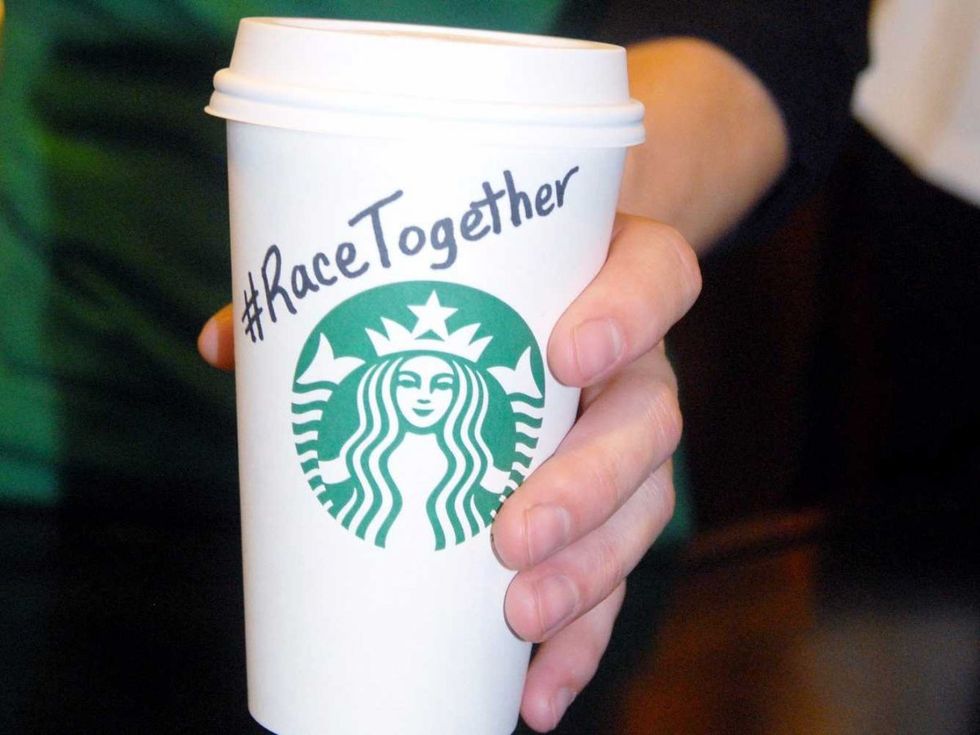
While breaking off into a tangent on the humorous light stereotypes on coffee drinkers, the class elicited recent headlines of Starbucks Coffee's #RaceTogether campaign from memory. Earlier this year, the chain coffee franchise attempted to start a conversation about race. Starting with "#RaceTogether" written on the coffee cup, the baristas complied in talking about modern race relations when inquired upon by customers. Although the campaign failed for the barista's lacking expertise in the subject, it provoked awareness on having those uncomfortable, but necessary, conversations about race. Slightly odd and informal for Starbucks of all corporations to raise the issue, it gave rise to the question: Who should be leading these discussions? Who should be getting communities to start thinking about them? And in the end, should these conversations really be that uncomfortable to have?
College students are not the only academic groups that have to assume roles of diversity. Responsibility of opening eyes to diverse lifestyles falls onto the professors as well. Dr. Romero summarizes Marist's language department as a "good distribution in age, gender, and ethnicity." An instructor of language and culture being fluent on the subject matter enriches the substance of the curriculum. Diversity should always be inserted into the curriculum. Romero continued, "Some professors are products of the 1960's...in their courses...they teach awareness of diversity on a global level." There is so much worldly experience to be gained from being taught by professors hailing from differing walks of life. Certain universities lacking staff diversity cannot be totally at fault. Murray revealed, "Diverse individuals who are professionals...can get better packages somewhere else." Smaller schools get the chance to add a different perspective to their teaching roster stolen away by competing universities.

Just because a school like Marist has a lack of diversity does not mean there is a lack of concern on the issue. It is an issue that concerns administrators, professors, and students, alike. Marist College President Dennis J. Murray sent out an email to the student mass after classes resumed for the current fall semester. After the uproar at last semester's diversity panel, President Murray took it upon himself to meet with a group of diverse students, relating national climates to the ones on campus. He highlighted the satisfaction rate of minority groups- African-Americans being the lowest at 61.3 percent- with other races being much lower than those of white students, who hold a percentage of 86.8 in satisfaction. New policies range from a media hub to read written works following modern issues and sensitivity training for security personnel regarding higher interactions between them and minority students. President Murray closed his email newsletter with this bright, hopeful message:
"As you can see, the College has made a lot of progress in terms of diversifying our campus and making it a more welcoming place for people of all backgrounds. However, we recognize that there is still much to do. I've always wanted Marist to be a community in which everyone regardless of race, religion, sexual orientation, political persuasion, etc. feels welcome. For this reason, we are strongly committed to continuing our efforts and to keeping these issues high on the College's agenda. I look forward to working with all members of the Marist community as we take on these challenges."
Race issues in our society are far from expunged. Embracing diversity aids in the understanding of these matters and coming together to find a solution to them. Looking in a mirror, only seeing individuals similar to one's self, does not replicate the process of learning what it is like to live in America from an entirely new perspective. Until diversity becomes even more present in our communities and brings issues to our attention, the millennial generation will continue to displace the need to tackle them head on, letting them lurk in the back of our thoughts for the time being. Taking the time to have these difficult conversations together may just relieve the pressure building up, preventing a possible tragedy from becoming another sad headline that leaves us too shocked to react.