

Once I was chatting with a friend about this or that when someone knocked on the door of his dorm room.
In walked a frantic looking fellow. In terms which were increasingly bizarre, he relayed the story of a demon he encountered just a week before.
I was skeptical and to my shame a little bit condescendingly amused. My companion, on the other hand, didn’t crack a smile. He listened with keen interest and asked more questions before saying goodbye and returning to our conversation.
Unready to move on from the incident, I questioned my friend, “Do you believe all that he just said?”
He told me that he did. Still unsatisfied I asked him how he could believe such a ridiculous tale.
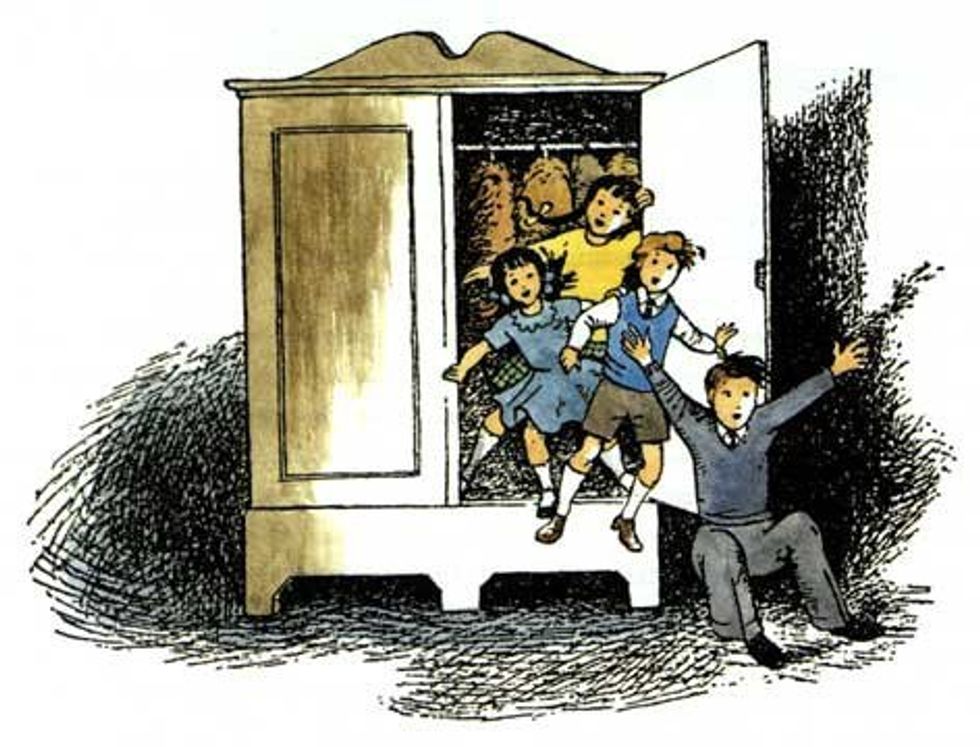
He paused before inquiring as to whether or not I had read "The Lion, the Witch, and the Wardrobe" from "The Chronicles of Narnia" series by C. S. Lewis.
I thought the turn towards the children’s fantasy books was a gross non sequitur, but told him that I had read the book.
He made mention of a scene where protagonist Lucy Pevensie shares with her siblings her discovery of a magical land which can be accessed through a wardrobe. Naturally they dismiss it and become more and more distressed at her insistence.
When they confront their caretaker about her story, he asks them how they know it isn’t true.
Because it isn’t logical! They insist.
Has she ever been known to lie to you before? (My friend paraphrases.)
They agree that she hasn’t.
“Then there are only three possibilities. Either your sister is telling lies, or she is mad, or she is telling the truth. You know she doesn't tell lies and it is obvious that she is not mad. For the moment then and unless any further evidence turns up, we must assume that she is telling the truth.'”
These thoughts have stuck with me. It occurs to me that unless we have known one to lie to us it is our responsibility to believe them.
Even further than that, I would make the argument that belief is a form of love.
I’ve come to terms with the conviction that if I am in a relationship with someone on any level -- particularly in cases of close friendship or romantic commitment -- it is my duty to believe them. It is so with an equal measure with my duty to always give them the truth.
I think this is true even if the evidence stacks hopelessly against them. Because in the course of life, sometimes our story will be preposterous and utterly unbelievable no matter how true it happens to be. It is in these cases when we need people who are committed to believing us no matter what.
In the midst of a principle this risky, it is pivotal remember that to love is to run the risk of failure. We really might choose this path and be betrayed.
But we still will have loved, really loved.
And then our belief must take a new form. It must rise into the likeness of faith, blinded not by ignorance, but by the jabbing fingers of treachery, and evolve into the belief in one’s core goodness. The belief that somewhere inside the liar there is someone who desperately wants to tell the truth.
To love, we must believe.