Last week, over Spring Break, I had the great pleasure of being able to reminisce and talk about my trip to India. But this was different than the usual who, what, where questions. It was a 30-minute presentation. A 30-minute presentation to a class of third graders at my old Catholic grade school. And, I was mere moments into it when I realized—everything is different when looked at through the eyes of a child.
I knew that when I went to India many things would be different, from the food to the bathrooms to the street life. And, when I returned, I also expected reverse culture-shock and a new appreciation for all of the luxuries we have here in America. But what I discovered, talking to that class of third graders, is that there are a billion and one other Americans who know little to nothing about life in India besides faked, stereotypical accents, annoying phone calls to tech support, and the heavy smell of curry.
While I was speaking, the photos or ideas that the children found weird or disgusting would make gags and chuckles erupt throughout the classroom. That was the moment when I knew I had to change my approach when talking about India to people who have never been there. As children, I do not blame them for acting this way. However, I decided that the children’s reaction is merely an amplification of what I’m sure many adult Americans would be saying to themselves inside their heads.
The comments started off mildly. The children cringed at the toilets. They called the food gross-looking. Others questioned how the Indian people can possibly drive when the streets are so crowded. These are all understandable comments. I myself had a similar reaction the first time I experienced the differences in India compared to my home in the United States. But suddenly, the situation turned serious.
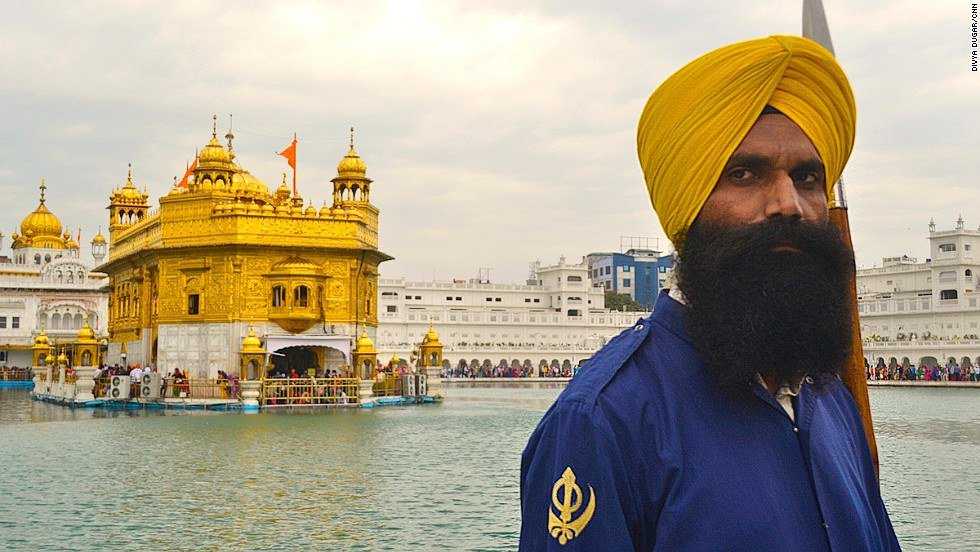
A young boy raised his hand and asked me if there are Muslims in India. At first, I nodded yes, a little confused. Then, I turned and remembered the picture I was showing on the presentation screen at the time. It was a picture of the beautiful Golden Temple in Amritsar, India surrounded by hundreds of people dressed in beautiful colors. All of the men in the picture were wearing turbans. I understood where he was coming from and cringed. These men were Sikhs.
That was the moment that hurt me most deeply. So many people are too quick to assume that a man with dark skin and a turban is a Muslim. That is why the Sikhs have been misunderstood, misjudged, and abused throughout their entire history. Yet, while we were in Amritsar, the Sikh capital, we experienced nothing but welcome, compassion, and kindness. In fact, one of the men there only asked that we share the goodness we found in Amritsar with those people back home. He asked this so that the world could find peace with them and not seek to inflict any more pain or violence upon his people.
Trying to spread this message, I was so grateful for those third graders. Despite their initial reactions, they had an extremely large capacity to learn and understand. Despite every student in the room being of a white and Catholic background, they were amazingly receptive to learn about another culture and about other religions. And, most importantly, they were amazing respectful once they understood why the other culture or religion does what it does.
That gave me hope. While the adult population may be difficult to sway, there is always hope to convince the children. And we need to convince the children in our lives that every nation, culture, and ethnicity is beautiful in its own way. India is no weirder a place than the one we live in here in America. It is not gross or less important. It is merely different. It is another beautiful way of life. And when we realize that, we can stop being critical, self-centered, or ethnocentric and begin to foster world peace and understanding.
I have a new hope for the future of our world. And I have the class of third graders at my old grade-school to thank for that.