
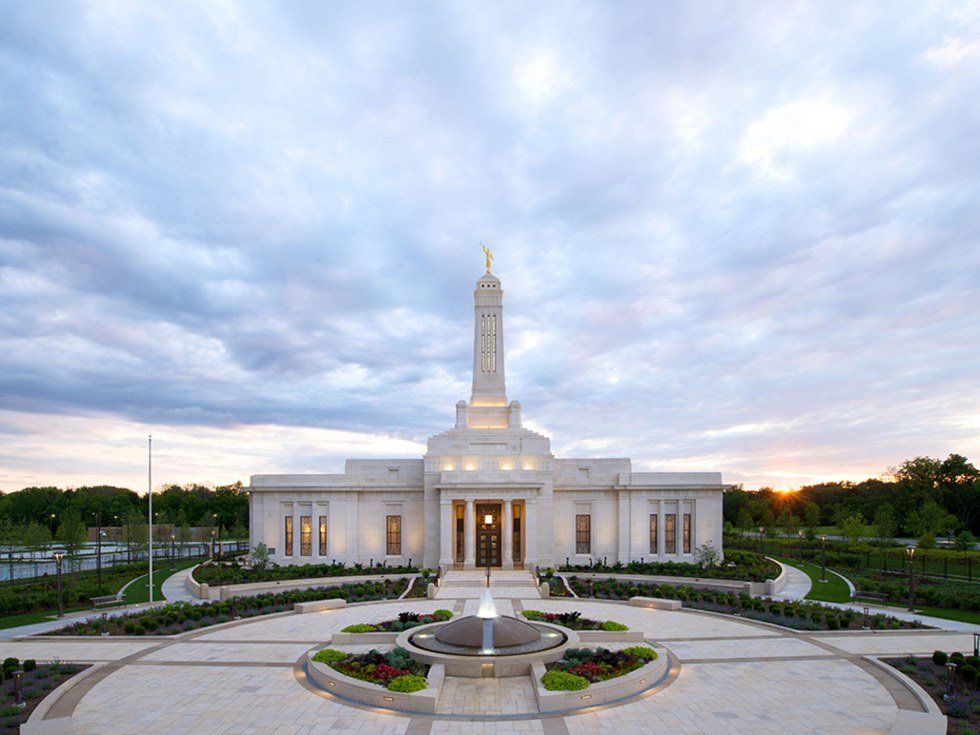
On July 16, my father and I had the pleasure of being among the first VIP groups to take a tour of Indiana's very first Temple of The Church of Jesus Christ of Latter-day Saints. My father is a land surveyor, head of his surveying department, and vice president of the small company whose surveying and engineering company was chosen to assist with the building of the temple. Now, after three years of construction, the temple is fully finished. It is easy to tell that Mormons don't mess around with their worship sites; the Indiana temple is a beautiful sight to see.
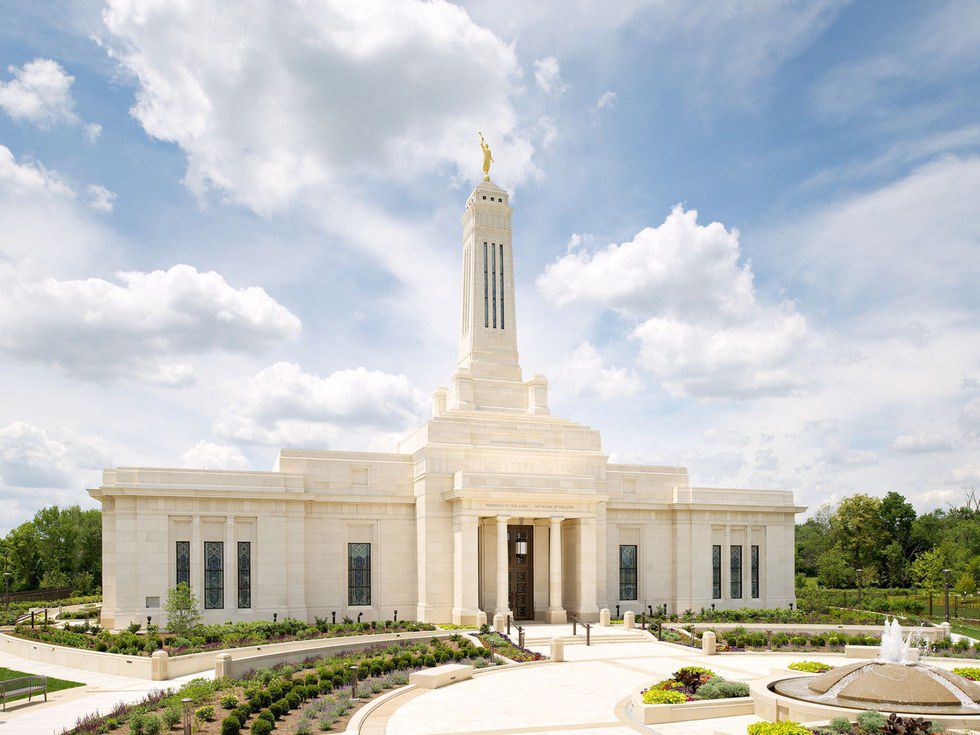
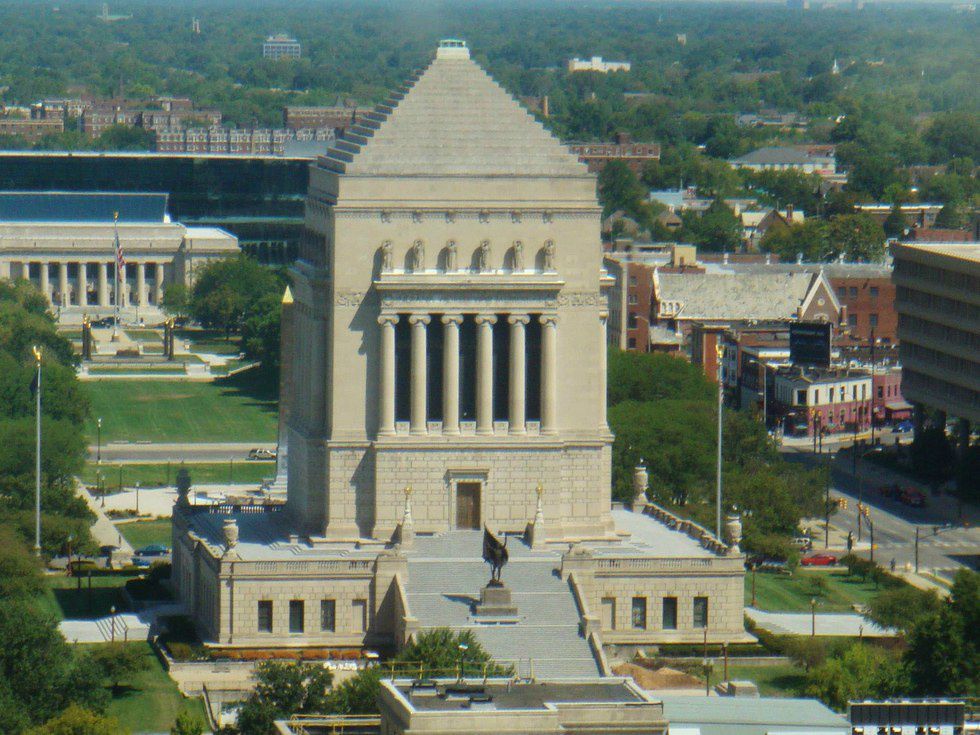
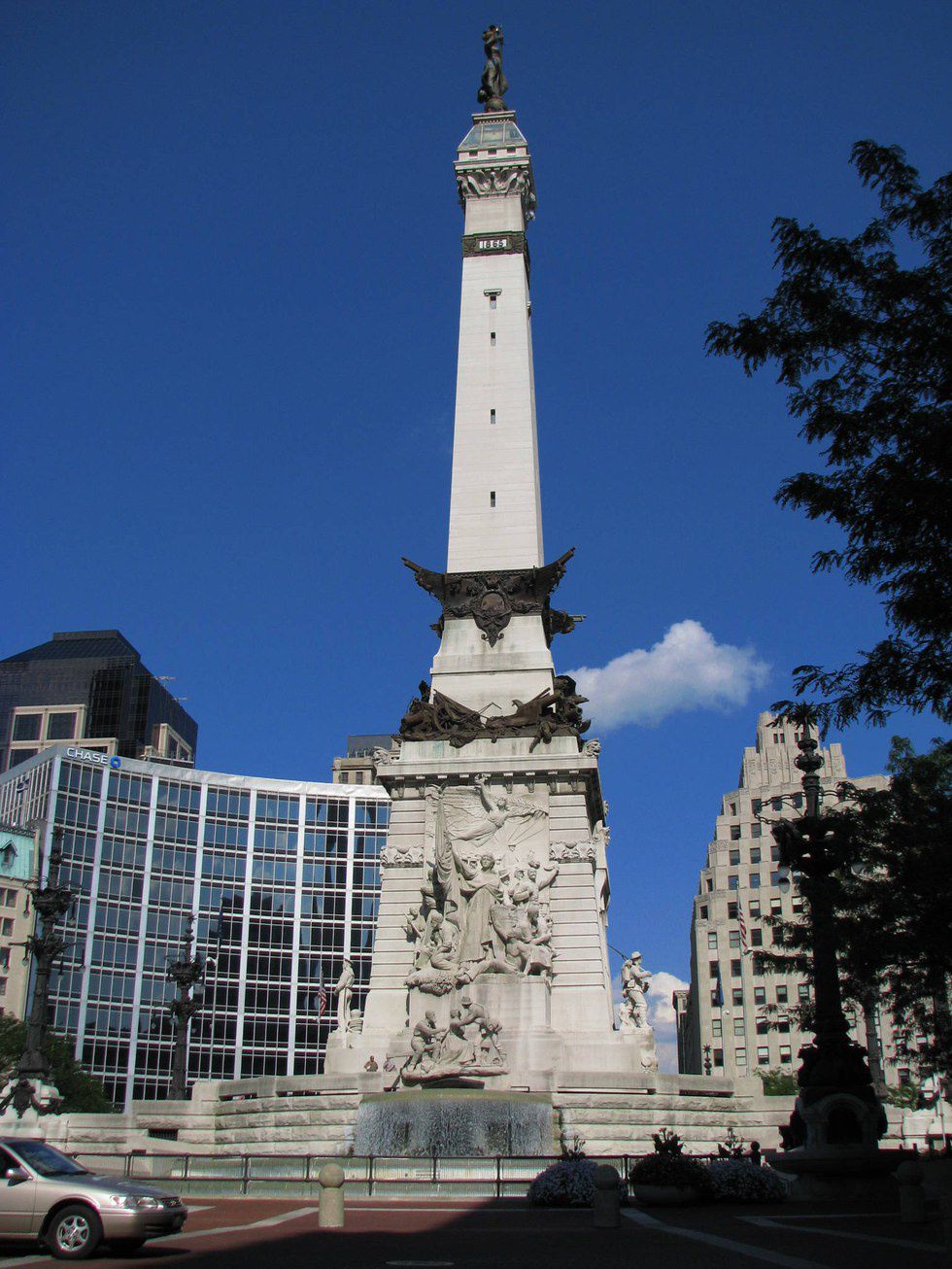
Located on the north side of Indianapolis in Carmel, the 34,000 square foot temple sits on 12 acres of land right off West 116 Street and Spring Mill Road on Temple Drive. I was amazed to see the evening sun shining off the imported Turkish limestone exterior and gold statue of the angel Moroni as we drove up. My first thought was, "Huh, it almost reminds me of the Indiana War Memorial and the Soldiers and Sailors Monument!" While on the tour, I learned that the design was inspired by both those monuments (see below).
When we first got to the temple, we were led to a separate church building called the Meeting House, also located on the property. Since I was carrying my Nikon camera hanging off my shoulder, I was told that I could take as many photos as I wanted of the temple's exterior, but I was not allowed to take photos of the inside of the building. If I were to write an article about the temple, there were specific media photos located online.
In the Meeting House, we were asked to watch a 10-minute video that explained what temples are and what the Church of Latter-day Saints believes and featured interviews with various members of the church. After the video, we were led to a walkway outside the east entrance of the temple and had plastic shoe covers placed on our feet in order to keep the marble and carpeted floors clean as we walked inside.
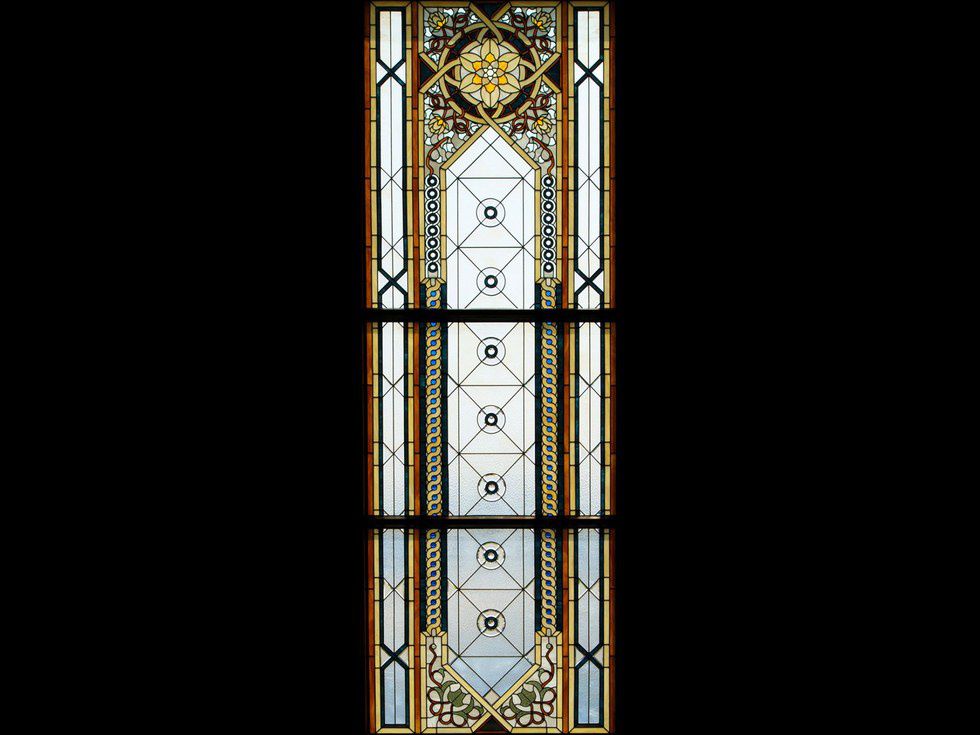
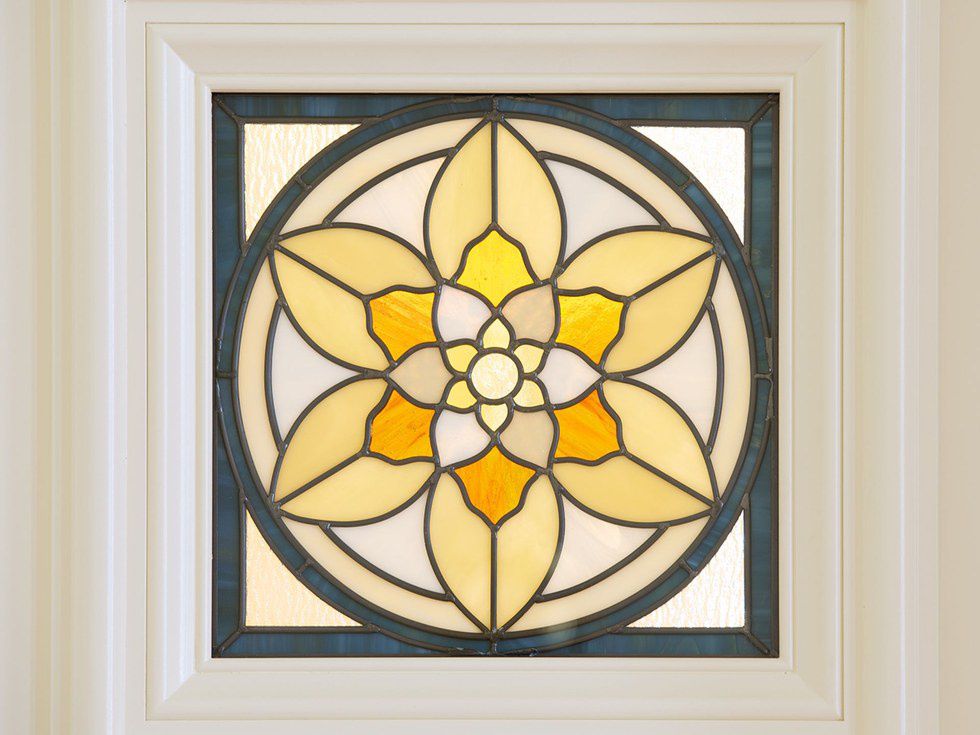
The tour guide, a member of the church, led us into an entryway and told us the next room we were going to enter was the baptismal room. As we stood there, I couldn't help but gaze around the small room in awe. Most of the entryway was white and cream, but the doors and trim were a beautiful, dark cherry wood. One wall had a slim, stained glass window resembling the one below.
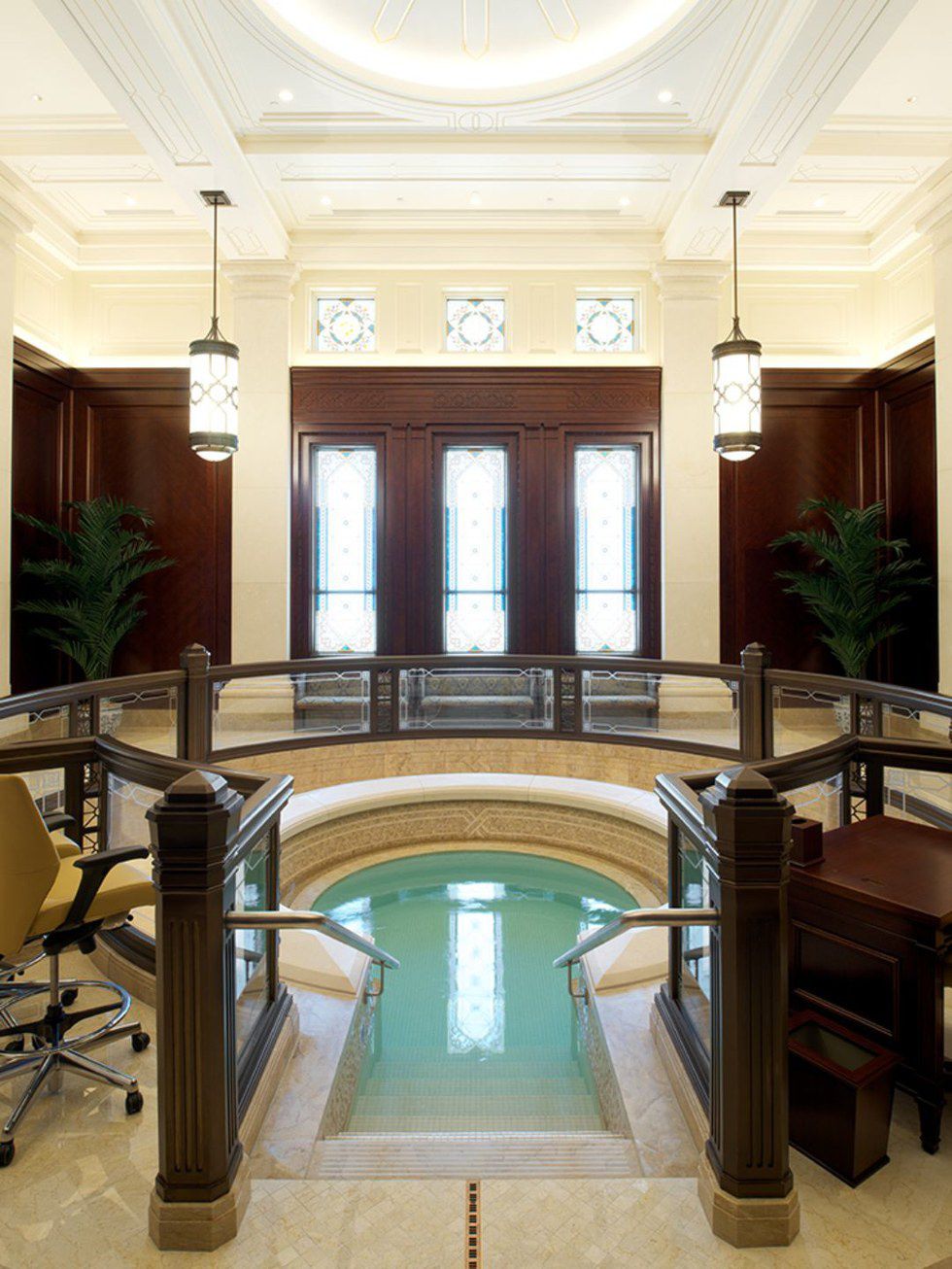
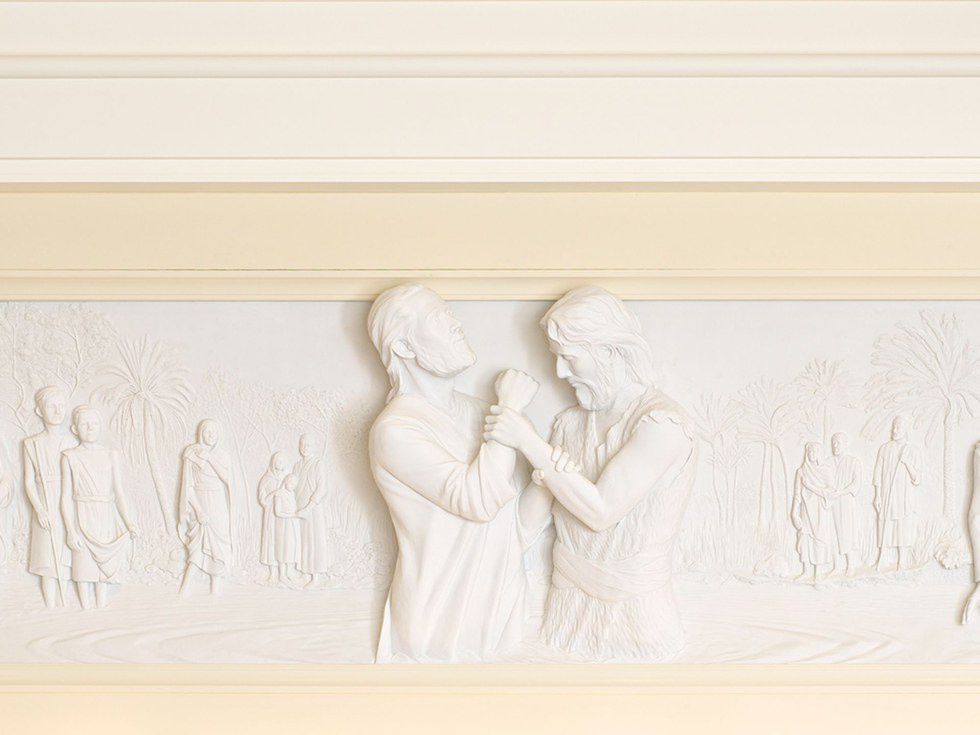
After another group exited the baptismal room, our group was led in. The room was bright and I could see my reflection in the marble floors. In the center of the room was a circular glass and bronze balcony that met stairs on one side that led to the tile baptism pool. As I looked over the balcony, I realized the pool was held up by a base of twelve large bronze oxen (not pictured). It was explained to us that this baptism pool was specifically for baptisms that are dedicated to ancestors, who can accept them or decline them while they are in the afterlife. Along the top of the wall, straight across from the stairs, was a hand-carved mural of Jesus being baptized, which took the local Avon artist a year to make.
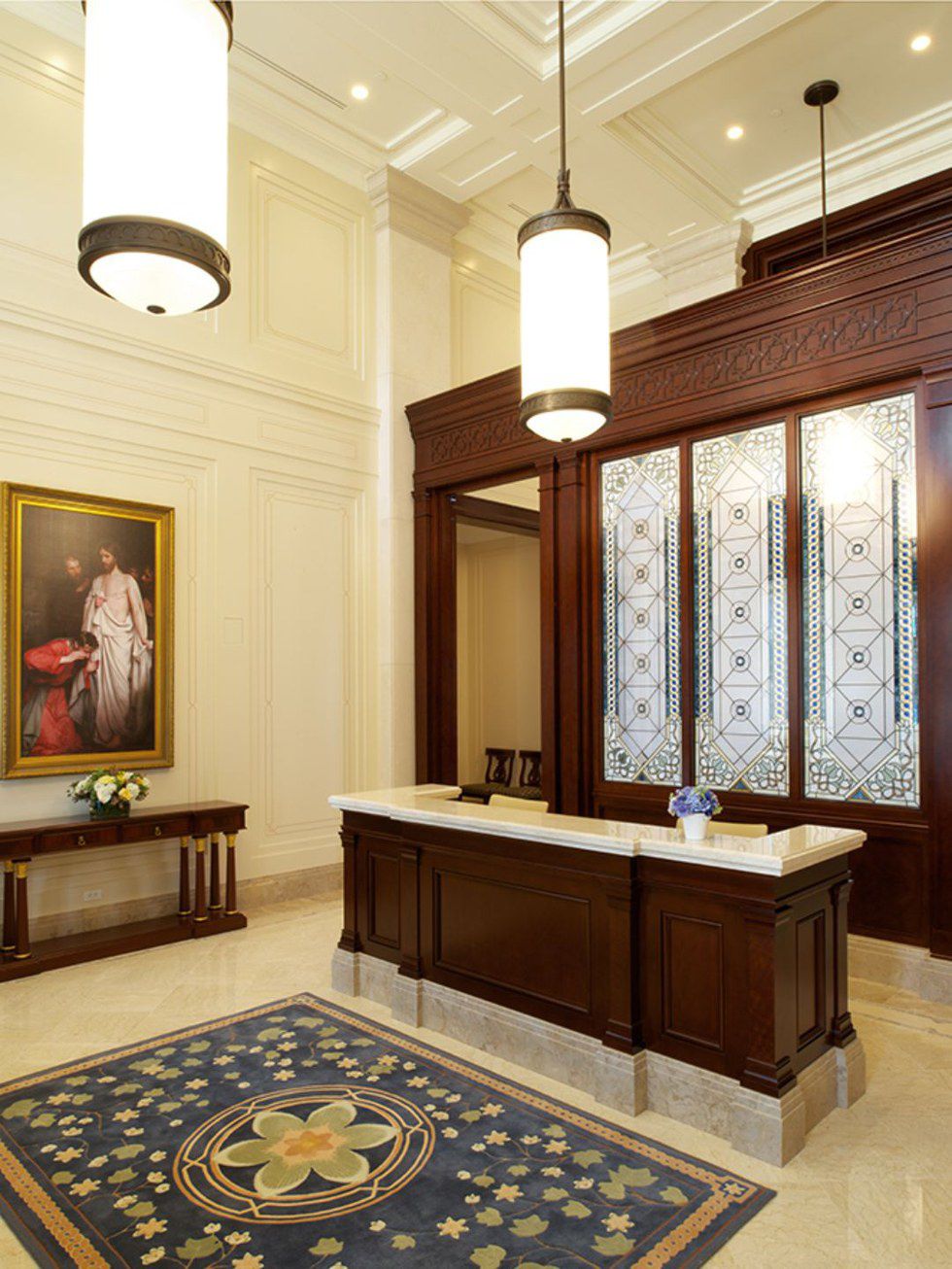
From there, we were led into the main entryway. We were told that every temple takes design inspiration from the state it is built in, which explained a plush rug on the floor in front of the main desk depicting a tulip blossom (Indiana's state tree). Tulip blossoms are depicted everywhere in the building, from the stained glass to the door handles.
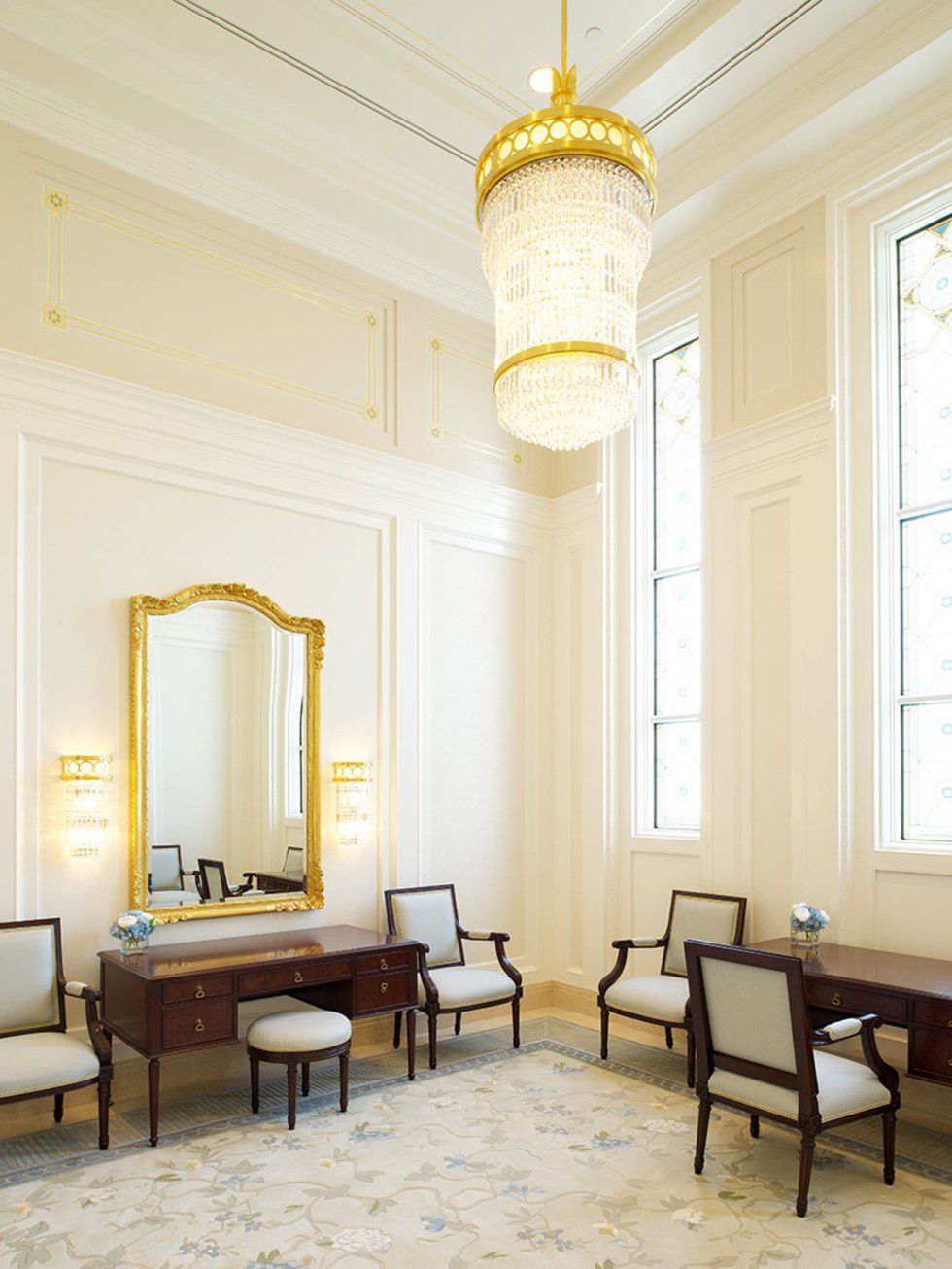
We then made our way to a rather small, bright space with a few chairs, two makeup tables with stools, and two large mirrors. This was the bridal room, we were told. Unlike the women, men only have a locker room to get dressed in. Our tour guide told us, "We like to spoil our women."
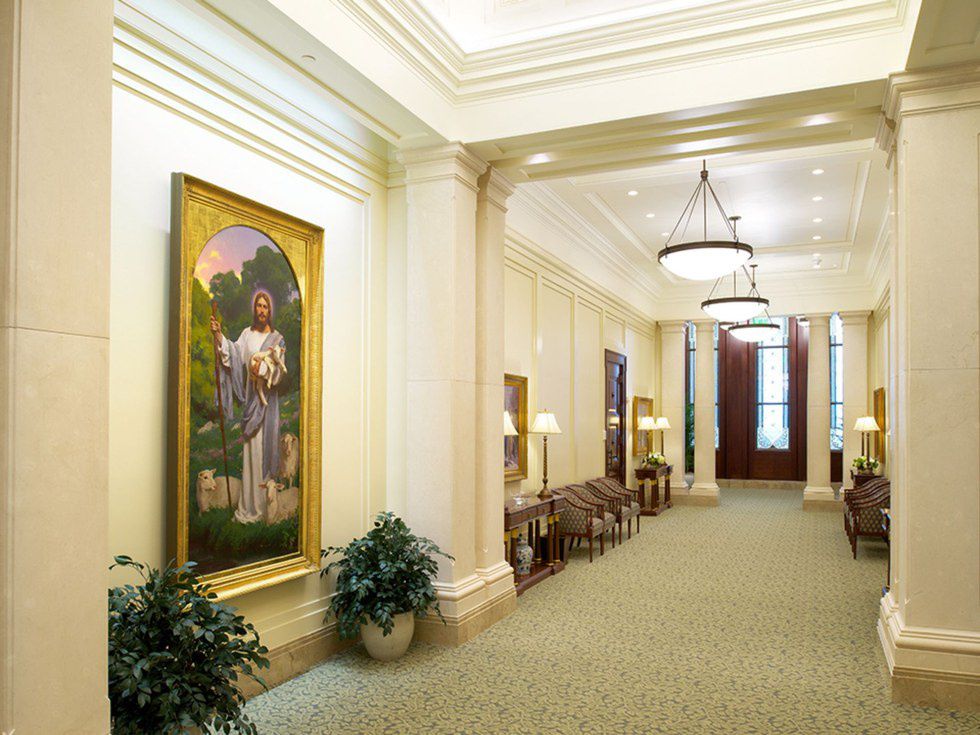
After leaving the bridal room, we were led through the men's locker room to a long hallway decorated with medium and large paintings depicting various scenes from Jesus's life as told in the Bible. On either end of the hallway were stained glass windows and other hallways splitting off to different sections of the building. Due to the various other members of the church stationed around our tour, no one was allowed to branch off or even look down these other hallways. The tour was very specific in its purpose.
While in this hallway, our group was told that most of the paintings are replicas except for two that were pointed out to us. One, a large painting of Jesus as a shepherd (pictured below) was the biggest painting in the hallway.
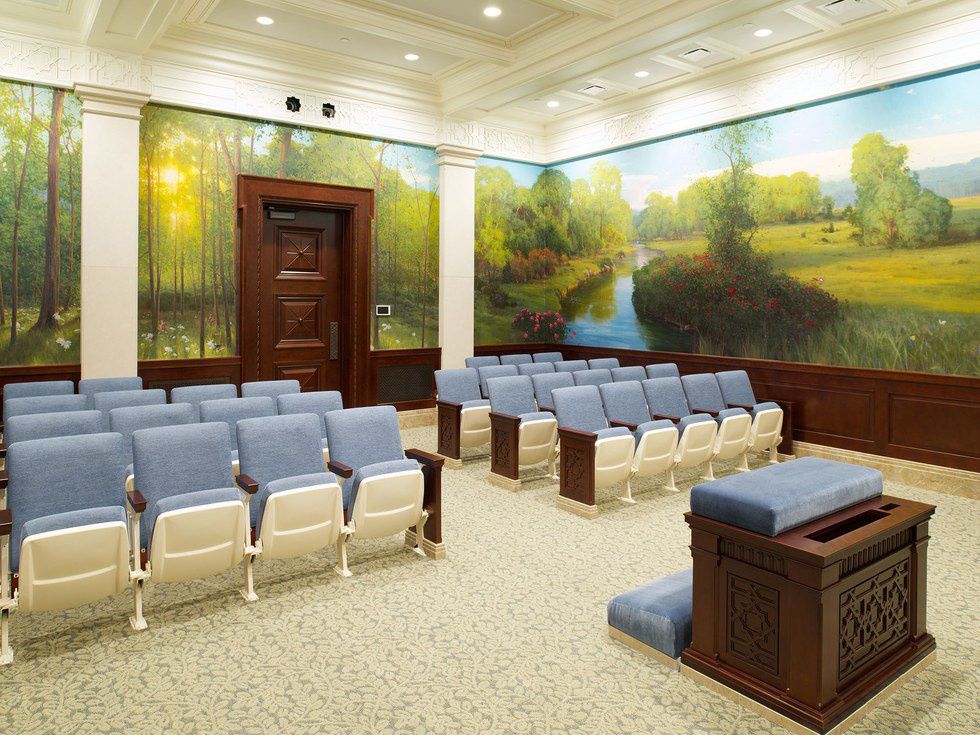
We walked through a door at the far end of the hallway (also pictured above) and entered one of the two ordinance rooms. The first ordinance room had no windows and a cherry wood border around the bottom of the room. On the top half of the wall was a mural that wrapped around the entire room. The tour guide explained that the mural was painted by an artist out of Arizona. Due to my lack of note paper, I don't remember the name of the painter. However, the guide told us that the painting took over a year to paint and that the artist, a non-native to Indiana, drove around the state to get inspiration for the painting. I must say, the mural did remind me of the Indiana countryside!
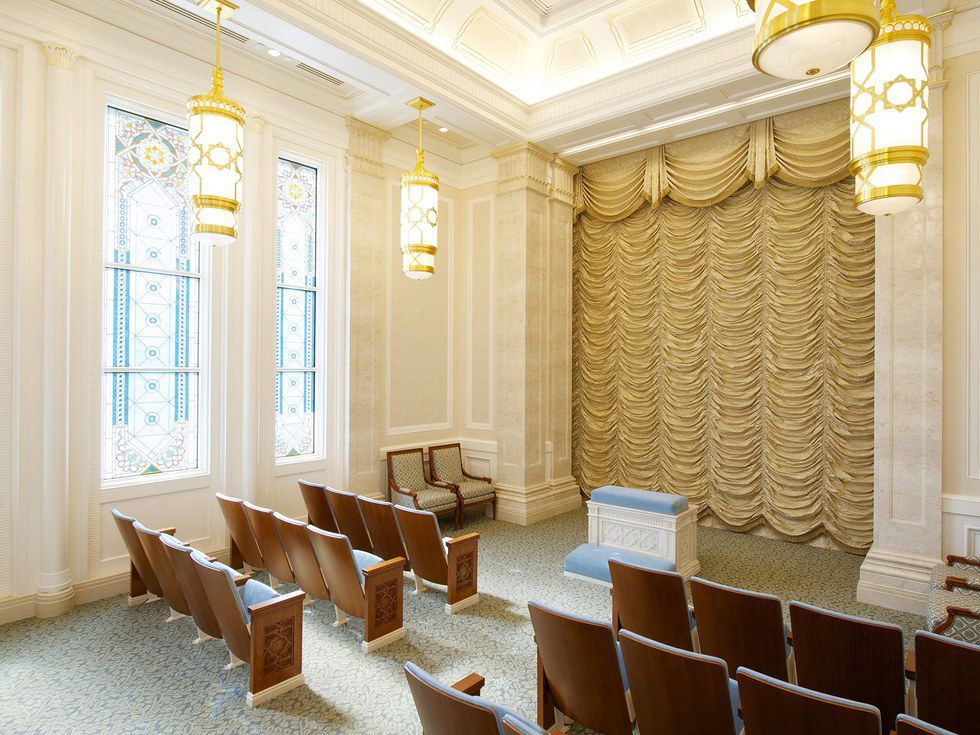
The second ordinance room had a wall of stained glass windows, vaulted ceilings, and various lighting fixtures to "keep the room bright."
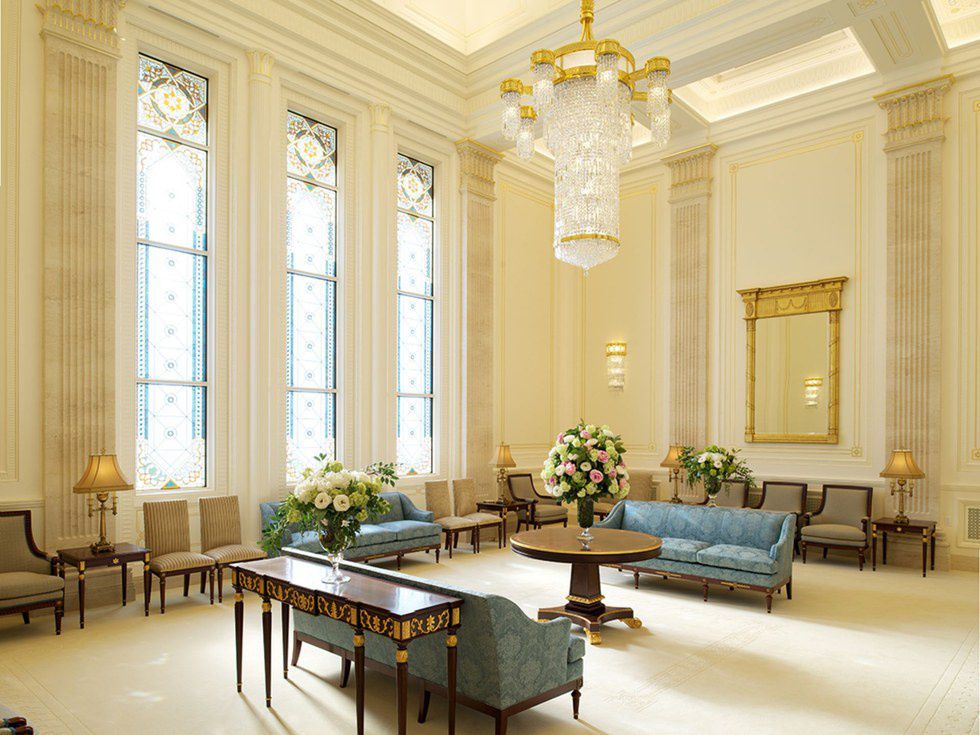
Our guide told us we were then going to the Celestial Room. He told us he wouldn't talk too much in this room because it was meant for meditation and thinking. This room was the most beautiful part of the tour. As pictured, one wall had three large stained glass windows. The ceilings were vaulted and had gold paint decoration in a minimalist design. A large chandelier hung in the middle of the room over a small table and two couches. While standing there, the guide whispered to us and said the carpet's ornate design had been handcrafted and cut into a single piece of carpet. It took two weeks to make.
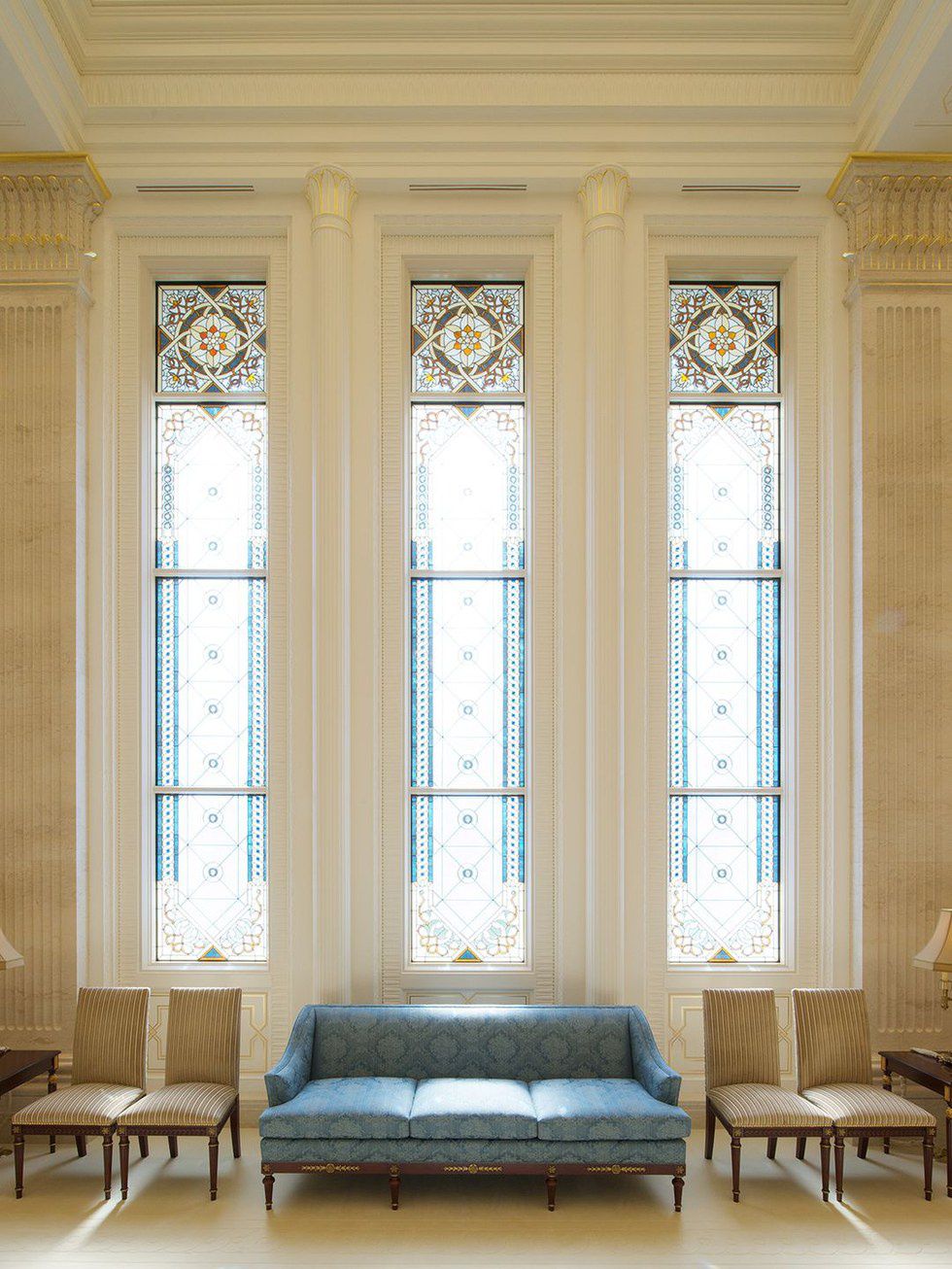
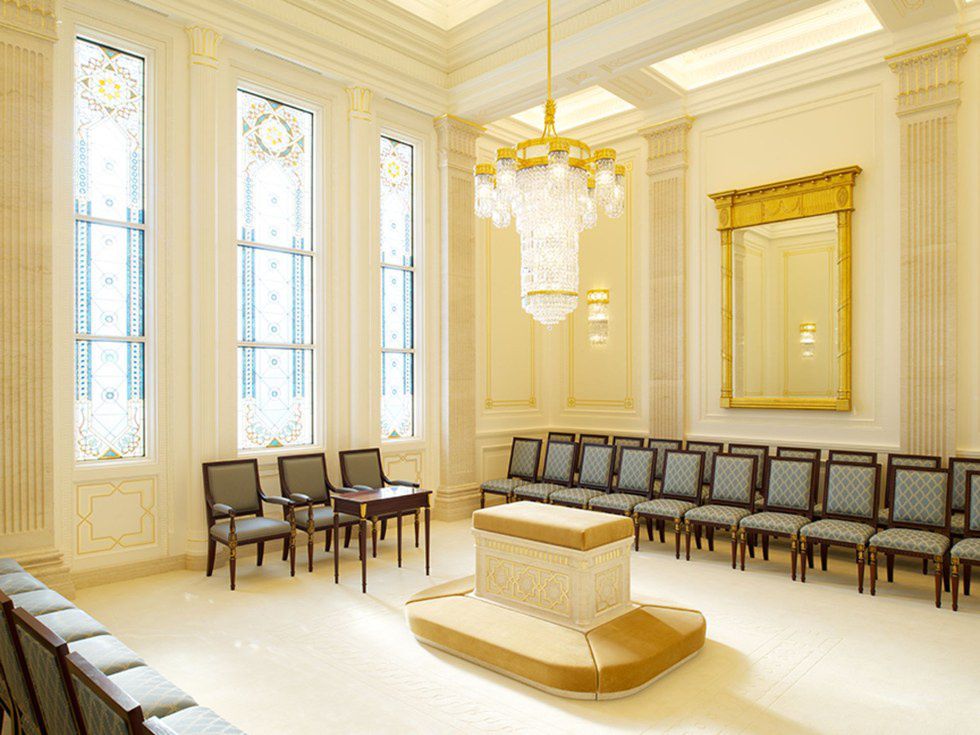
Lastly, our group was led into one of two Sealing Rooms, where marriage ceremonies take place. They have two of these rooms: one that seats 20 people and another that seats 50 people. Like most of the rooms, this one was also bright and had three stained glass windows on one wall. A chandelier hung over a cushioned alter made out of what looked to be some sort of stone. It was surrounded by more plush cushions that were to be knelt on by the married couple during the ceremony. Two large mirrors, just like the ones in the bridal room, hung on either end of the room and, if you looked into them, they reflected back and forth forever.
As we left the building, my father and I went to eat at a mini buffet and get-together. While in there, he and his business partner/president of their company, were reminded that the church is highly selective with who they choose for their building process. The fact that they chose Banning Engineering, my father and his partner's company, was a great compliment and they should be proud.
Overall, I was greatly impressed with the temple and am lucky I was able to be a part of the tour.
The Indiana Temple of the Church of Jesus Christ of Latter-day Saints is to open to the public from July 17 to Aug. 8. If you are in the Northern Indianapolis area, or are willing to travel, I suggest taking advantage of one of the FREE once in a lifetime public tours that will be available during these dates. It is to be dedicated Aug. 23, and after that, no one other than those of the Mormon faith are able to enter.
Editor's note: All photos in this article were taken from The Church of Jesus Christ of Latter-day Saints Newsroom, with permission of the Indiana Temple.