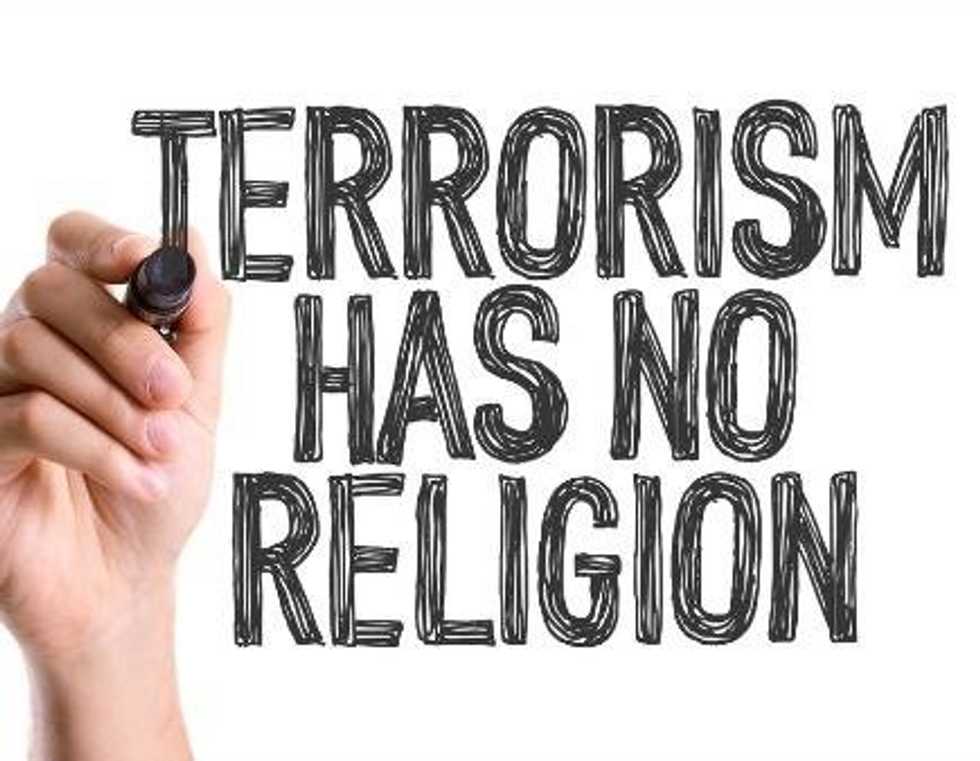
With the June 12 Orlando mass shooting, the most deadly in United States history, have come outcries of ignorance and fear about those of Islamic faith within the United States. Various sources (including personal testimony from his ex-wife, Sitora Yusify) have indicated that the shooter, 29-year-old Omar Mateen, may have been homosexual himself and struggling with his identity, and he was not considered to be very religious by Yusify nor his father. He did, however, call 911 to pledge his alliance to ISIS during his rampage, so his exact motives behind the attack remain unclear.
Whatever the exact reason(s) behind the shooting, it is becoming increasingly important to remember this: he is not representative of the vast majority of American Muslims. Islam is not our adversary.
Throughout history, it has been easy to use a “minority group” (in the U.S., maybe, but as a quarter of the world’s population, Muslims hardly seem like a “minority group” to me) as scapegoats—channeling our fears by trying to hold somebody accountable. This is counterproductive in actually preventing the seemingly inevitable massacres (assuming nothing changes) and is only aiding in the increase of hatred, division and unrest within our country. Unfortunately, many American Muslim citizens, who are equally as horrified and saddened by this attack on the LGBTQ community, are now being forced to face the backlash of a society that is filled with fear and mistrust.

Samra Habib reminds us that this tragedy affects American Muslims in the same way it is affecting the rest of those in the United States: “We are now used to the fact that, every time a criminally misguided Muslim commits an act of violence, the entire religion and all its followers are questioned and placed under suspicion in a way that isn’t replicated with other faiths. Our thoughts must for now be with those in Orlando. But over the next few days, as we try to recover from this atrocity and begin to piece together what it all means, it's important to remember that Islam is exploited by religious extremists all over the world, often in attacks committed against other Muslims.”
Picking out bits of the Quran that seem to be indicative of extreme violent ideation and applying it to everyone within the Islamic community can easily be done with the Bible, yet it is so rare to find somebody that believes extremists, such as the members of the Westboro Baptist Church, are representative of the beliefs of all Christians. Overall, the Quran sends a beautiful message of peace and hope, as well as urges forgiveness and restraint:
“If anyone slays a person—
unless it be for murder or for spreading mischief in the land —
it would be as if he slew all people.
And if anyone saves a life,
it would be as if he saved the life of all people."
Fear is justified. What is happening within the United States is terrifying. What is not justified is our desperate need to take this fear and misplace it upon so many people who are completely innocent. We must unite to support Muslim Americans, because they are just as scared for the next shooting as the rest of us. They are our classmates, neighbors,and friends.
Though they are critically vital topics of discussion, this article is not attempting to delve into the complexities of gun laws or society’s perpetration of widespread homophobia that led to a hate crime of this nature. However, it is also important to remember that this is not an “us” versus “them” within the United States regarding Muslim citizens—there is no “they.” There is simply “we.” And we all grieve for those who were lost on June 12.