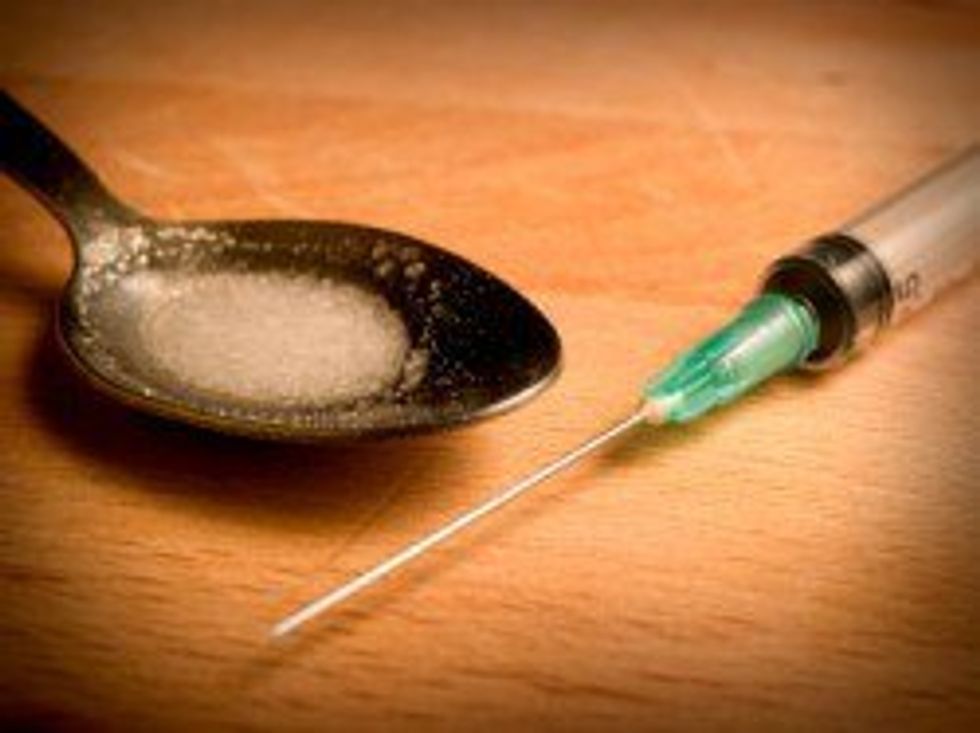
I am one of the more than 8,000 families affected by heroin overdoses. This past summer, my family lost our beloved brother, son, nephew, and cousin to a heroin overdose. For many years, heroin overdoses have been underrepresented until now. Now, America is seeing an epidemic of heroin addicts and overdoses.
My family’s tragedy has led me to become more proactive and educated in the fight to stop heroin addiction and overdoses.
When I found out that he lost his battle with addiction, memories of our childhood flooded back to me immediately. I was overwhelmed with guilt, frustration, and anger for the part of adolescence I hadn’t even realized he represented to me, the memories we shared.
If you told me years ago, that as I sat in those DARE classes, I would be one of those individuals who not only lost one loved one but two to drug overdoses, I would have laughed in your face.
I didn’t understand that it is an illness. The grasp the illness has on its victims, probably because what those DARE classes didn’t teach was that addiction is a disease.
It was simply the wrong path, the path to be avoided but what if that were you? No one ever taught me about that side.
That’s what friends said as they shared their words of compassion. I however became defensive and still am when I hear uneducated and misguided individuals share their opinions on drug addicts. I cringe and fight back tears as they say horrible things about what they believe an addict is, but then I smile at the sky because I know who my loved ones were.
After his death, I began to truly appreciate all that he offered the world and all that the world would miss out on. I never told my cousin this but in a lot of ways, I thought he was the coolest. He would come to family gatherings in his pick-up truck and tell incredible stories of sailing, fishing, and building—he had all the talents and gifts I wish I inherited.
I just kept telling myself that this was an awful nightmare, that he couldn’t really be dead.
I guess none of this really justifies why his death was so unjustified and difficult to me. It wasn’t the first time someone I knew died from an overdose.
But it was also not lost on me that as I was in West Virginia working—my family was grieving and heartbroken.
So maybe, it was a guilt-motivated decision to research addiction especially heroin addiction.
Maybe I wanted to, at the very least, change the way I thought and understood addiction. Maybe I felt, for whatever subconscious fueled reason, I owed something to my family and cousin.
After all, we came from the same family. We had the same opportunities, the same education, and the same kind of potential. We grew up with the same sort of love.
His death made me protective of his legacy. It made me protective of all addicts.
Heroin? In my family? This is still a thing that’s happening? It is a problem that continues to grow? It wasn’t a mishap? Defensive and determined, I decided to go to the core of this problem and do my own research.
I grew up in a larger than life family. My family was overprotective at times but at the root of this was love. My grandmother especially loved each of her grandchildren in their own unique way. She pushed us to be the best version of ourselves.
We were the lucky ones. We grew up with the support that we could be anything we wanted; it was an optimistic person's dreams.
Heroin, when I did finally learn what it was (which was likely in one of those DARE classes), seemed like a faraway threat, unreal to me. It was something that existed only in the neglected corners of the inner city, affecting only people who didn’t know any better. It was the cheap drug or cheap alternative to pills. I didn’t understand how my cousin could die.
I laugh now at how naïve I was, but sadly, that perception still plagues a lot of people in our country. As a culture, despite the statistics that urge us to reconsider, we still consider heroin a dirty word. We ostracize addicts instead of helping and comforting them. Pop-culture has glorified this addiction or demotes it to a shameful habit of those who we consider inferior. There isn’t too much conversation about what this stuff is really doing—how many lives it claims.
Addiction operates in a way that makes a lot of us uncomfortable, and I get it. It’s volatile and hurtful, and its route is difficult to classify or understand. So we default to the very distorted, dangerous, but reassuring opinion that drug addiction is exclusively a choice, an implication from someone else’s decisions. It’s a reassurance we are safe and sound because we would never—because our family and friends would never. It is easier that way but the reality is that it can be anyone.
We as individuals create a society of judgment, shame, and inability for those suffering from this illness. We lack proper knowledge and resources to adequately help. The unpopular but irrefutable reality is addiction has no regard for race, socioeconomic status, or education.
Addiction doesn’t care where you come from, who you family is, or what opportunities you have blessed with. It cares only about prying on its victims. It lingers in all but only seldom chooses its victims.
Addiction is not limited to the poverty-stricken or the irresponsible; that’s simply a lie we tell ourselves, it is just as likely to affect us as cancer.
One key difference, though, is that when someone develops cancer, we don’t shame them out of getting help by belittling them for why they got sick in the first place. We don’t provide judgment at their physical ailments, and tell them to “just stop.”
We make it clear that we support them in their fight to get better, to regain a healthy lifestyle, and to feel themselves again. Our levels of judgment don’t grow as a cancer patient’s illness progresses; it doesn’t affect how we perceive their battle. So, why is addiction any different?
If you talk to the families of those affected, the mutual decision is that there is a high level of judgment. So much so that individuals are discouraged from admitting they have a problem or a loved one does. I am immensely proud of my family’s strength to undermine these obstacles and share their story with the world. If not for this sharing, who do addicts and their loved ones turn to?
Contrary to what you may read in the news or on your social media accounts, every addict I knew was not a loser just a lost soul looking for help. My cousin did not have it coming. He did not deserve to die for his illness but receive the proper help and support he needed from society.
His story and the larger story of so many others like him is not embarrassing or shameful. It is not weakness. It is heartbreak. It is a disease. It is impacting people from all walks of life, from all families, from all backgrounds.
My cousin was a caring man who touched a lot of lives in his 31 years. I know he touched mine in a way I wish I thanked him for.
We may not ever know what caused his addiction. Whether it was the terrible boating accident that led him to being prescribed pain medication or whether it was peer pressure.
The biggest misunderstanding is in how heroin is first tired. It is the biggest misnomer that people try it for the thrill. For some it may be about the thrill, for others especially those of the wealthy class, it starts from the inability to receive pills so they turn to heroin for a similar high. Oxycodone is the leader of the pack—it is a highly addictive legal drug that is administered throughout hospitals and doctor offices every day. Even now, an 11-year-old can receive a prescription for this drug. This is pure insanity.
In recent years, Oxy has become a favorite of upper-income users. Since Oxy is legal, obtaining the drug, especially for the wealthy, really isn’t that difficult. Thanks to prescription forgery, overprescribing of pills, and pill mills—this addiction will only continue to rise. Despite revised FDA labels urging doctors to refrain from prescribing Oxycodone to patients with moderate, short-term pain, medical professionals are under no legal obligation to limit the distribution of this drug. The similarities between these two drugs are such that individuals who abuse Oxycodone are 40 times more likely to also abuse heroin. The biggest difference is that the suppliers of heroin are at their own will to produce this lethal substance with anything from metal to baby formula.
No one elects to be addicted to heroin. No one chooses to die alone; no one chooses to have EMTs attempt to resuscitate them.
No one deserves to be defined by his or her disease, even those suffering from addiction. No one deserves to be told their “illness” was a choice they made.
I wish I could say that in sharing my family’s story, in researching heroin, I have found a way to perfectly articulate and educate the world but I have not. I however can help those who need help by being a friend and a family member. I can plead that somebody acknowledges addiction as an illness.
I wish I didn’t know what it was like to lose someone I love to drugs but I do and therefore I will never stop fighting for the addicts of our world because every illness deserves fair treatment. Until it is you, until you get that phone call from your father saying they couldn’t save him and that he died, you have not authority to be a judger in this world.
To any addicts whether heroin or else, don’t ever give up. You can beat this addiction because there are good people in this world who will stand by you. Anyone can be affected by heroin: your daughter, your grandson, your cousin, your uncle, and even you. Heroin is something that should never be taken lightly.
For more information on how to help a loved one or yourself, visit, http://www.drugfree.org/get-help/helpline/
For statics on heroin especially those included in this article, visit, http://www.drugabuse.gov/drugs-abuse/heroin.