I first saw Bernie Sanders when he appeared on "The Colbert Report" in late 2014 and Colbert interviewed him on his views. He warned of a corrupt political system where politicians were beholden to the interests of the wealthy, how America could learn from countries like Denmark in instituting universal healthcare and free college education, and what it means to be a Democratic Socialist. I had never heard of the Independent senator from Vermont, but after watching the interview I found his ideas quite interesting and thought provoking. Most interesting to me was when asked by Colbert if he was going to run for President, and Sanders said he was thinking about it. At that point in time, the 2016 election had no official contenders, but it was widely speculated that this would be a Bush vs. Clinton match up and Donald Trump was not even a thought.
I concluded that the senator had no chance since he was an Independent, and Hillary Clinton was a powerhouse of a candidate. Also, where will he get the money to run this campaign? He talked about raising donations of $20 and $40, but who would do that? It all seemed unrealistic and silly to me. However, I looked forward to seeing what he would bring to the race and honestly wished him the best. Little did I or anybody else knew at the point that Bernie Sanders would give Hillary Clinton a run for her money.
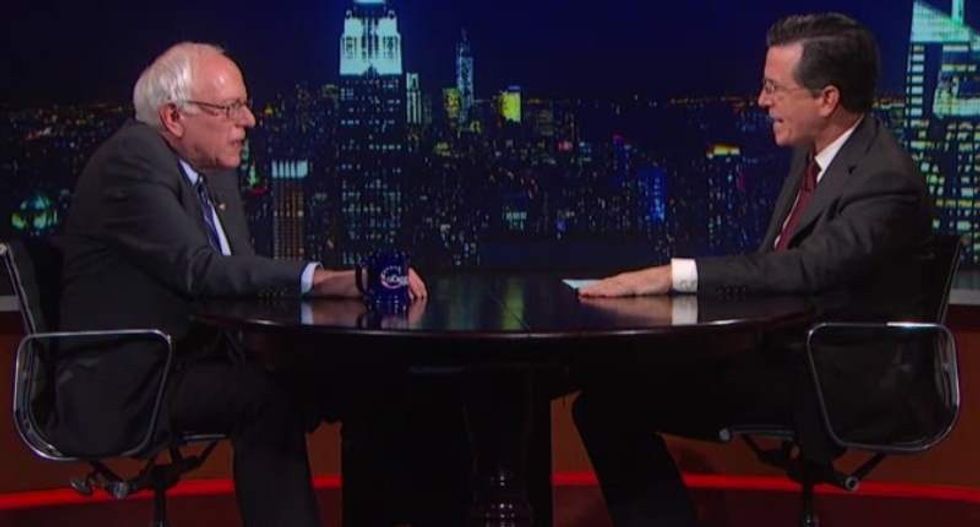 Senator Sanders telling Colbert that the nation's healthcare system is great for people who can afford it, emphasizing the need for universal healthcare.
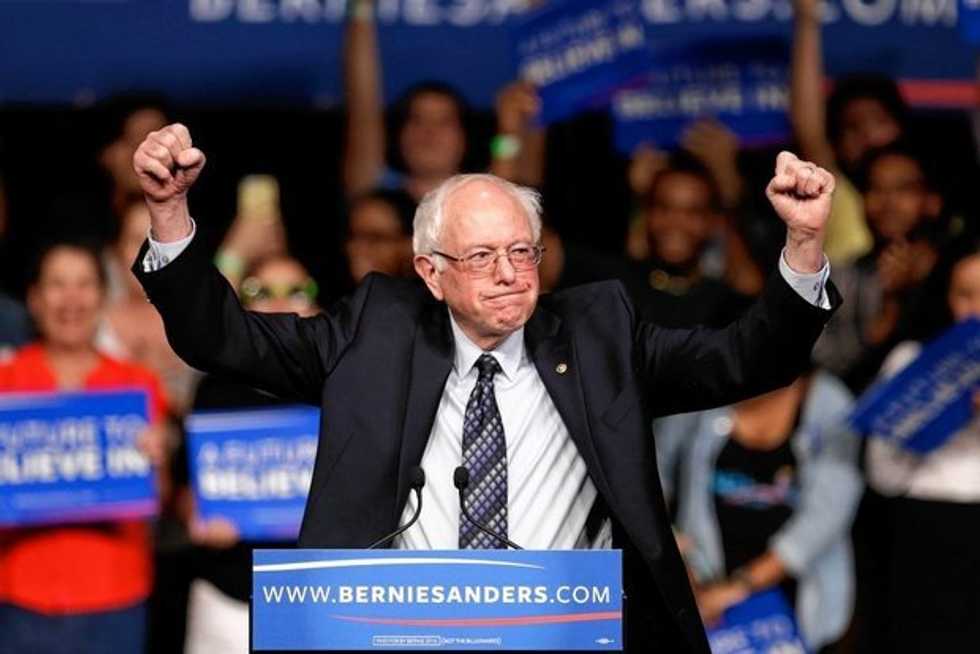
Fast forward to today, when Bernie Sanders successfully raised over $200 million through individual donations, carried 22 states, and acquired over 1,800 delegates -- only 400 delegates shy of winning the Democratic nomination. Officially, he lost the race to Hillary Clinton, and it is looking to be a Clinton vs. Trump match in November.
Now would be the time to work together and unify the Democratic Party, but the senator's refusal to drop out of the race and endorse Clinton has temporarily stopped this from happening. Why? What is his goal? What will he achieve from doing this? Perhaps Sanders never expected to reach this far, and wanted to draw attention to the larger issues that the Democratic Party failed to address, such as income inequality.
In a live broadcast to his supporters on June 16, Sanders called for the political revolution to continue arguing that "the political revolution means much more than fighting for our ideals at the Democratic National Convention and defeating Donald Trump. It means that, at every level, we continue the fight to make our society a nation of economic, social, racial and environmental justice." He urged his supporters to take their ideals with them to every occupation in the workforce such as education, health services, and especially in city and state politics.
Sanders has championed the idea of a political revolution throughout his campaign and framed his election to the presidency as the start of it. Now that it seems unlikely, he is urging his supporters to carry out his legacy by fighting for more progressive policies to be enacted. This was his goal all long and he has been constantly saying this on the campaign trail citing that more working people should stand up and demand for a better America for everyone and not just the 1%.
By not dropping out, Sanders is in a powerful position to mold the Democratic party to a more progressive party and adopt his ideas. And it's working. Hillary Clinton was originally against raising the minimum wage to $15/hr, now she is for it. The topic of income inequality is now talked about by both parties.
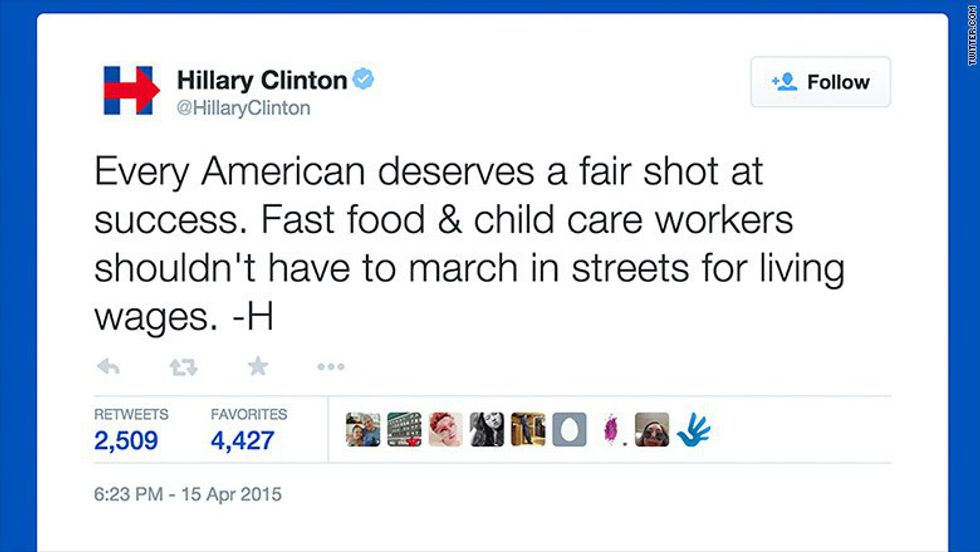 Clinton supporting the Fight for 15
Hillary Clinton may have won the battle for the Democratic nomination, but Bernie Sanders won the battle of ideas. In order for the Democratic party to attract his supporters, they must give in to his ideas. Since Bernie said he will stay as a Democrat after the election, he has great leeway in ensuring people that share his ideas become elected in every level of politics. After inspiring millions of Americans, mostly young voters, his political revolution will no doubt bear fruition long after this election, making him the real winner of this election.