
Rap and Hip Hop are two of the most popular genres that we have in today’s music industry. These genres generate more than ten billion dollars per year, according to Julie Watson of Forbes (2004). Since 2004, we can all rest assure that these genres have gotten more attention and a bigger fan-base which means more money, right? These genres were once ignored, are now gaining publicity all over the world, not just America. Hip Hop and Rap have had a tremendous impact on mass media and western culture.
Most of us believe that Hip Hop and Rap are the same genre, or they are just called by different names. Most believe there is no history that can distinguish the two from each other. Perhaps, you are right.
But then again, you are wrong. Hip Hop and Rap have histories and have different meanings or foundations that allow it to become what it is today. Hip Hop is a culture and Rap is a component of what grew out of Hip Hop today.
The histories of Hip Hop and Rap first developed in one of the most diverse city in the world, New York City. Home to one of the largest communities of African American and Latino American, it grew on these people in the 1970s. There are various evidences that DJ KOOl Herc gave a platform (and also the name, Hip Hop) for Hip Hop to grow what it is today.
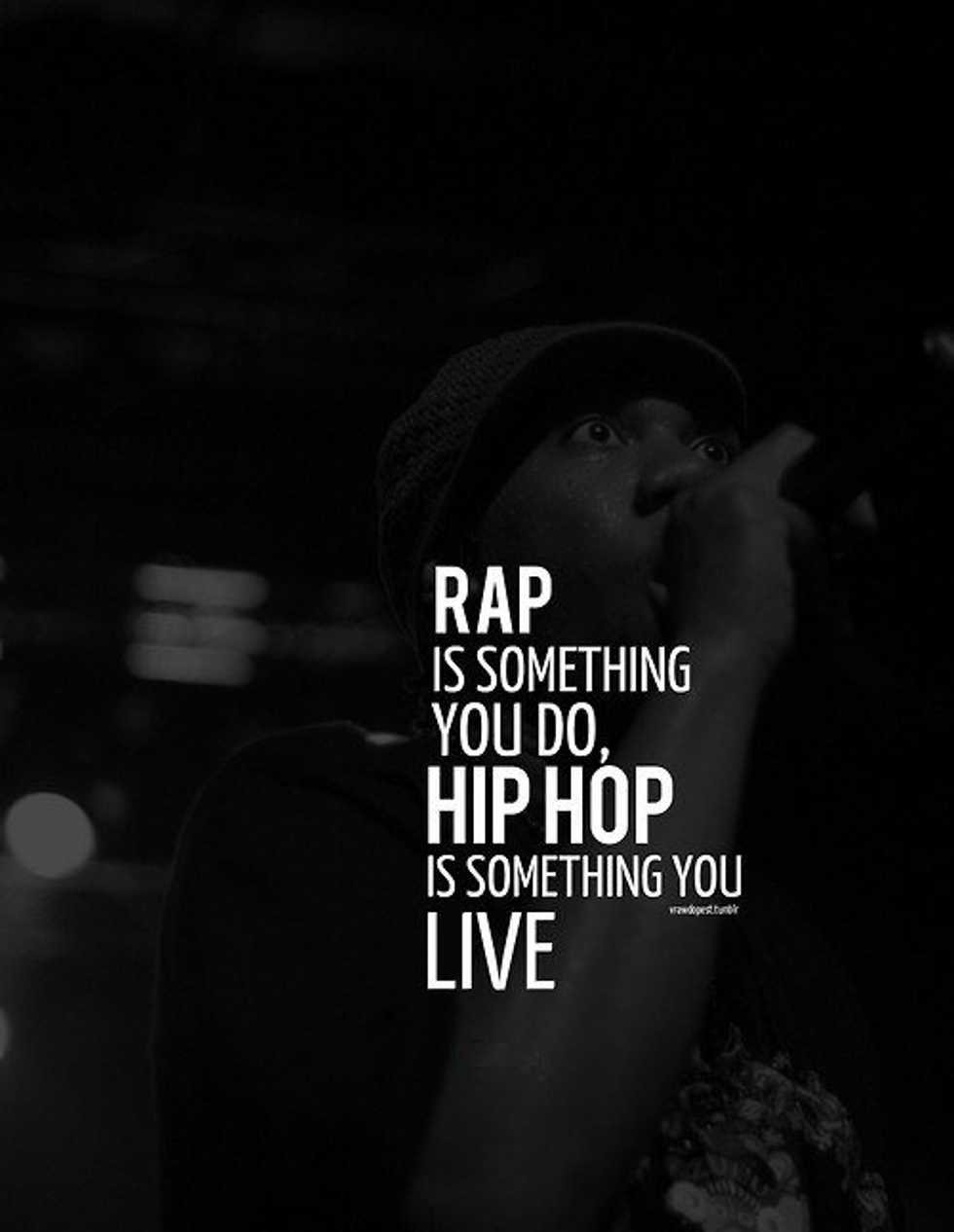
Again, I want you to view Hip-Hop as a culture. Hip Hop is based on how you lived or how you faced oppression whether you are Caucasian, Black, Asian, and others. Hip Hop tends to focus on the real problems that people who live more normative lives might actually experience. Hip Hop can be viewed by how YOU LIVE.
The elements of Hip Hop contain Djing (famous for clubs, house parties, high school dance performances), Emceeing or MCing (Rapping), Graffiti (tagging, street art), Breaking (dancing), and Beatboxing. Almost every single day, you could find these elements of Hip Hop in your everyday life.
The best example of what make Hip Hop can be found in the artists: Kendrick Lamar with recent albums such as To Pimp A Butterfly, which was dropped in 2015, and the newly recently dropped album, Untitled Mastered; and the Fugees, who were famously known in the 90s for songs as The Mask and Ready Or Not. To Pimp A Butterfly actually paints the culture of American’s society in an album and how it has been treating people for the last several decades. Examples of what Hip Hop means to represent can be found in the Grandmaster Flash and the Furious Five’s released album in 1982, The Message, which was an example of tackling social issues of poverty, crime, and the stress of living in a dangerous city.
But dare I say that Hip Hop is a culture because it gave birth to different styles and connections that people of all different demographic can listen to: jazz rap in which De La Soul are well known for; A Tribe Called Quest added jazz and R&B samples to their beats; and the Fugees is an example of creating their own style with reggae and soul.
This is where the situation gets complex. While Hip Hop can be defined by how YOU LIVE, Rap can be defined by something YOU DO. Rap is best defined by what you do, often in times by objectifying through material objects today’s generations.
Yet there are numerous sources which stated that in the early 1970s and 1980s, rappers provided social commentary on issues that were not receiving regular media attention. Soon, popular rap began to focus more on commercialism and relationship issues.
Just as Hip Hop can be found in the artists, rap is represented by the artists: Lil’ Wayne, Eazy E, French Montana, Big Sean, LL Cool J, and dare I say, Jay-Z. They speak on what they do more often than rather what they do or what goes around them.
While, yes, you can be hard to now differentiate artists on which category they belong to, perhaps we can just say that there are more to Hip Hop and Rap than what we really think it is. The two are like family and that while they are different, they correlate with one another. Hip Hop and Rap helped influenced the music that we are listening to in the 21st Century that consumers and music lovers sometimes look at these two genres as one genre.
My argument is not to prove out that calling Hip Hop rap is wrong; rather it is that Hip Hop and Rap were not the same when they were created and that they have a history. Perhaps we can have an easier discussion about who is the greatest rap artist and hip hop artist because we will know look at artists by using the histories of these two genres.
These genres have stimulated interests from different demographic and different countries. While most most major artists come from New York or Los Angeles in the 90s and Blacks or Hispanics, we are now seeing artists come from so many countries and demographics. Today’s music is an example of that: we have arguably the best rapper today from Canada, Drake; to the best Hip Hop Artist from the South, Outkast; to the Midwest with the greatest Hip Hop, or you can argue that he is also a rap artist as well, Eminem and Kanye Wes; and to the West with B-Real, Snoop Dogg, and Tupac; to having females rap artists and hip hop artists, Lauryn Hill, Nicki Minaj, and Missy Elliot; and to having Caucasian hip hop artists and rap artists such as Eazy E and Macklemore.
Rap was once and still being seen to express the current events and to tell the stories of people within the local community. Hip Hop can be seen to give optimistic view and hope for the future and to remember the successes of the past.
Once can say that Drake and Kendrick Lamar belongs in these two separate categories. Perhaps, we can debate on whether that these two should be judged based on the merits separately of what they bring to music in the next article.
Ice-T, who is considered to be an icon among hip hop in the late 80s and early 90s, briefly explained in a video about the difference between Hip Hop and Rap. He directed a performance documentary called, Something From Nothing: The Art of Rap. The documentary can give us a better understanding of the hip hop culture and its component, rap.