

Unusual.
Off the beaten path.
Homey.
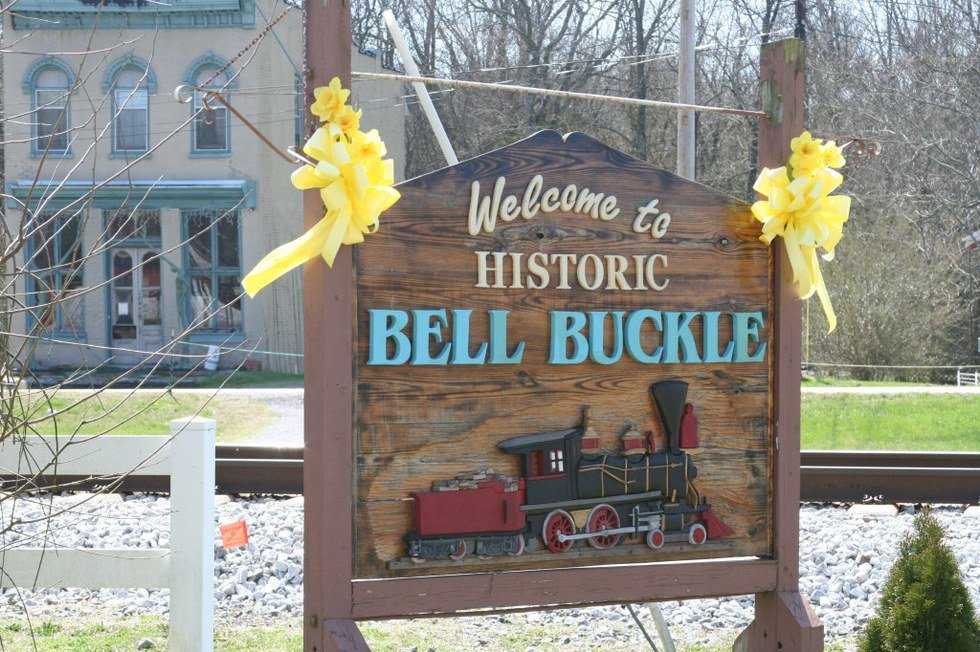
Ask residents of Bell Buckle, Tenn., about their town, and those are just some of the words they’ll use.
Nearly 160 years old, Bell Buckle was a rundown shanty with few inhabitants. The houses were old, covered in vines, and falling apart on their very foundations. Prepped for demolition in 1977, Bell Buckle was set to be no more. Luckily, a group of artists who appreciated the area for its quaint heritage claimed the town as their next project. With one shop owner selling handmade quilts and another selling original artwork, the townspeople were struggling to keep above water. Still, the little community wasn’t giving up.
Mildred Locke, a master quilter, was the town’s saving grace. She opened the first quilting store, and took the liberty of inviting the National Quilt Show to Bell Buckle, and, with the help of a woman by the name of Anne Skrugs, also started the annual craft festival.
Locke ignited a new light in the town, and in a wave of rental properties, purchases, and renovations, Bell Buckle became a center for arts and crafts well known across the nation.
With such a roller coaster history, what is it about this little town that makes it so special?
“It’s the people.”
At least that’s the view of Heather Williams, a member of the Bell Buckle Chamber of Commerce. As the manager of Bell Buckle’s Southern Charm Tea Room, Williams was enthusiastic about answering questions, while serving food, with the biggest smile on her face.
Lacey Smith, another waitress at Southern Charm, had to agree. She smiled, holding her 8-year-old daughter, who often comes to the restaurant after school to help her mom.
“The people make it special.”
She has lived in the area for 16 years and every day, she said, she felt that she had the “funnest job ever.”
Perfectly Painted is one of the oldest stores in the area. Having been standing since Mildred Locke revamped the town, it has remained in the same family, selling the same handcrafted artworks as it did in the beginning. A cashier for Perfectly Painted and student at Cascade High School, Brianna Davis, was excited to talk about her town, if only to alleviate the boredom of the mundane job. “Meeting the tourists and getting to socialize” are her favorite parts of working at the antique store.
While walking around the strip of shops, visitors will notice that the small town has an unusual amount of through traffic, which makes walking from store to store a bit dangerous. It also makes parking a bit of a hassle, crossing roads in order to get to the gravel lot, and then leaving by backing out onto the busy road. Still, with so many kind people working in the shops and wonderfully original goods to be bought, it can be easy to ignore the unfortunate design flaws.
After going in and out of a few stores, visitors should stop in at the Bell Buckle Café for a soda and a piece of pie. Jeanette Heinike, owner of the Bell Buckle Café, is happy to talk to anyone who’ll listen about her town’s history. She’ll even introduce you to a few of her usual patrons.
One of these regulars, a woman by the name of Katherine Strobel, has been a resident of the town since its renovation in 1977, and is able to tell you in great detail every historic fact she knows. Her husband, Eugene, had been mayor in 1978-1979, and all three of her children attended the local private academy, Webb School, which has been in operation since the late 1800s. Strobel’s friend Florance Hall has also been a longtime resident of Bell Buckle. Her house is one of the oldest in the area, with a history to match. Having started as a hotel in the early 1850s, it was remodeled into a mortuary during the war before becoming the beautiful Victorian-style house at the edge of town.
After a day spent talking to folks in the town, I took away several bits of interesting history, but even more than that, I learned why this community fought so hard to keep its town in its place. Ask any of the residents, and they’ll equate Bell Buckle's greatness to the same thing. But, I think Heinike says it best:
“There aren’t a lot of people, but they’re neat. It’s a neat place.”
















