

“The days are gone forever when our enemies could blackmail us with nuclear bombs.” –Kim Jong Un, Supreme Leader of the DPRK
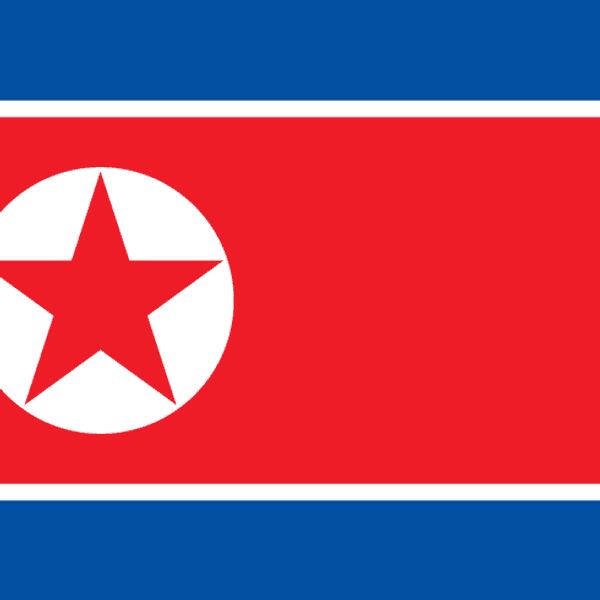
To many, North Korea seems to be nothing more than a particularly irritable nation state that holds an irrational level of contempt towards the United States. North Korea, officially known as the Democratic People's Republic of Korea (DPRK), is well known for its outlandish claims of being able to level our entire nation with their massive arsenal of nukes. It can be hard to take such flagrant threats seriously when the small country employs technology that is years behind any modern nation, but as retired senior British intelligence official John Scarlett once said, you must never underestimate the opposition.
In order to understand the threat the DPRK poses to the United States, one must first understand the deep-seated hatred that the "People's Republic" has for the U.S. and its allies. Tensions began in 1950 when a civil war erupted in Korea between the Soviet-backed North (DPRK) and the UN-backed South (ROK).
The U.S. was not prepared to use military force to protect its interests until the DPRK let loose an onslaught of tanks and heavy artillery on the ROK on June 25, 1950. Unfortunately, the ROK did not have any counter-measures to the North's heavy weapons, leading to a piecemeal response that did little to stop the well-equipped North Koreans.
After this attack was committed by the North, the U.S. decided to intervene. Seeing the attack as evidence that communism would continue to actively challenge the free world, the maintenance of a non-communist South Korea was quickly prioritized. This series of events, known as the Korean War, led to the extremely anti-Western culture North Korea has today.
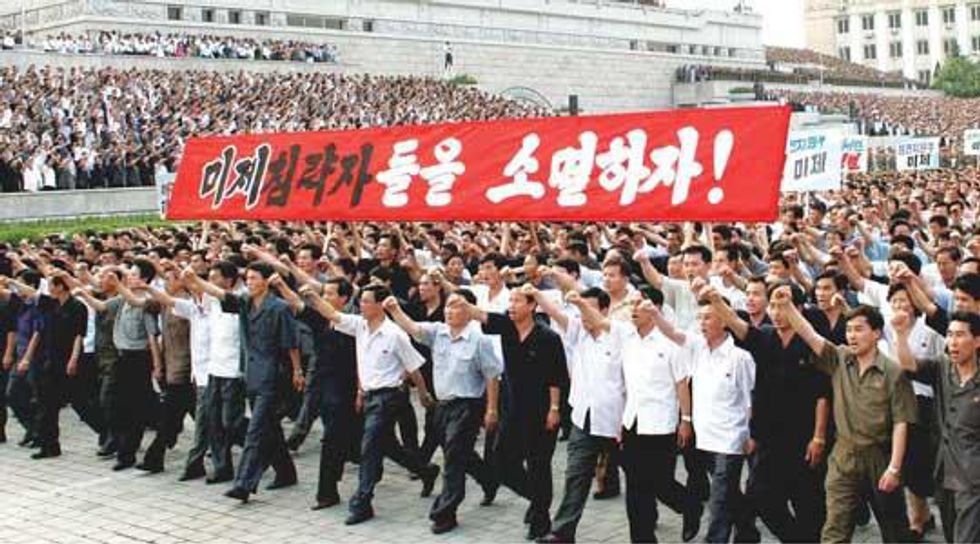
Propaganda is perpetual, all media is state-owned, and access to the outside world is limited as much as possible. The country even celebrates "Struggle Against American Imperialism Month," an annual re-affirmation and denunciation of America's allegedly brutal war crimes during the Korean War. In regards to the overall threat the DPRK poses to the United States today, one thing is for certain: North Korea's regime is hell-bent on taking revenge for the Korean War.

Despite the seething hatred North Korea has for the United States, even all the intent in the world couldn't bring down the United States unless it was backed with some serious firepower. This is where the facts come in: according to the Nuclear Threat Initiative, North Korea is in possession of several nuclear warheads and long-range missiles. Although these missiles are fairly inaccurate, the mainland U.S. is quite a large target—it wouldn't be unreasonable for the DPRK to hit a heavily populated area (given that everything else goes their way). Even if North Korea did not attack the United States mainland itself, the U.S. is contractually bound to defend as much as 25 percent of humanity; the sheer amount of mutual-defense treaties the United States has signed means that even one small misstep by North Korea could lead to a global nuclear war. On top of that, with China being North Korea's most influential ally, that could mean two of the (arguably) most powerful countries in the world engaging in direct warfare.
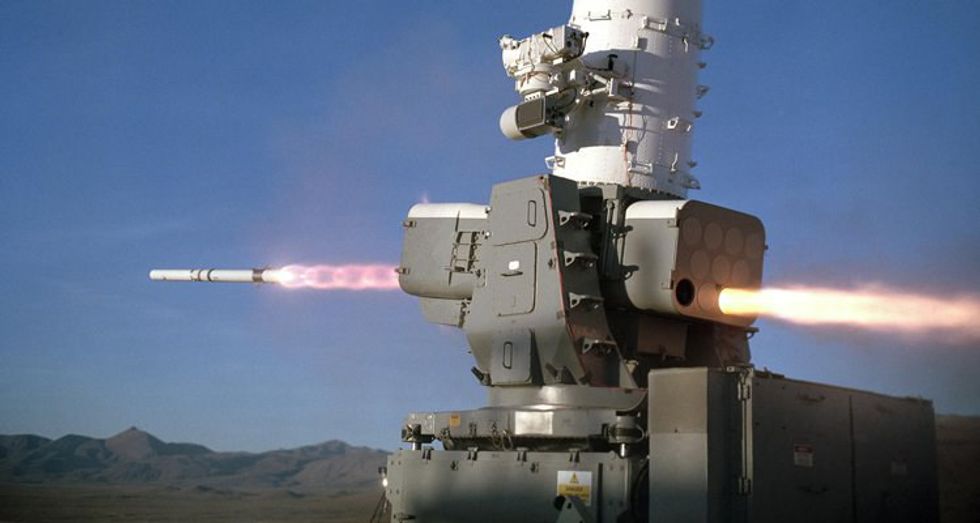
Despite the serious threat North Korea poses to international stability, there are some caveats. First of all, the United States has access to high-tech missile defense systems with the capability to deter almost any short, medium, or long-range missiles directed at the country. Second of all, recent events such as China and the U.S. agreeing to tougher sanctions for North Korea have demonstrated China's willingness to keep the quick-tempered nation in check. The DPRK's military (regardless of nuclear capabilities) is also significantly less powerful than that of the United States. While the DPRK spends approximately $7 billion per year on their military, the U.S. spends a cool $689.6 billion.
All in all, North Korea is without a doubt one of the biggest threats to international stability that we face today. With China keeping the rogue nation in check and the United States having a substantially more powerful military, the chances of North Korea engaging in a war of attrition are low—the country's equalizer would likely be biological, chemical, or nuclear weapons. Luckily, their missile technology is still flawed and their nuclear warheads are small, and the modern world is flush with missile defense systems that could easily defend against North Korea's arsenal. North Korea might be able to launch a faulty rocket every now and then, but the chances of delivering it without interference are low. All things considered, international destabilization is quite plainly the most calculable and notable threat that North Korea poses to anyone.