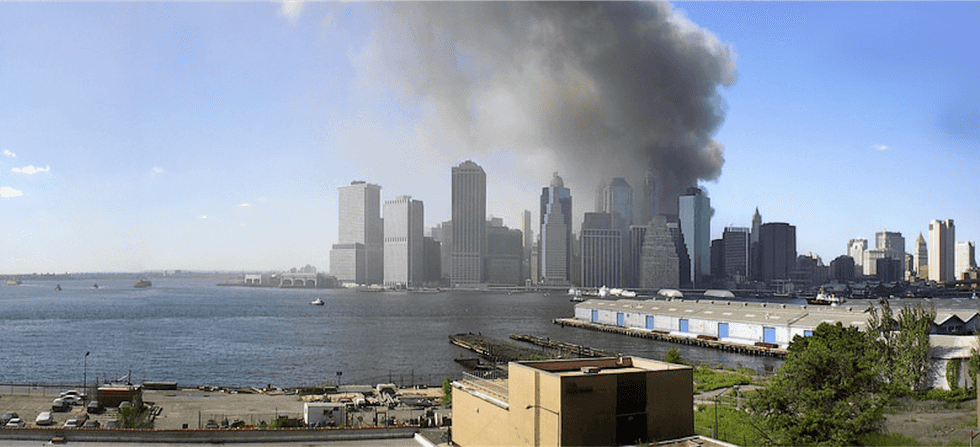
Fifteen years ago, the whole world changed when two planes flew into the World Trade Center. This event was so catastrophic, so iconic, that it has come to be known simply by its date: 9/11. For a week afterward, airspace was completely shut down in the United States. When the airspace opened up, the process of flying was changed completely. My own grandfather recalls a time when a person could walk into an airport, buy a plane ticket, and walk onto the plane five minutes later. According to Farecompare.com, since 9/11, airport security has been increased. A specific ID (on which the name must match the ticket) is required, shoes must be removed at checkpoints, all baggage must be screened, liquids above 3.4 ounces are not permitted, items such as laptops must be pulled from luggage, outerwear must be removed, there are body scanning machines, pat-downs have been enhanced, and non-ticketed visitors are no longer allowed at the gates. Because of this increased security, airports now recommend that a passenger arrives several hours before departure.
While this increased security is completely understandable – and indeed comforting – it also marks a huge shift in world culture. The increased security is a reminder of what has happened in the past – and what might happen again. This security is a reminder of the fear terrorists aim to spread each time they attack. This culture of fear has permeated the United States in particular in the past 15 years, especially as news reports have continued to shed light on shootings, bombings, and other violent events around the country. Many of these attacks have been by American citizens – like Sandy Hook in 2014 – while others have been by those from other countries. Of the two men held responsible for the Boston Marathon in 2013, one was a naturalized American citizen and the other had lived in the United States for ten years. Neither man had been born in the United States; they came from the former Soviet republic of Kyrgyzstan. Because of these attacks (both domestic and foreign in origin), as well as the resultant changes of 9/11, many Americans may no longer feel safe even in their own homes.
Even beyond America, tragic events have unfolded just in the past 12 months. In November of 2015, gunmen and bombers spread through Paris, France and murdered at least 128 people. In April of 2015, two bombs were set off at Brussels airport. This fear culture has touched more than just the United States of America.
So, as a citizen of the world, how does one deal with the carnage and death which is so prevalent in this fear culture? Each person has his or her own solution. Some seek the advice of those they consider wiser and others push the fear to the background and try to ignore what is there. Still, others might shove this fear culture in the faces of the second group, trying to convince them that they need to do something now about the fear which runs rampant through the world. Some might even pursue the idea that the government was behind many of these attacks, as a way to deflect from the reality that something must be done or in an attempt to run away. In the end, the best way to deal with the fear culture is to face the reality of what is happening and then act on your feelings which result. But make sure you are informed of the truth of that reality: a false report of what happens can result in stigma, prejudice, and major issues in the future.