



Picture, if you will, a young college freshman. He's slumped over a table in College Library at three in the morning, surrounded by a pile of empty Red Bull cans, coffee cups, an apple that he lied to himself that he’d eat while studying (to stave off the freshman fifteen) and the half-empty Topperstix box that he actually ate. Why does he look so lost, you ask? Well, since this freshman was me, I’ll tell you. He’s lost because that giant notebook spread open on the table in front of him contains the notes from all his classes this semester, but since there’s no rhyme or reason to the way he wrote them down, he’s been unable to find the information he needs for tomorrow’s exam, which he now knows he’s going to fail (I got a C, but I’ll never know how). This was my crucible moment about study habits—the moment I knew that high school was truly over.
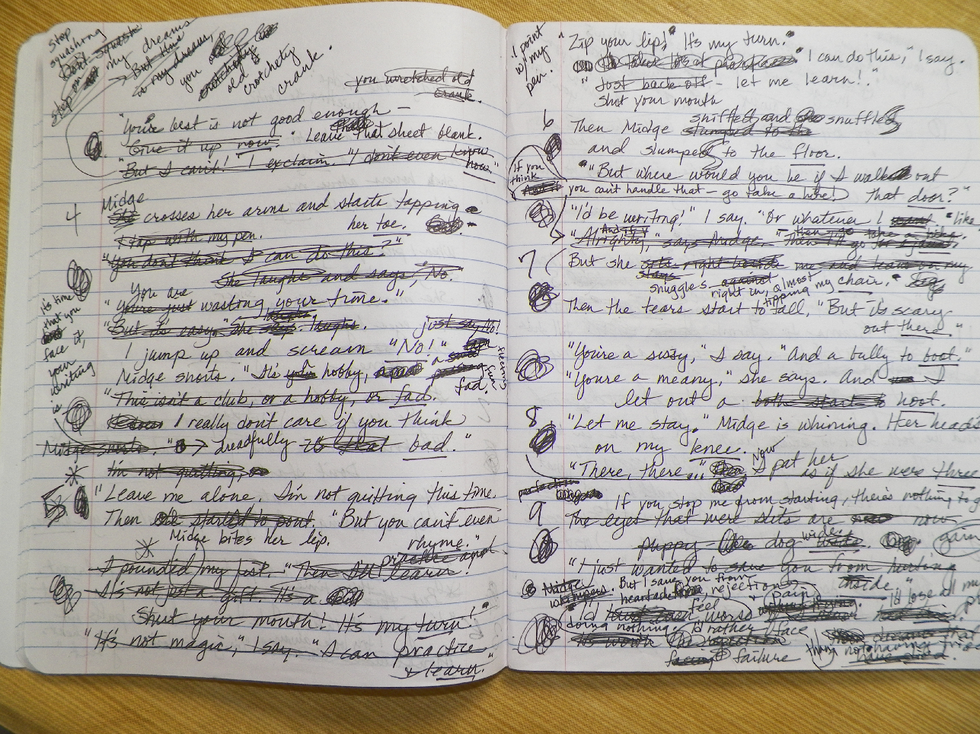
[Image Credit Amy Ludwig VanDerwater]
(not an actual image of my notebook, but a decent approximation)
So why am I, a second-semester sophomore, only telling you this now? Well, I only endorse stuff that I use myself, so we’ll call the last year a trial run.
What emerged from that moment of utter hopelessness was the Cornell note taking system. For those of you who figured out that this genius system is far and away the best way to take notes long ago, congratulations! You’re a smarter person than I. For those of you who, like me, were unaware of its existence, welcome to the way you should take notes for the rest of your life.
Cornell notes is a system devised in the 1950s by a professor at (no surprise) Cornell. It stems from the idea that simply writing down what is said in lecture is insufficient to learn information - that we as students must revisit our notes frequently to increase recall and retention of information. To that end, one sets up a page of Cornell notes as follows:
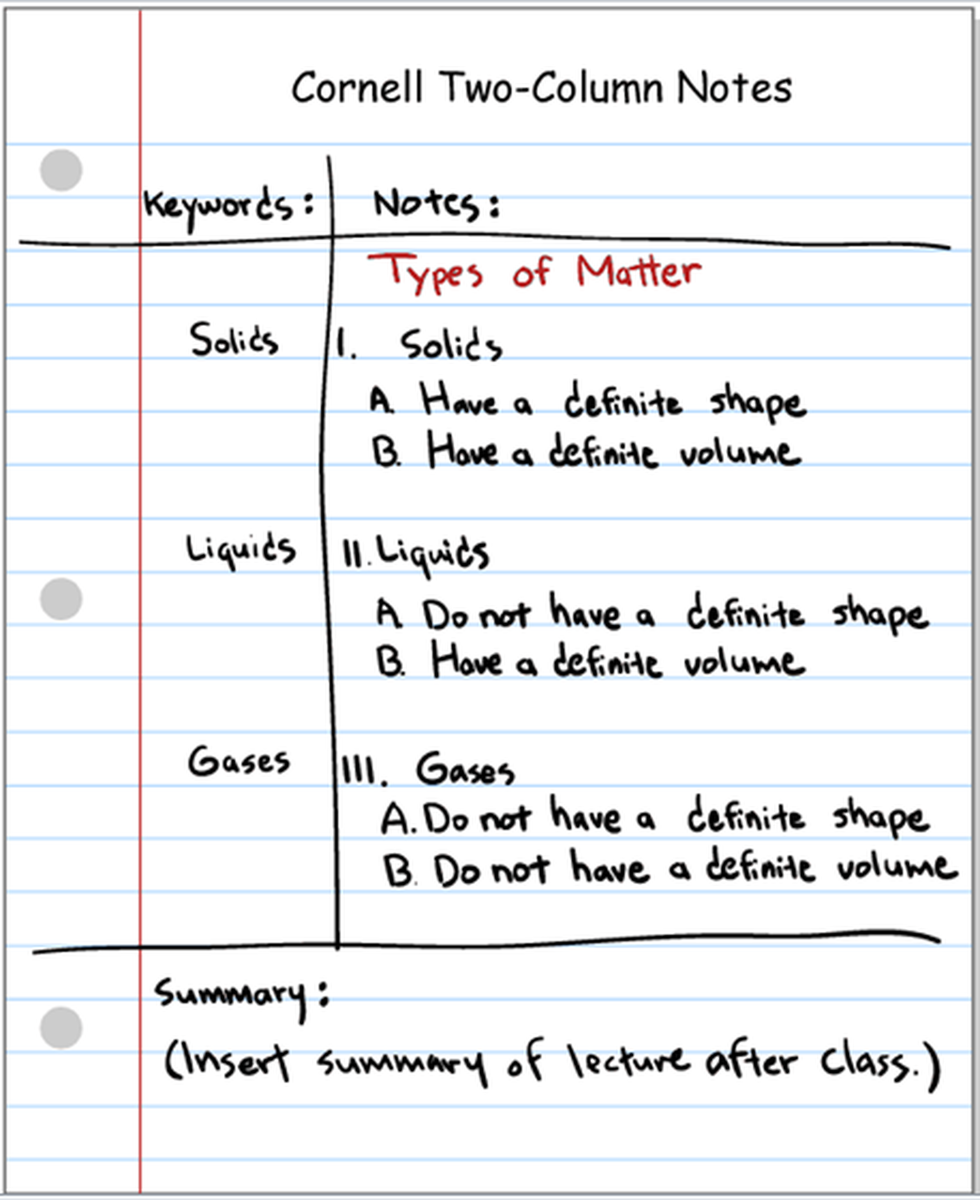
[Image Credit: MVCA Earth Science]
In the right column (measuring about six inches), take notes as you usually would. In the left column (measuring about 2.5 inches), pull main ideas from the content discussed, or note questions you have. For added benefit, color code these main ideas with the content they correspond to (for those wondering, yes, I do get weird looks when I show up to lecture with a ruler).
At the bottom of the page, leave a two- to three-inch space. Later on the day of lecture, summarize in one or two sentences the content of notes on this page.
I know this sounds incredibly labor-intensive, and it is at first. But as you get use to this system, you will find that your ability to take notes is both faster, as you inherently condense information to fit within the space of the guidelines, and more legible as the summary and main ideas sections allow for quick and easy location of material. Never again will I be that hopelessly tired and totally screwed freshman in the library.

















