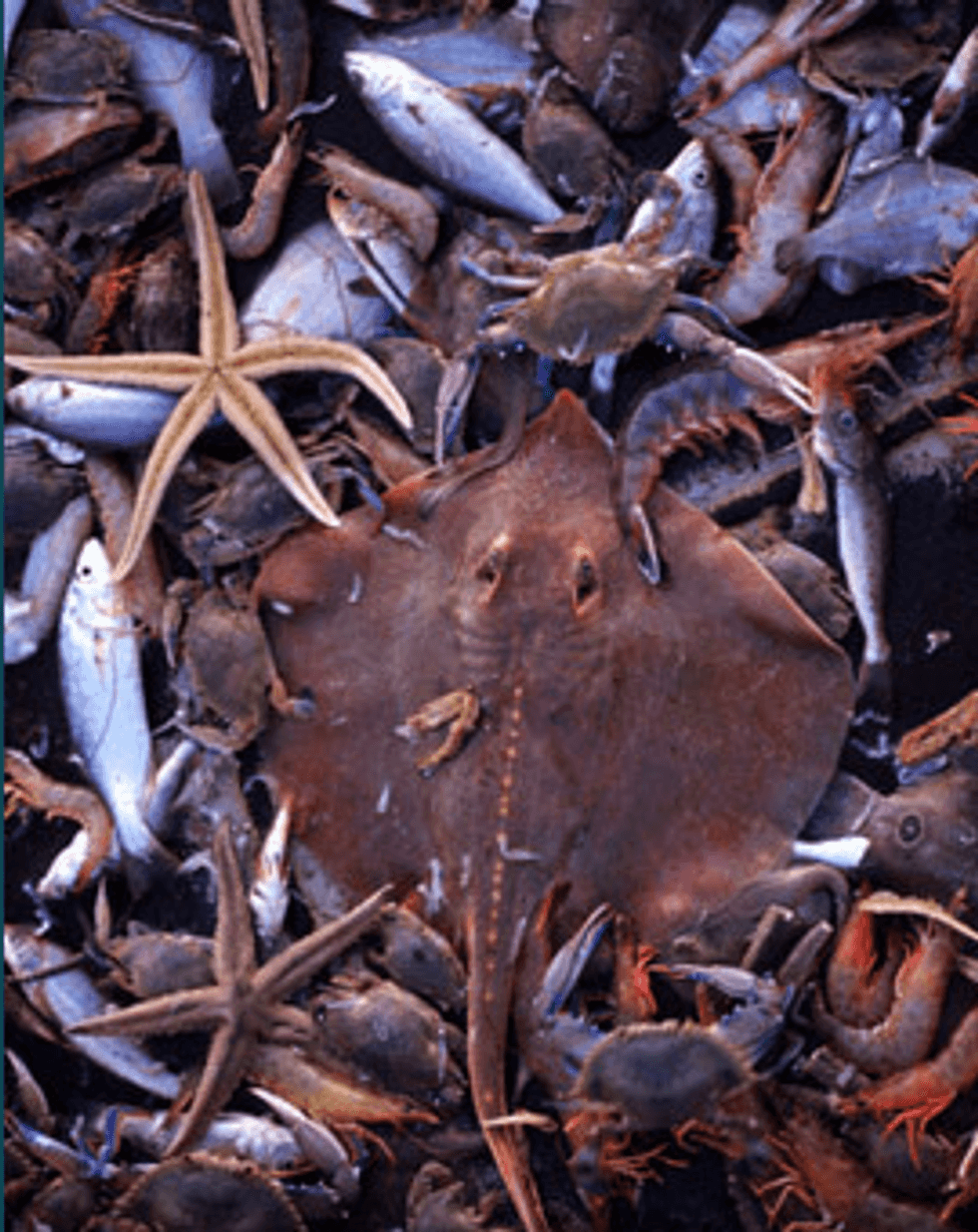
Bycatch. Many may ask: what is that?
It is a marine species or fish that is caught unintentionally with the target catch. Qualifications for bycatch usually are different species, wrong sex of the species, or underdeveloped species.
How big of a problem is bycatch?
In the United States, according to PBS, the annual bycatch rate ranges from 17-22%. Most bycatch is caught by different commercial fishing techniques that are non-specific to catching a certain species. These practices include dredging, long-lining, bottom-trawling, and gillnetting. Long lining can cause death of many birds and marine animals due to its long hooks; bottom trawling disturbs the habitats of the sea floor and many coral reefs, using heavy gear to drag along the ocean floor.
Gillnetting attracts birds and other animals to it and manages get it caught in its lines. Gilnetting is the use of a floating net, held down by weights and held straight by floats. The net is so thin that it appears nearly invisible in the water. Dredging uses metal teeth to dig into the sea floor to catch shellfish, this can cause significant damage to organisms already dwelling. Longlining involves a fishing line with various baited hooks that can range from one to 50 miles long. They are either placed on top or the sea floor. They usually are responsible for the deaths of sea turtles, sharks, and sea birds.
Bycatch causes more problems than one when it comes to revenue. While around 20% of all catch is being lost every year, it also affects the lives of animals who are vulnerable to the different methods of fishing. Bycatch has affected many species of turtles, birds, and dolphins. Around 200,000 loggerhead and 50,000 leatherback sea turtles are captured annually; there is a species of dolphin that will become extinct in a few years. It also kills and damages many other marine species with a 20% death rate.
It not only creates problems for animals but also fishermen. It damages the gear, and it wastes their time when they have to throw the waste overboard.
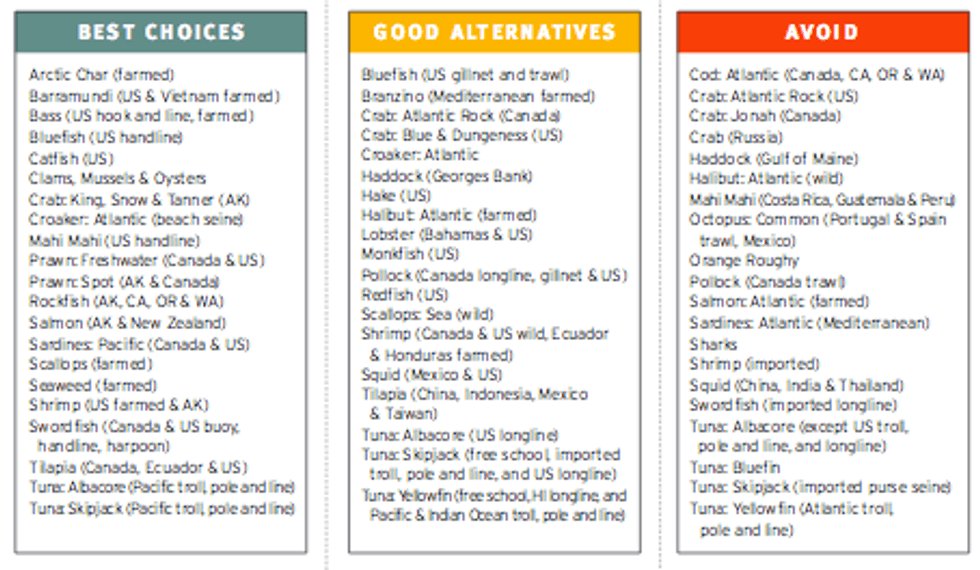
There is a way to reduce bycatch-and that is ordering food that is caught with low bycatch rates. There are multiple ways to do this: ask the chef what kind of fish(or animal) they are serving and how it was caught(if they know), also, go to seafoodwatch.org. They usually have the best information on the subject. There is a card that specifies what is good to eat, what is ok, and what should be avoided based on geographical location.
Here is the card for New York: