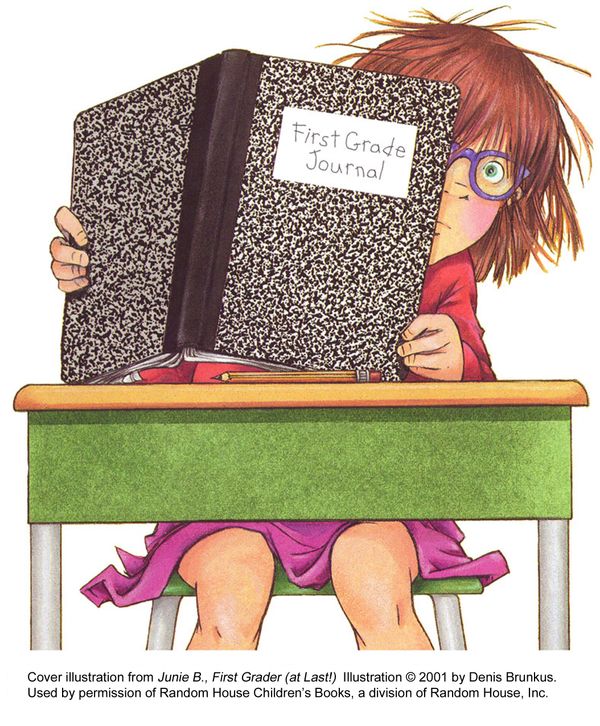

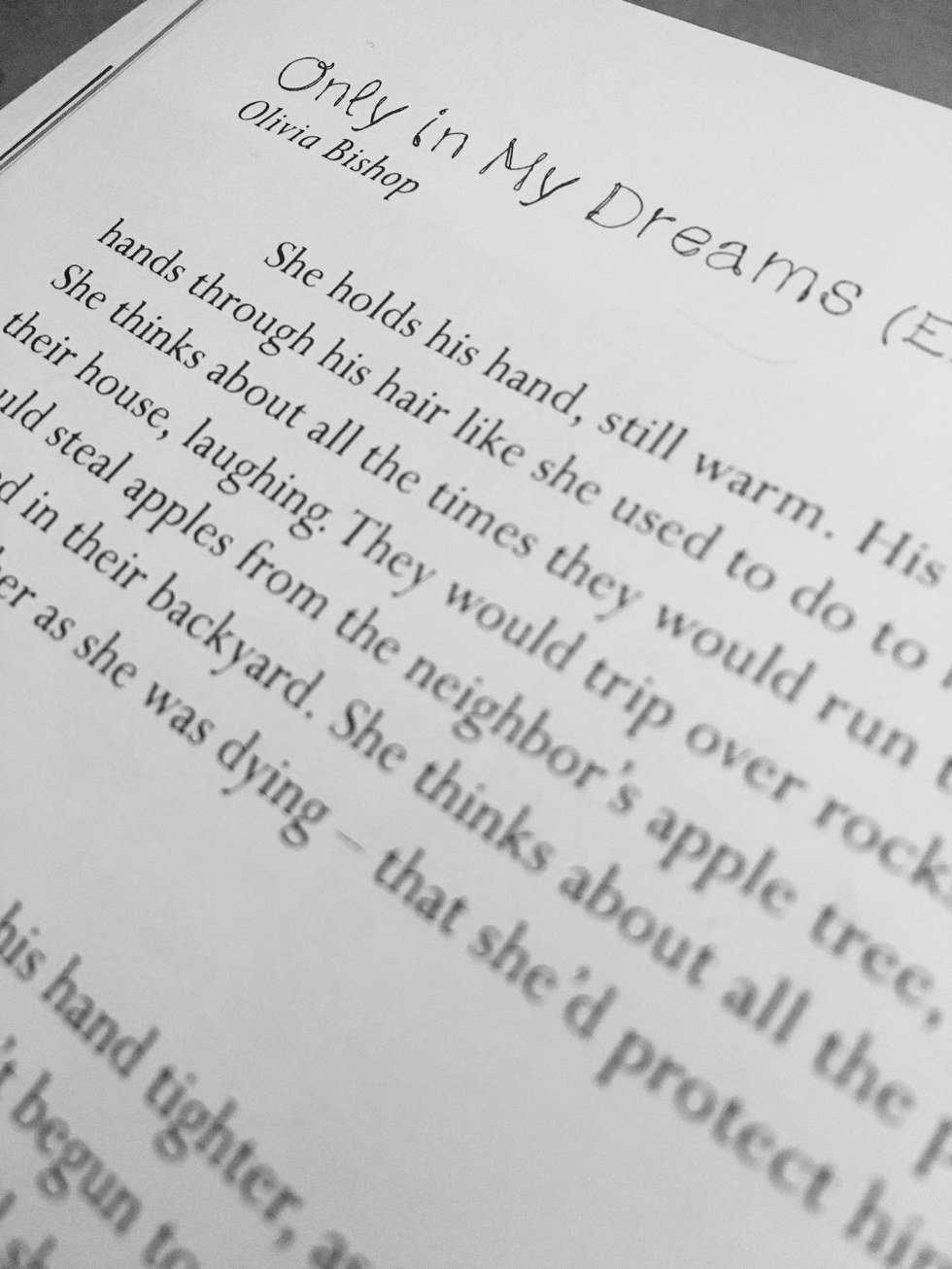
I remember in third grade we were assigned to write a play. Most of the other kids created little skits that were about three or four handwritten pages about this or that. I remember, in detail, that I wrote a play about a little girl who was struggling with deciding what she would be for Halloween. It was over ten pages long and even though it was on par with a third-grade writing ability, I beamed with pride. I still have the short story I wrote in fourth grade about a student falling asleep on the last day of school and waking up to an empty classroom with animate school supplies. Throughout elementary and middle school, I placed in a handful of story writing competitions, winning the opportunity to have two of my books placed in my local library's collection.
I had always loved school and loved all of the subjects I studied – except science, which is even a contemporary struggle that I face – but there was something powerful that rose up inside of me when I was asked to write something creative. Throughout adolescence, as I struggled with depression, anxiety, and an overall self-worth, I was always able to retreat into these alternate realities and alternate universes. I pulled confidence from the compliments and criticism I received in my creative writing class second block my sophomore year. As STEM (Science, Technology, Engineering, and Mathematics) began overwhelming the public education system, I began to lose myself – constantly reminding myself that intelligence manifests in many different ways. As my friends excelled in our chemistry class, I sat, filling the margins of my notes with story bunnies and potential dialogue, and it took me a while to accept that that was just who I was.
Storytelling has always come easily to me – hundreds of worlds, thousands of characters, millions of stories jumbling around in my brain, clogging up the parts of my brain concerned with logic and rationale. I live in my own reality 90% of the time. I have severe anxiety with racing thoughts, my mind always on the next story I'm going to tell. I didn't understand why for a very long time – why something that made me feel so powerful could make me feel so broken at the same time. I stumbled upon a beautiful article a few years ago published on Thought Catalog, entitled "This Is What Happens When You Love A Writer" and it depicts a writer in ways that helped me find my identity as a writer. Zoie Gale writes:
Love a writer, and you love a wondrous, broken, fragile thing. A creature who has with their own two hands pulled down those structures protecting them from the outside world, in order to better see it, feel it, capture it. They had to, but sometimes that means that the world is too big, too loud, too bright, too close.
Not a day goes by without hearing those words in my mind. A writer is forced to see the world differently – we have to be analytical and cynical, we take notes with our eyes – and when I understood that, I was able to embrace who I was. Being a writer isn't something that you become; it's something that you are born.