

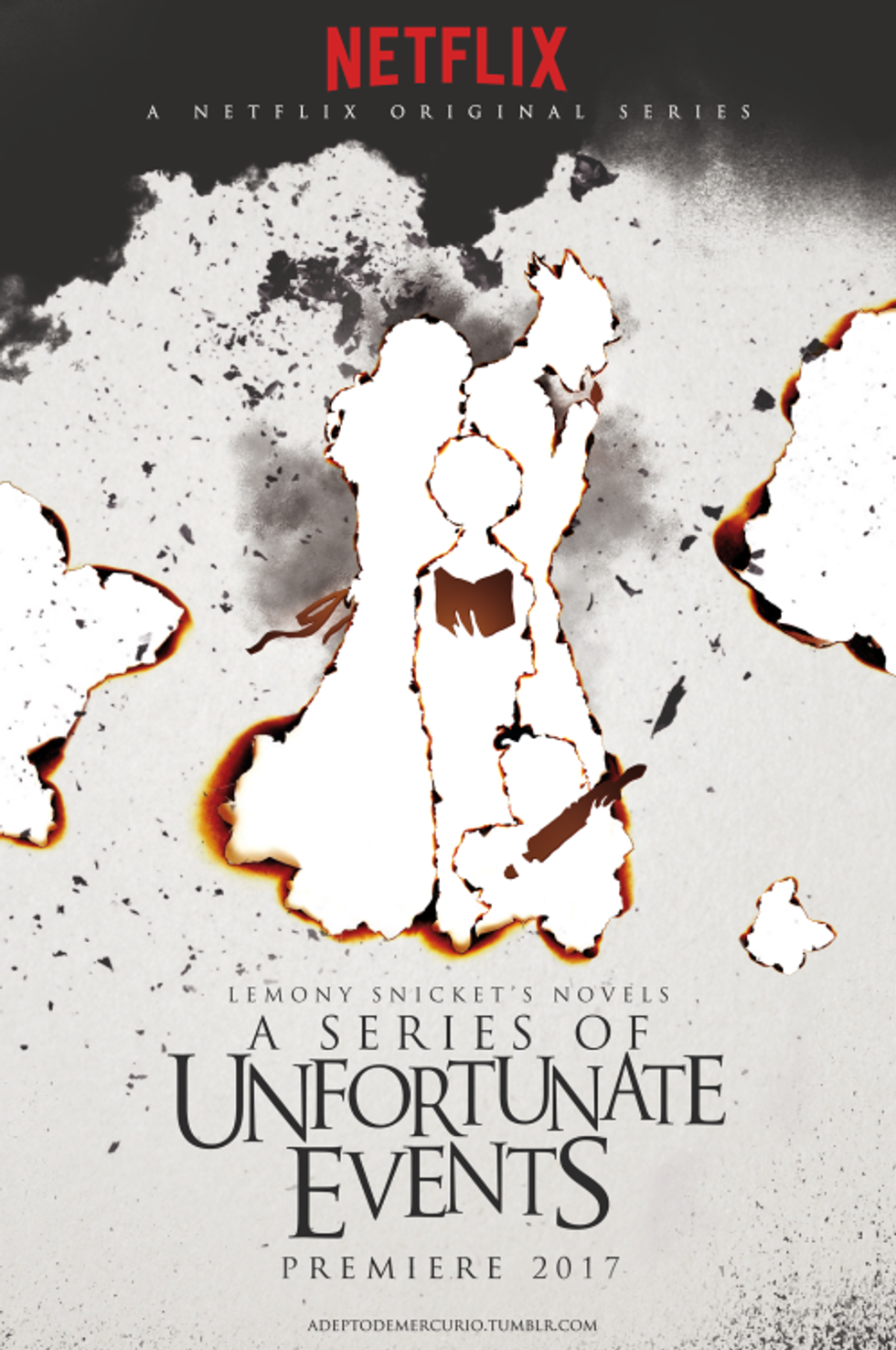
Netflix announced in late 2014 that the online streaming service would be adapting the hugely popular and critically acclaimed series A Series of Unfortunate Events. Fans went crazy. After the disappointing 2014 adaption starring Jim Carey, finally the treacherous saga of the Baudelaire orphans would be given a second chance. Two years later, casting announcements have been scarce. So far the only released cast is x as Violet, and x as Klaus. Just last week, Neil Patrick Harris was revealed to be playing the villain, Count Olaf. For the most part, Netflix original series’ have been excellent. Still, with such a dedicated fanbase, a huge and increasingly complicated cast of characters, and the terrible previous attempt to bring the story to the screen, there are some pivotal and almost likely things that could go wrong. SPOILERS AHEAD!!!!!
1. Misused Narration
The voice of Lemony Snicket is iconic, even inspiring the genre-name "Lemony Narrator". To quote TV Tropes, "A Narrator who tells the story from a third-person perspective, in an eccentric, bizarre, or otherwise unconventional style." An easy example starting from the first book forward are his morbid dedications to a (then) unidentified woman named Beatrice. It isn't until a few books in that Lemony becomes a central character himself. For all the flaws of the movie, they handled the narrative aspect pretty well. To leave out Lemony’s commentary completely would take away much of the tone and even some clues to future plotlines, but to have the narrator speak more than the actors and images themselves is lazy.
2. Trivializing Count Olaf
Count Olaf is literally a murderer. He’s killed old women, nuns, colleagues, and has no qualms about killing infants. Jim Carey made him cartoonish. As the books go on, more of his background is revealed, suggesting that there is a reason he is the way he is. One of the more intriguing and mysterious moments of the final book is the revelation of the implied previous romance between Count Olaf and the (mostly?) noble Kit Snicket, sister of the narrator.
3. Marketing It As a Children's Show
Even more so perhaps than Harry Potter, ASOUE is a children’s book series for adults. To leave out the overall dark, black humor of the series and turn it into a show about three kids going on wacky adventures would be pointless. There are so many things that I caught reading for the sixth time as an older teenager than I did as a pre-teen. Olaf’s borderline sexual interest in Violet in the first couple of books, Sir and Charles’ beyond just-business relationship, arson, murder (with the methods becoming more and more unique), and of course the continuing theme of most adults being totally useless, are things that would not fit in on Nickelodeon or The Disney Channel. Underestimating the intelligence of it’s (young and old) audience would be a betrayal to a faithful adaption.
4. Oversimplifying the characters
One of the central themes of ASOUE is that there is no such thing as a perfect hero. Everyone in the series has done bad things, some for necessary reasons, but bad all the same. Throughout the series, the line between the two sides of the mysterious organization VFD increasingly becomes hazier. There is no such thing as “good guys” and “bad guys”. Even Count Olaf isn’t completely evil. As Lemony Snicket says in The Penultimate Peril, “It is very difficult to make one's way in this world without being wicked at one time or another, when the world's way is so wicked to begin with.”

















